Laurikka Pilvi, Salmi Teea, Collin Pekka, Huhtala Heini, Mäki Markku, Kaukinen Katri, Kurppa Kalle
School of Medicine, University of Tampere, Tampere 33014, Finland.
Department of Dermatology, Tampere University Hospital, Tampere 33014, Finland.
Nutrients. 2016 Jul 14;8(7):429. doi: 10.3390/nu8070429.
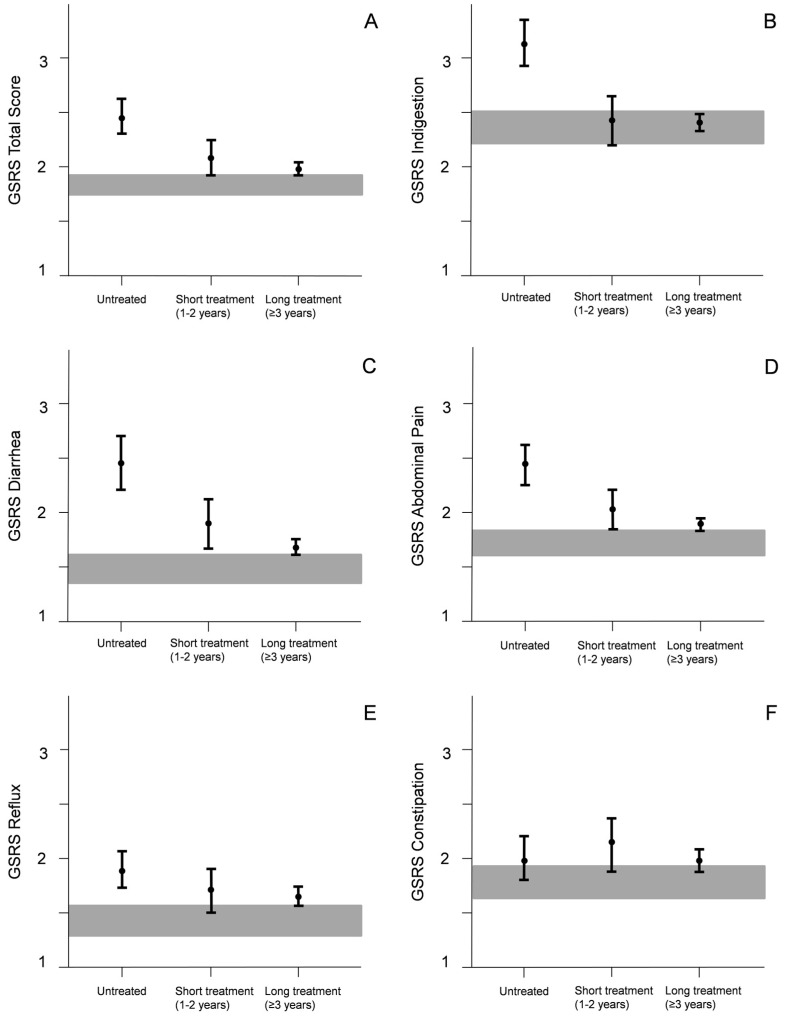
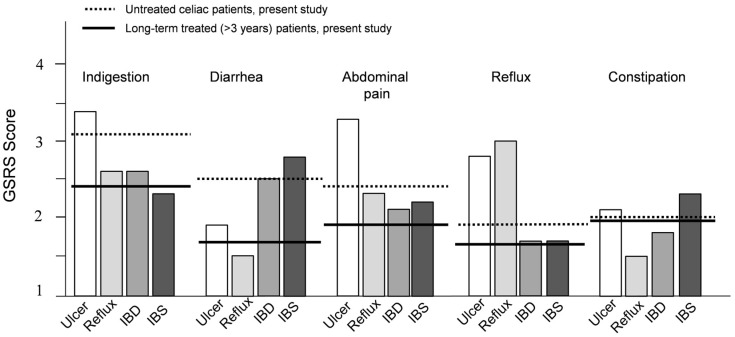
Experience suggests that many celiac patients suffer from persistent symptoms despite a long-term gluten-free diet (GFD). We investigated the prevalence and severity of these symptoms in patients with variable duration of GFD. Altogether, 856 patients were classified into untreated (n = 128), short-term GFD (1-2 years, n = 93) and long-term GFD (≥3 years, n = 635) groups. Analyses were made of clinical and histological data and dietary adherence. Symptoms were evaluated by the validated GSRS questionnaire. One-hundred-sixty healthy subjects comprised the control group. Further, the severity of symptoms was compared with that in peptic ulcer, reflux disease, inflammatory bowel disease (IBD) and irritable bowel syndrome (IBS). Altogether, 93% of the short-term and 94% of the long-term treated patients had a strict GFD and recovered mucosa. Untreated patients had more diarrhea, indigestion and abdominal pain than those on GFD and controls. There were no differences in symptoms between the short- and long-term GFD groups, but both yielded poorer GSRS total score than controls (p = 0.03 and p = 0.05, respectively). Furthermore, patients treated 1-2 years had more diarrhea (p = 0.03) and those treated >10 years more reflux (p = 0.04) than controls. Long-term treated celiac patients showed relatively mild symptoms compared with other gastrointestinal diseases. Based on our results, good response to GFD sustained in long-term follow-up, but not all patients reach the level of healthy individuals.
经验表明,许多乳糜泻患者尽管长期遵循无麸质饮食(GFD),仍会出现持续症状。我们调查了不同GFD持续时间的患者中这些症状的患病率和严重程度。总共856例患者被分为未治疗组(n = 128)、短期GFD组(1 - 2年,n = 93)和长期GFD组(≥3年,n = 635)。对临床和组织学数据以及饮食依从性进行了分析。症状通过经过验证的GSRS问卷进行评估。160名健康受试者组成对照组。此外,将症状的严重程度与消化性溃疡、反流性疾病、炎症性肠病(IBD)和肠易激综合征(IBS)患者的症状严重程度进行了比较。总共93%的短期治疗患者和94%的长期治疗患者严格遵循GFD且黏膜恢复。未治疗的患者比接受GFD治疗的患者和对照组有更多的腹泻、消化不良和腹痛。短期和长期GFD组之间的症状没有差异,但两组的GSRS总分均低于对照组(分别为p = 0.03和p = 0.05)。此外,接受1 - 2年治疗的患者腹泻更多(p = 0.03),接受超过10年治疗的患者反流更多(p = 0.04)。与其他胃肠道疾病相比,长期治疗的乳糜泻患者症状相对较轻。根据我们的结果,长期随访中对GFD的良好反应得以持续,但并非所有患者都能达到健康个体的水平。