Department of Entomology , Michigan State University , East Lansing, MI 48824 , USA.
R Soc Open Sci. 2016 Jun 1;3(6):150677. doi: 10.1098/rsos.150677. eCollection 2016 Jun.
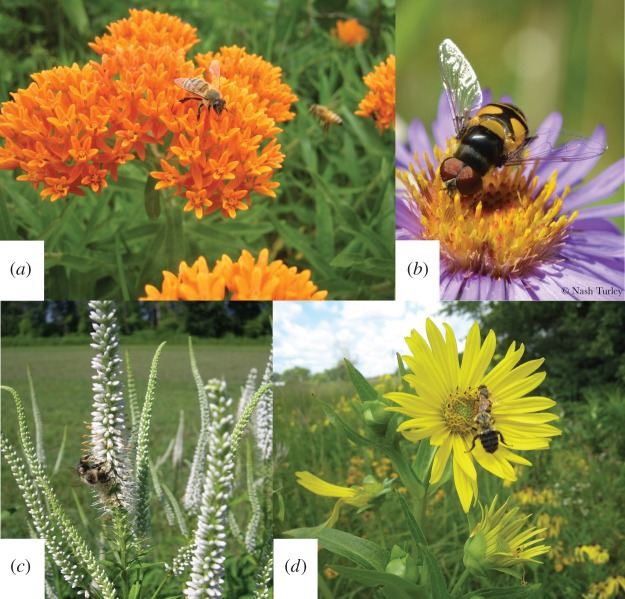
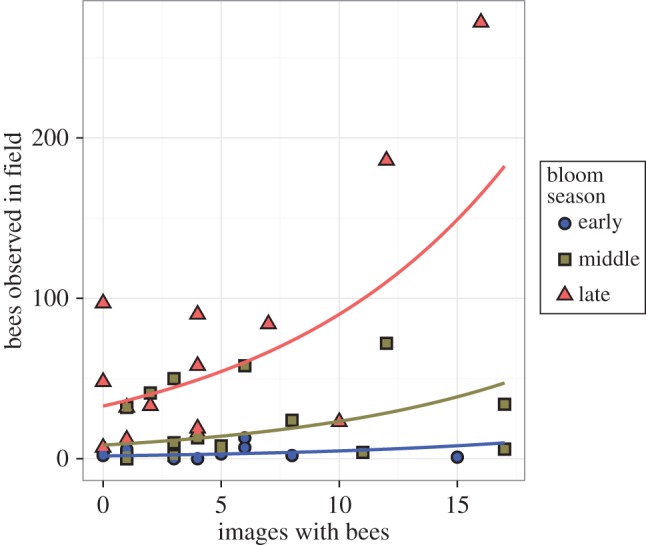
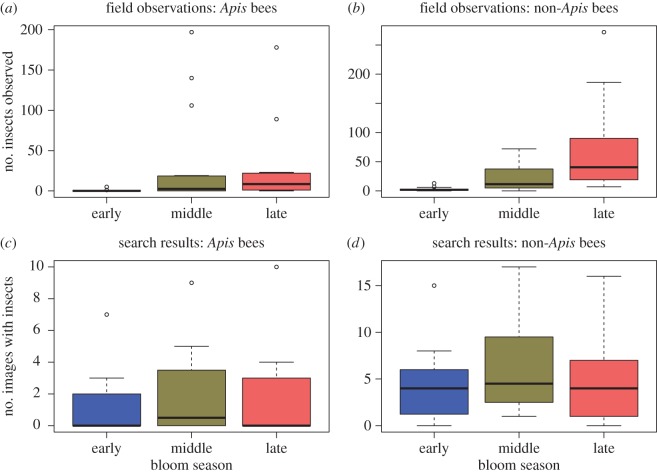
Global concern regarding pollinator decline has intensified interest in enhancing pollinator resources in managed landscapes. These efforts frequently emphasize restoration or planting of flowering plants to provide pollen and nectar resources that are highly attractive to the desired pollinators. However, determining exactly which plant species should be used to enhance a landscape is difficult. Empirical screening of plants for such purposes is logistically daunting, but could be streamlined by crowdsourcing data to create lists of plants most probable to attract the desired pollinator taxa. People frequently photograph plants in bloom and the Internet has become a vast repository of such images. A proportion of these images also capture floral visitation by arthropods. Here, we test the hypothesis that the abundance of floral images containing identifiable pollinator and other beneficial insects is positively associated with the observed attractiveness of the same species in controlled field trials from previously published studies. We used Google Image searches to determine the correlation of pollinator visitation captured by photographs on the Internet relative to the attractiveness of the same species in common-garden field trials for 43 plant species. From the first 30 photographs, which successfully identified the plant, we recorded the number of Apis (managed honeybees), non-Apis (exclusively wild bees) and the number of bee-mimicking syrphid flies. We used these observations from search hits as well as bloom period (BP) as predictor variables in Generalized Linear Models (GLMs) for field-observed abundances of each of these groups. We found that non-Apis bees observed in controlled field trials were positively associated with observations of these taxa in Google Image searches (pseudo-R (2) of 0.668). Syrphid fly observations in the field were also associated with the frequency they were observed in images, but this relationship was weak. Apis bee observations were not associated with Internet images, but were slightly associated with BP. Our results suggest that passively crowdsourced image data can potentially be a useful screening tool to identify candidate plants for pollinator habitat restoration efforts directed at wild bee conservation. Increasing our understanding of the attractiveness of a greater diversity of plants increases the potential for more rapid and efficient research in creating pollinator-supportive landscapes.
全球对传粉媒介减少的关注加剧了人们对管理景观中传粉媒介资源的兴趣。这些努力通常强调恢复或种植开花植物,以提供对所需传粉媒介极具吸引力的花粉和花蜜资源。然而,确定应该使用哪些植物物种来增强景观是很困难的。为了达到这个目的,对植物进行实证筛选在后勤上是艰巨的,但可以通过众包数据来创建最有可能吸引所需传粉媒介类群的植物清单,从而使这项工作更加高效。人们经常拍摄开花植物的照片,互联网已经成为这些图片的巨大存储库。其中一部分图片还捕捉到了节肢动物对花朵的访问。在这里,我们检验了以下假设,即包含可识别传粉媒介和其他有益昆虫的花朵图像的丰富程度与之前发表的研究中控制田间试验中同一物种的观察到的吸引力呈正相关。我们使用谷歌图像搜索来确定互联网上拍摄的传粉媒介访问照片与同一物种在常见花园田间试验中的吸引力之间的相关性,共涉及 43 种植物。从成功识别植物的前 30 张照片中,我们记录了传粉媒介(饲养的蜜蜂)、非传粉媒介(专门的野生蜜蜂)和蜜蜂模拟食蚜蝇的数量。我们将这些来自搜索结果的观察结果以及开花期 (BP) 作为预测变量,纳入广义线性模型 (GLM) 中,以预测这些组中每一组的田间观察丰度。我们发现,在控制的田间试验中观察到的非传粉媒介蜜蜂与在谷歌图像搜索中观察到的这些类群呈正相关 (伪 R (2) 为 0.668)。田间观察到的食蚜蝇数量也与它们在图像中被观察到的频率相关,但这种关系很弱。传粉媒介蜜蜂的观察结果与互联网图像无关,但与 BP 略有相关。我们的研究结果表明,被动众包的图像数据可以成为一种有用的筛选工具,以识别用于野生蜜蜂保护的传粉媒介栖息地恢复工作的候选植物。提高对更多种类植物的吸引力的认识,可以增加创建支持传粉媒介的景观的快速和高效研究的潜力。