Basu Arpita, Morris Stacy, Nguyen Angel, Betts Nancy M, Fu Dongxu, Lyons Timothy J
Department of Nutritional Sciences, College of Human Sciences, Oklahoma State University, Stillwater, OK 74078, USA.
Centre for Experimental Medicine, Queen's University of Belfast, Belfast BT7 1NN, UK.
J Nutr Metab. 2016;2016:3910630. doi: 10.1155/2016/3910630. Epub 2016 Jun 27.
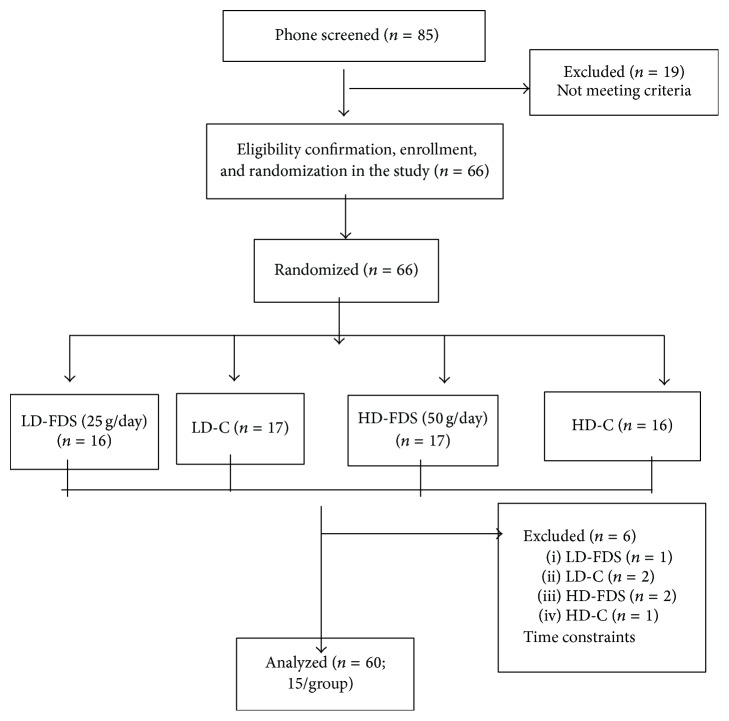
Berries have shown several cardiovascular health benefits and have been associated with antioxidant functions in experimental models. Clinical studies are limited. We examined the antioxidant effects of freeze-dried strawberries (FDS) in adults [n = 60; age: 49 ± 10 years; BMI: 36 ± 5 kg/m(2) (mean ± SD)] with abdominal adiposity and elevated serum lipids. Participants were randomized to one of the following arms: low dose strawberry (25 g/day FDS), low dose control beverage (LD-C), high dose strawberry (50 g/d FDS), and high dose control beverage (HD-C) for 12 weeks. Control beverages were matched for calories and total fiber. Plasma antioxidant capacity, trace elements (copper, iron, selenium, and zinc), whole blood glutathione (GSH), and enzyme activity (catalase, glutathione peroxidase, and glutathione reductase) were examined at screening (0 week) and after 12 weeks' intervention. At 12 weeks, plasma antioxidant capacity and glutathione levels were higher in the strawberry versus control groups (low and high dose FDS: 45% and 42% for plasma antioxidant capacity and 28% and 36% for glutathione, resp.); glutathione was higher in the high versus low dose strawberry group (all p < 0.05). Serum catalase activity was higher in the low dose strawberry (43%) versus control group (p < 0.01). No differences were noted in plasma trace elements and glutathione enzyme activity. Dietary strawberries may selectively increase plasma antioxidant biomarkers in obese adults with elevated lipids.
浆果已显示出对心血管健康有多种益处,并且在实验模型中与抗氧化功能相关。临床研究有限。我们研究了冻干草莓(FDS)对腹部肥胖且血脂升高的成年人[ n = 60;年龄:49±10岁;体重指数:36±5 kg/m²(均值±标准差)]的抗氧化作用。参与者被随机分为以下几组之一:低剂量草莓组(25克/天FDS)、低剂量对照饮料组(LD-C)、高剂量草莓组(50克/天FDS)和高剂量对照饮料组(HD-C),为期12周。对照饮料的热量和总纤维含量相匹配。在筛查时(0周)和12周干预后,检测血浆抗氧化能力、微量元素(铜、铁、硒和锌)、全血谷胱甘肽(GSH)和酶活性(过氧化氢酶、谷胱甘肽过氧化物酶和谷胱甘肽还原酶)。在12周时,草莓组的血浆抗氧化能力和谷胱甘肽水平高于对照组(低剂量和高剂量FDS组的血浆抗氧化能力分别提高45%和42%,谷胱甘肽分别提高28%和36%);高剂量草莓组的谷胱甘肽水平高于低剂量草莓组(所有p<0.05)。低剂量草莓组的血清过氧化氢酶活性高于对照组(43%,p<0.01)。血浆微量元素和谷胱甘肽酶活性无差异。食用草莓可能会选择性地增加血脂升高的肥胖成年人的血浆抗氧化生物标志物。