Kim Jaehwan, Kim Soyoung, Jo Jieun, Lee Seungjun, Eom Kidong
Konkuk University, 120, Neungdong-ro, Gwangjin-gu, Seoul, Korea.
J Vet Med Sci. 2016 Dec 1;78(11):1693-1697. doi: 10.1292/jvms.16-0161. Epub 2016 Jul 16.
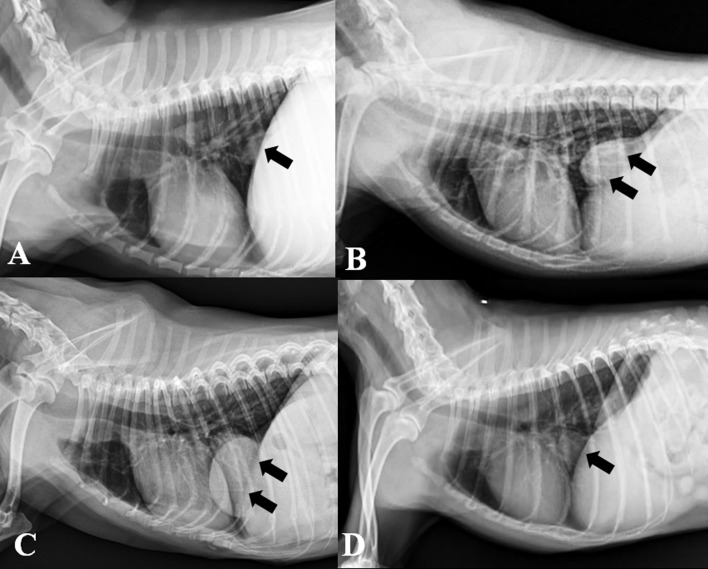
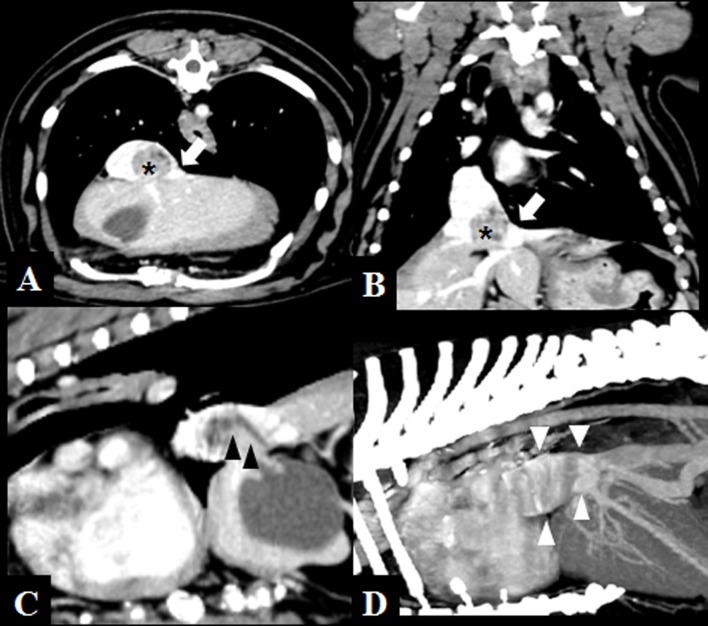
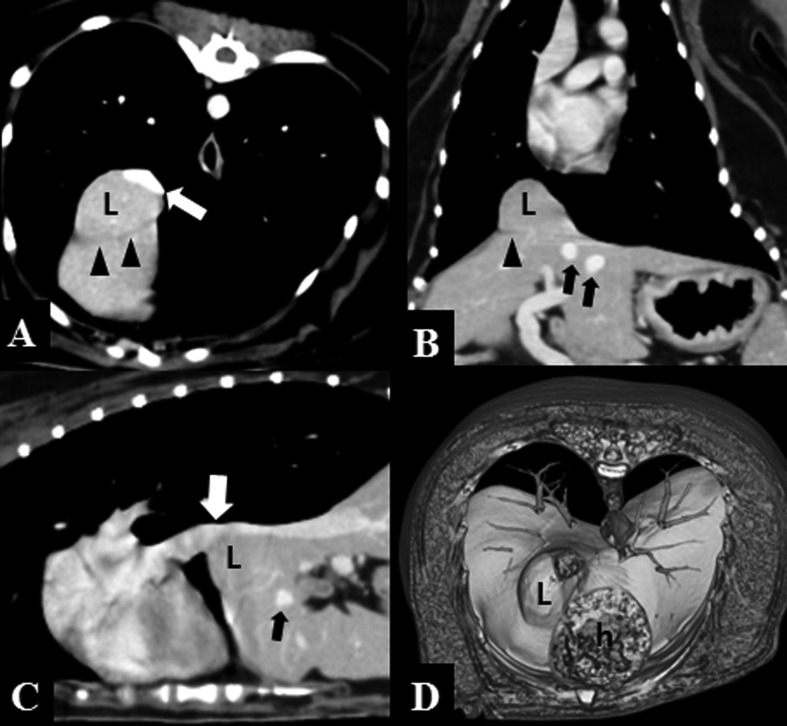
This study describes the imaging features and characteristics of caval foramen hernias in 7 dogs diagnosed by computed tomography (CT). On lateral radiographs, 6 of 7 dogs showed dome-shaped, broad-based, caudal mediastinal lesions. CT findings included caudal vena cava (CVC) compression (n=7), right lateral (n=6) or medial (n=1) liver lobe involvement, hepatic vein dilation (n=5) and biliary tract involvement (n=1) with partial (n=6) or entire (n=1) liver lobe hernias. A caval foramen hernia should be part of the differential diagnosis when the aforementioned imaging features are detected. CT is considered as a useful tool for diagnosis and evaluation in dogs with a caval foramen hernia.
本研究描述了7只经计算机断层扫描(CT)诊断为腔静脉孔疝的犬的影像学特征。在侧位X线片上,7只犬中有6只显示出圆顶状、宽基底的后纵隔病变。CT表现包括尾腔静脉(CVC)受压(n = 7)、右侧(n = 6)或内侧(n = 1)肝叶受累、肝静脉扩张(n = 5)以及胆道受累(n = 1),伴有部分(n = 6)或整个(n = 1)肝叶疝。当检测到上述影像学特征时,腔静脉孔疝应作为鉴别诊断的一部分。CT被认为是诊断和评估犬腔静脉孔疝的有用工具。