Mannaa Mohamed, Kim Ki Deok
Laboratory of Plant Disease and Biocontrol, College of Life Sciences and Biotechnology, Korea University, Seoul 02841, Korea.
Mycobiology. 2016 Jun;44(2):67-78. doi: 10.5941/MYCO.2016.44.2.67. Epub 2016 Jun 30.
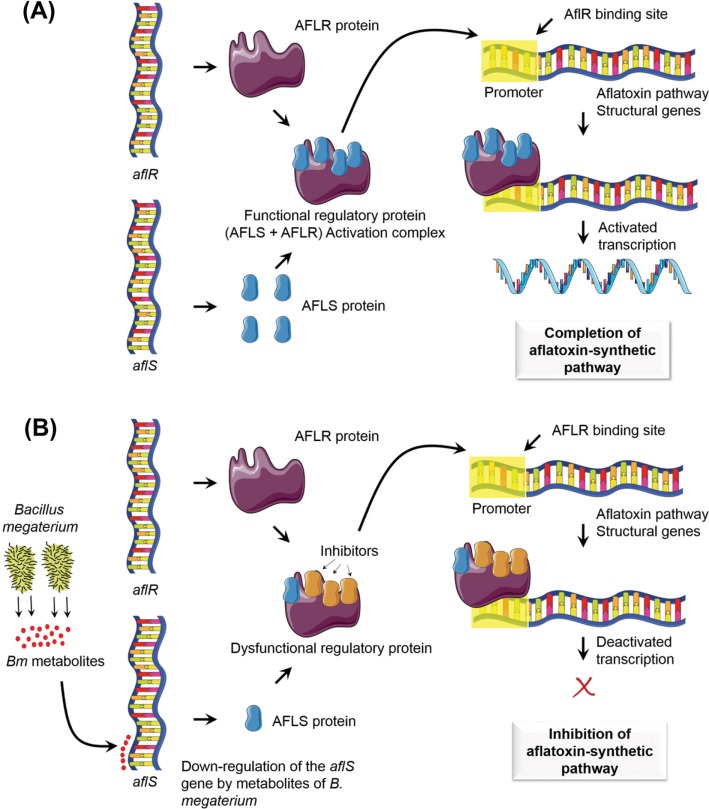
Rice contaminated with fungal species during storage is not only of poor quality and low economic value, but may also have harmful effects on human and animal health. The predominant fungal species isolated from rice grains during storage belong to the genera Aspergillus and Penicillium. Some of these fungal species produce mycotoxins; they are responsible for adverse health effects in humans and animals, particularly Aspergillus flavus, which produces the extremely carcinogenic aflatoxins. Not surprisingly, there have been numerous attempts to devise safety procedure for the control of such harmful fungi and production of mycotoxins, including aflatoxins. This review provides information about fungal and mycotoxin contamination of stored rice grains, and microbe-based (biological) strategies to control grain fungi and mycotoxins. The latter will include information regarding attempts undertaken for mycotoxin (especially aflatoxin) bio-detoxification and microbial interference with the aflatoxin-biosynthetic pathway in the toxin-producing fungi.
储存期间被真菌污染的大米不仅质量差、经济价值低,还可能对人类和动物健康产生有害影响。储存期间从米粒中分离出的主要真菌种类属于曲霉属和青霉属。其中一些真菌会产生霉菌毒素;它们会对人类和动物的健康产生不利影响,尤其是黄曲霉,它会产生极具致癌性的黄曲霉毒素。毫不奇怪,人们多次尝试设计安全程序来控制此类有害真菌和霉菌毒素的产生,包括黄曲霉毒素。本综述提供了有关储存米粒的真菌和霉菌毒素污染以及基于微生物(生物)的控制谷物真菌和霉菌毒素策略的信息。后者将包括有关霉菌毒素(尤其是黄曲霉毒素)生物解毒以及微生物干扰产毒真菌中黄曲霉毒素生物合成途径的相关尝试的信息。