Cadogan S L, McHugh S M, Bradley C P, Browne J P, Cahill M R
Department of Epidemiology and Public Health, University College Cork, Cork, Ireland.
Department of General Practice, University College Cork, Cork, Ireland.
Implement Sci. 2016 Jul 19;11(1):102. doi: 10.1186/s13012-016-0465-8.
Research suggests that variation in laboratory requesting patterns may indicate unnecessary test use. Requesting patterns for serum immunoglobulins vary significantly between general practitioners (GPs). This study aims to explore GP's views on testing to identify the determinants of behaviour and recommend feasible intervention strategies for improving immunoglobulin test use in primary care.
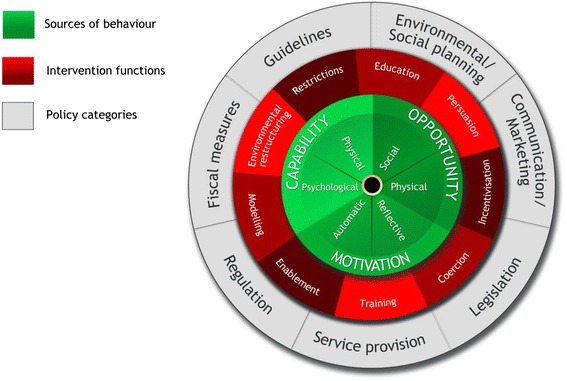
Qualitative semi-structured interviews were conducted with GPs requesting laboratory tests at Cork University Hospital or University Hospital Kerry in the South of Ireland. GPs were identified using a Health Service Executive laboratory list of GPs in the Cork-Kerry region. A random sample of GPs (stratified by GP requesting patterns) was generated from this list. GPs were purposively sampled based on the criteria of location (urban/rural); length of time qualified; and practice size (single-handed/group). Interviews were carried out between December 2014 and February 2015. Interviews were transcribed verbatim using NVivo 10 software and analysed using the framework analysis method. Emerging themes were mapped to the theoretical domains framework (TDF), which outlines 12 domains that can enable or inhibit behaviour change. The behaviour change wheel and behaviour change technique (BCT) taxonomy were then used to identify potential intervention strategies.
Sixteen GPs were interviewed (ten males and six females). Findings suggest that intervention strategies should specifically target the key barriers to effective test ordering, while considering the context of primary care practice. Seven domains from the TDF were perceived to influence immunoglobulin test ordering behaviours and were identified as 'mechanisms for change' (knowledge, environmental context and resources, social/professional role and identity, beliefs about capabilities, beliefs about consequences, memory, attention and decision-making processes and behavioural regulation). Using these TDF domains, seven BCTs emerged as feasible 'intervention content' for targeting GPs' ordering behaviour. These included instructions on how to effectively request the test (how to perform behaviour), information on GPs' use of the test (feedback on behaviour), information about patient consequences resulting from not doing the test (information about health consequences), laboratory/consultant-based advice/education (credible source), altering the test ordering form (restructuring the physical environment), providing guidelines (prompts/cues) and adding interpretive comments to the results (adding objects to the environment). These BCTs aligned to four intervention functions: education, persuasion, environmental restructuring and enablement.
This study has effectively applied behaviour change theory to identify feasible strategies for improving immunoglobulin test use in primary care using the TDF, 'behaviour change wheel' and BCT taxonomy. The identified BCTs will form the basis of a theory-based intervention to improve the use of immunoglobulin tests among GPs. Future research will involve the development and evaluation of this intervention.
研究表明,实验室申请模式的差异可能表明存在不必要的检测使用情况。全科医生(GP)之间血清免疫球蛋白的申请模式差异显著。本研究旨在探讨全科医生对检测的看法,以确定行为的决定因素,并推荐可行的干预策略,以改善初级保健中免疫球蛋白检测的使用情况。
对在爱尔兰南部科克大学医院或凯里大学医院申请实验室检测的全科医生进行了定性半结构化访谈。通过卫生服务执行机构科克-凯里地区全科医生的实验室名单来识别全科医生。从该名单中随机抽取全科医生样本(按全科医生申请模式分层)。根据地点(城市/农村)、资格年限和诊所规模(单人/团体)等标准进行目的抽样。访谈于2014年12月至2015年2月进行。使用NVivo 10软件逐字转录访谈内容,并采用框架分析法进行分析。将新出现的主题映射到理论领域框架(TDF),该框架概述了12个可促进或抑制行为改变的领域。然后使用行为改变轮和行为改变技术(BCT)分类法来确定潜在的干预策略。
采访了16名全科医生(10名男性和6名女性)。研究结果表明,干预策略应特别针对有效检测开单的关键障碍,同时考虑初级保健实践的背景。TDF中的七个领域被认为会影响免疫球蛋白检测开单行为,并被确定为“改变机制”(知识、环境背景和资源、社会/专业角色和身份、对能力的信念、对后果的信念、记忆、注意力和决策过程以及行为调节)。利用这些TDF领域,出现了七种BCT作为针对全科医生开单行为的可行“干预内容”。这些包括关于如何有效申请检测的说明(如何执行行为)、关于全科医生检测使用情况的信息(行为反馈)、关于不进行检测对患者造成后果的信息(健康后果信息)、基于实验室/顾问的建议/教育(可靠来源)、更改检测申请表格(重组物理环境)、提供指南(提示/线索)以及在结果中添加解释性评论(在环境中添加物品)。这些BCT与四种干预功能相一致:教育、劝说、环境重组和赋能。
本研究有效地应用行为改变理论,利用TDF、“行为改变轮”和BCT分类法确定了改善初级保健中免疫球蛋白检测使用的可行策略。所确定的BCT将构成一项基于理论的干预措施的基础,以改善全科医生对免疫球蛋白检测的使用。未来的研究将涉及该干预措施的开发和评估。
