Tjomsland Vegard, Pomianowska Eva, Aasrum Monica, Sandnes Dagny, Verbeke Caroline Sophie, Gladhaug Ivar Prydz
Institute of Clinical Medicine, University of Oslo, Oslo, Norway; Department of Pharmacology, Faculty of Medicine, University of Oslo, Oslo, Norway.
Institute of Clinical Medicine, University of Oslo, Oslo, Norway; Department of Hepato-pancreato-biliary Surgery, Oslo University Hospital, Rikshospitalet, Oslo, Norway.
Neoplasia. 2016 Jul;18(7):447-56. doi: 10.1016/j.neo.2016.06.003.
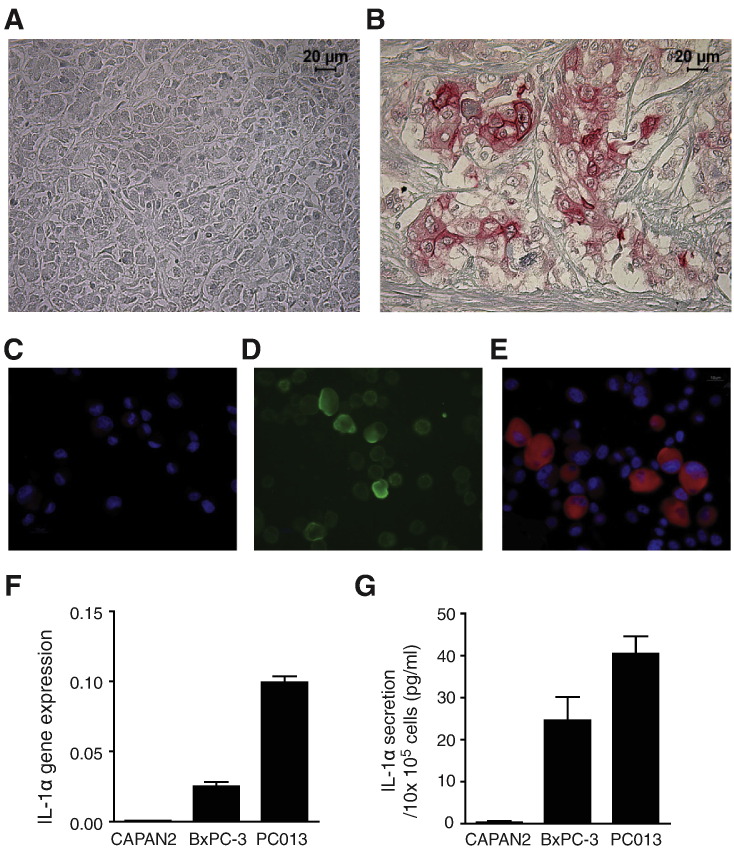
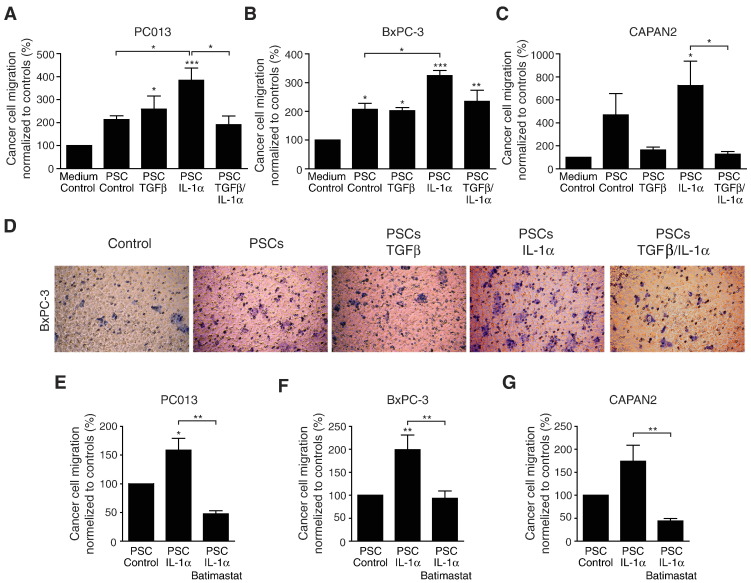
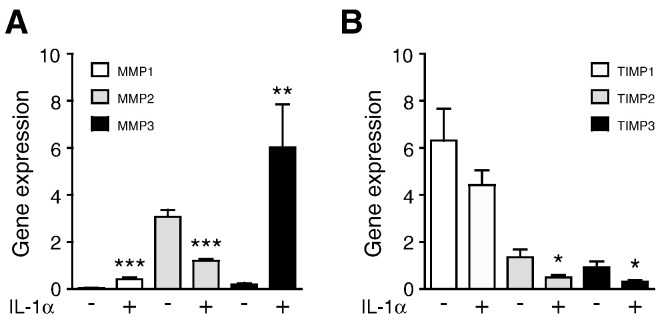
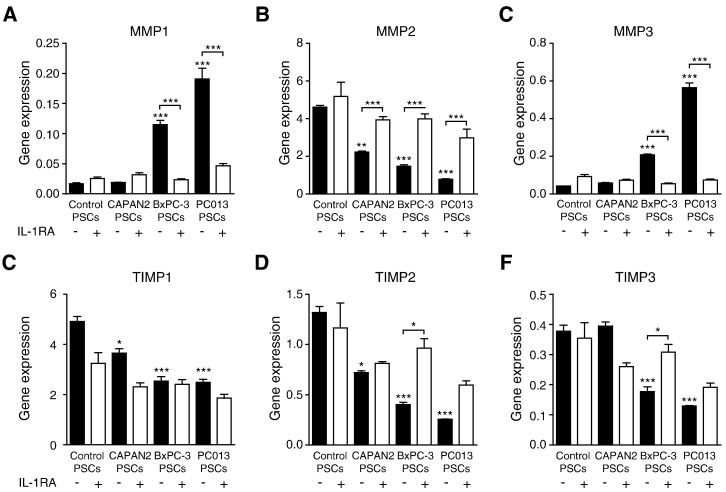
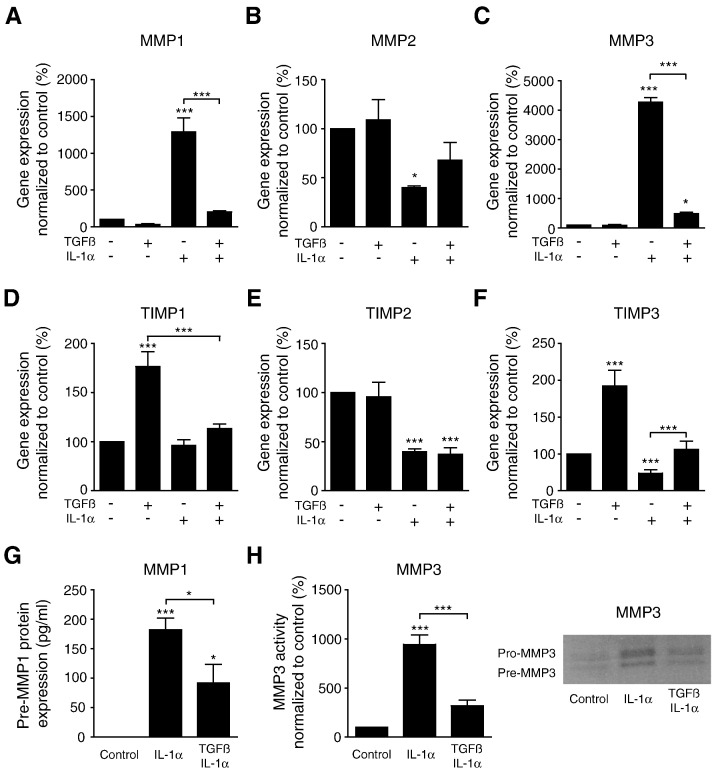
Pancreatic ductal adenocarcinoma is characterized by a prominent fibroinflammatory stroma with both tumor-promoting and tumor-suppressive functions. The pancreatic stellate cell (PSC) is the major cellular stromal component and the main producer of extracellular matrix proteins, including collagens, which are degraded by metalloproteinases (MMPs). PSCs interact with cancer cells through various factors, including transforming growth factor (TGF)β and interleukin (IL)-1α. The role of TGFβ in the dual nature of tumor stroma, i.e., protumorigenic or tumor suppressive, is not clear. We aimed to investigate the roles of TGFβ and IL-1α in the regulation of MMP profiles in PSCs and the subsequent effects on cancer cell migration. Human PSCs isolated from surgically resected specimens were cultured in the presence of pancreatic cancer cell lines, as well as IL-1α or TGFβ. MMP production and activities in PSCs were quantified by gene array transcripts, mRNA measurements, fluorescence resonance energy transfer-based activity assay, and zymography. PSC-conditioned media and pancreatic cancer cells were included in a collagen matrix cell migration model. We found that production of IL-1α by pancreatic cancer cells induced alterations in MMP and tissue inhibitors of matrix metalloproteinase (TIMP) profiles and activities in PSCs, upregulated expression and activation of MMP1 and MMP3, and enhanced migration of pancreatic cancer cells in the collagen matrix model. TGFβ counteracted the effects of IL-1α on PSCs, reestablished PSC MMP and TIMP profiles and activities, and inhibited migration of cancer cells. This suggests that tumor TGFβ has a role as a suppressor of stromal promotion of tumor progression through alterations in PSC MMP profiles with subsequent inhibition of pancreatic cancer cell migration.
胰腺导管腺癌的特征是具有突出的纤维炎性基质,该基质具有促进肿瘤和抑制肿瘤的功能。胰腺星状细胞(PSC)是主要的细胞基质成分,也是细胞外基质蛋白(包括胶原蛋白)的主要产生者,这些蛋白会被金属蛋白酶(MMP)降解。PSC通过多种因子与癌细胞相互作用,包括转化生长因子(TGF)β和白细胞介素(IL)-1α。TGFβ在肿瘤基质的双重性质(即促肿瘤或抑肿瘤)中的作用尚不清楚。我们旨在研究TGFβ和IL-1α在调节PSC中MMP谱以及随后对癌细胞迁移的影响中的作用。从手术切除标本中分离出的人PSC在胰腺癌细胞系以及IL-1α或TGFβ存在的情况下进行培养。通过基因阵列转录本、mRNA测量、基于荧光共振能量转移的活性测定和酶谱分析对PSC中MMP的产生和活性进行定量。将PSC条件培养基和胰腺癌细胞纳入胶原基质细胞迁移模型中。我们发现胰腺癌细胞产生的IL-1α诱导PSC中MMP和基质金属蛋白酶组织抑制剂(TIMP)谱及活性发生改变,上调MMP1和MMP3的表达及激活,并增强胶原基质模型中胰腺癌细胞的迁移能力。TGFβ抵消了IL-1α对PSC的影响, 恢复了PSC的MMP和TIMP谱及活性,并抑制癌细胞迁移。这表明肿瘤TGFβ通过改变PSC的MMP谱随后抑制胰腺癌细胞迁移,从而起到抑制基质促进肿瘤进展的作用。