Friedli I, Crowe L A, Berchtold L, Moll S, Hadaya K, de Perrot T, Vesin C, Martin P-Y, de Seigneux S, Vallée J-P
Division of Radiology, Department of Radiology and Medical Informatics Geneva University Hospitals and Faculty of Medicine of the University of Geneva, Switzerland.
Service of Nephrology, Department of Internal Medicine Specialties, Geneva University Hospitals, University of Geneva, Faculty of Medicine, Geneva, Switzerland.
Sci Rep. 2016 Jul 21;6:30088. doi: 10.1038/srep30088.
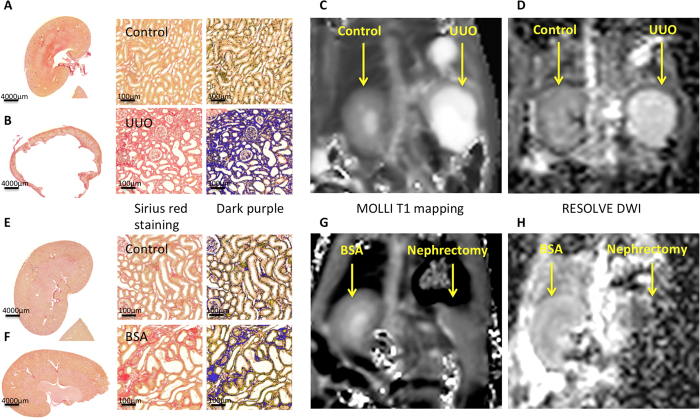
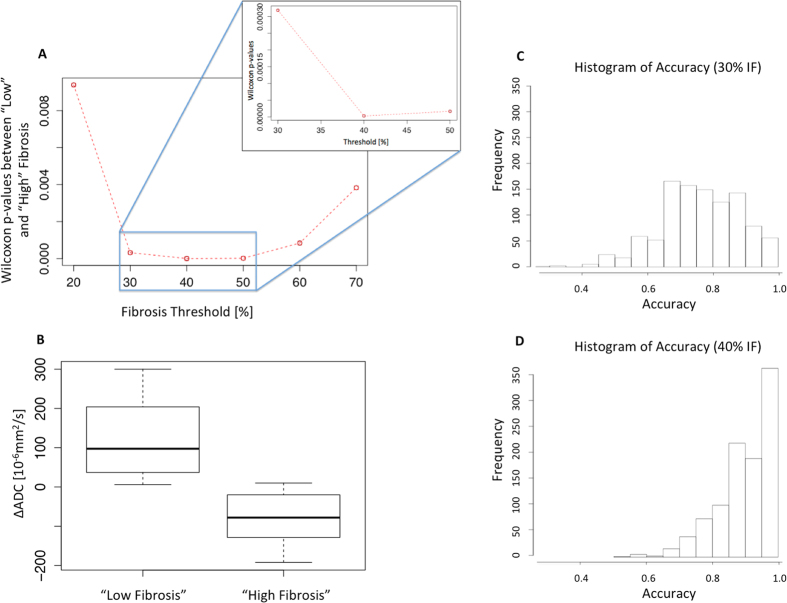
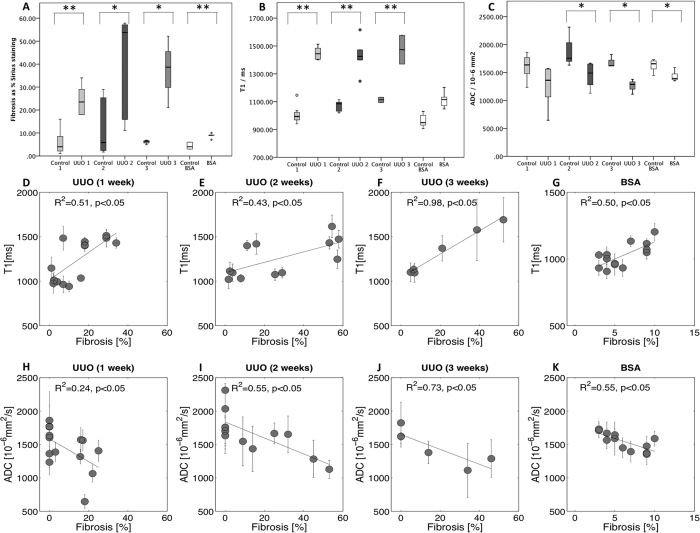
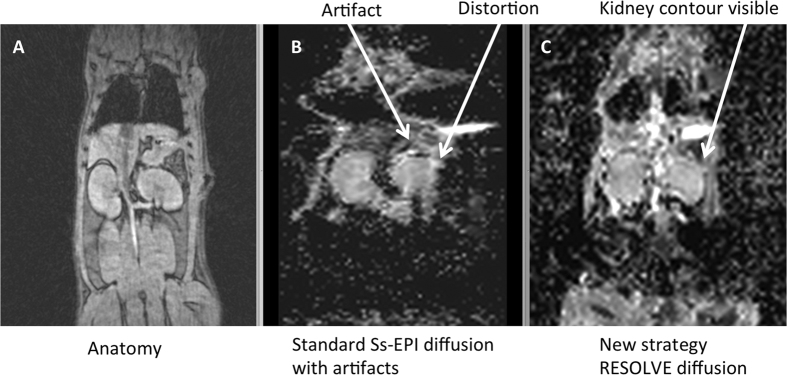
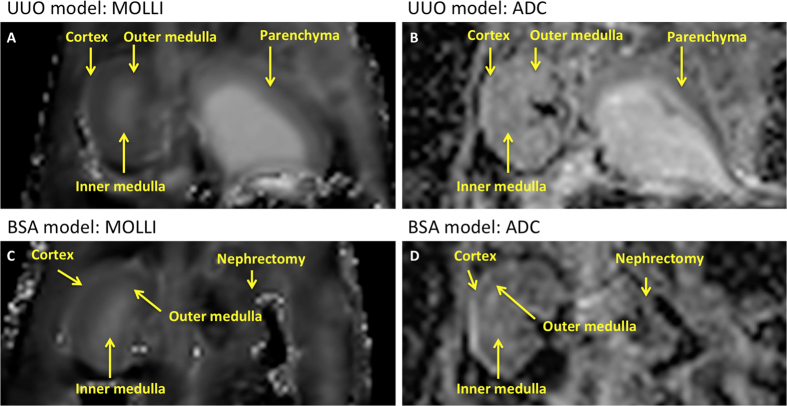
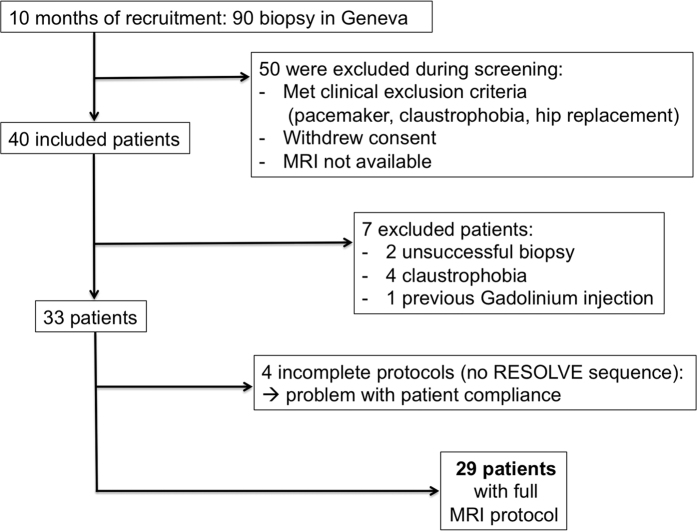
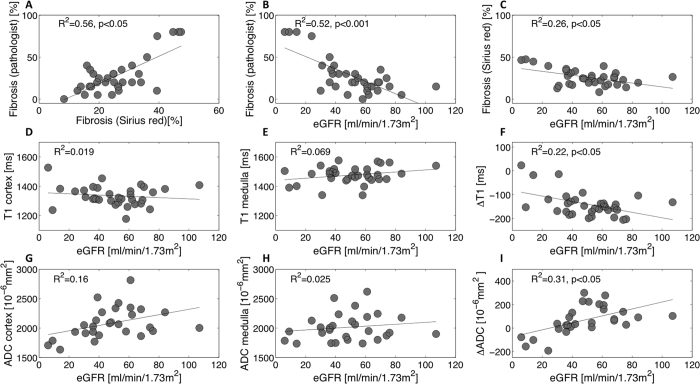
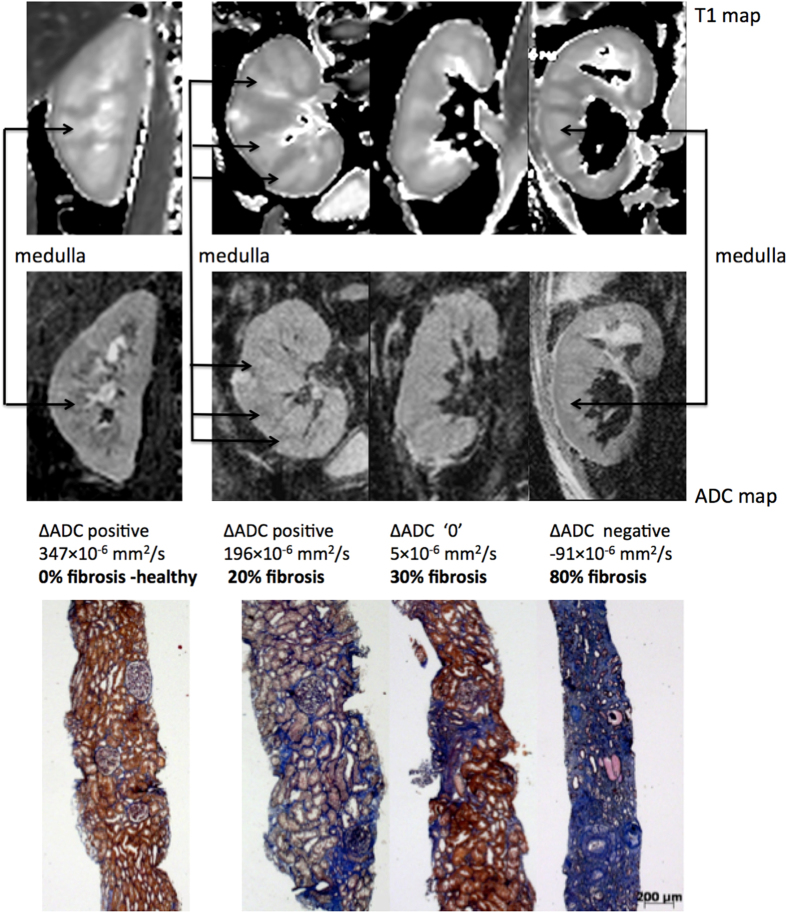
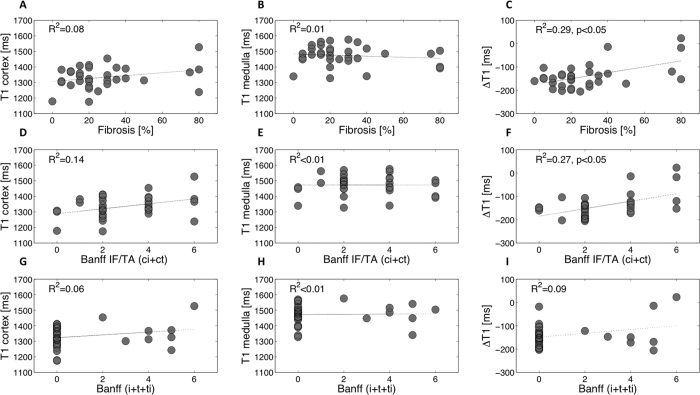
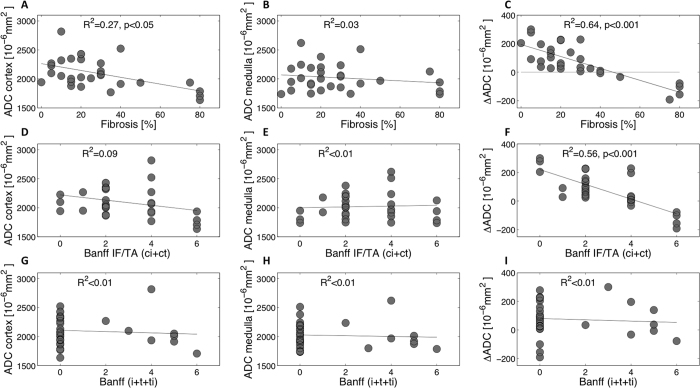
A need exists to noninvasively assess renal interstitial fibrosis, a common process to all kidney diseases and predictive of renal prognosis. In this translational study, Magnetic Resonance Imaging (MRI) T1 mapping and a new segmented Diffusion-Weighted Imaging (DWI) technique, for Apparent Diffusion Coefficient (ADC), were first compared to renal fibrosis in two well-controlled animal models to assess detection limits. Validation against biopsy was then performed in 33 kidney allograft recipients (KARs). Predictive MRI indices, ΔT1 and ΔADC (defined as the cortico-medullary differences), were compared to histology. In rats, both T1 and ADC correlated well with fibrosis and inflammation showing a difference between normal and diseased kidneys. In KARs, MRI indices were not sensitive to interstitial inflammation. By contrast, ΔADC outperformed ΔT1 with a stronger negative correlation to fibrosis (R(2) = 0.64 against R(2) = 0.29 p < 0.001). ΔADC tends to negative values in KARs harboring cortical fibrosis of more than 40%. Using a discriminant analysis method, the ΔADC, as a marker to detect such level of fibrosis or higher, led to a specificity and sensitivity of 100% and 71%, respectively. This new index has potential for noninvasive assessment of fibrosis in the clinical setting.
需要对肾间质纤维化进行无创评估,肾间质纤维化是所有肾脏疾病的常见过程,且可预测肾脏预后。在这项转化研究中,首先在两种严格控制的动物模型中,将磁共振成像(MRI)T1映射和一种用于表观扩散系数(ADC)的新型分段扩散加权成像(DWI)技术与肾纤维化进行比较,以评估检测限。然后在33名肾移植受者(KAR)中进行了与活检的验证。将预测性MRI指标ΔT1和ΔADC(定义为皮质 - 髓质差异)与组织学进行比较。在大鼠中,T1和ADC均与纤维化和炎症密切相关,显示出正常肾脏和患病肾脏之间的差异。在KAR中,MRI指标对间质炎症不敏感。相比之下,ΔADC优于ΔT1,与纤维化的负相关性更强(R² = 0.64,而R² = 0.29,p < 0.001)。在皮质纤维化超过40%的KAR中,ΔADC倾向于负值。使用判别分析方法,ΔADC作为检测这种纤维化水平或更高水平的标志物,特异性和敏感性分别为100%和71%。这一新指标在临床环境中具有无创评估纤维化的潜力。