John Radcliffe Hospital, University of Oxford, Oxford, UK;
Department of Physiology, Anatomy and Genetics, University of Oxford, Oxford, UK.
J Extracell Vesicles. 2016 Jul 19;5:31292. doi: 10.3402/jev.v5.31292. eCollection 2016.
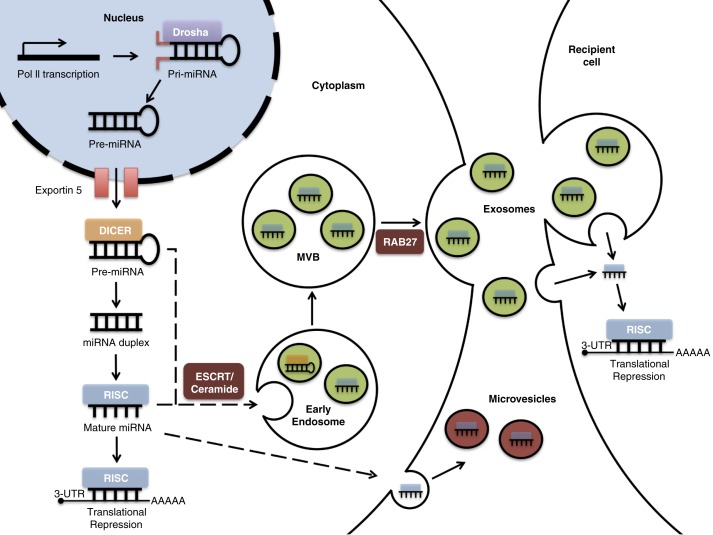
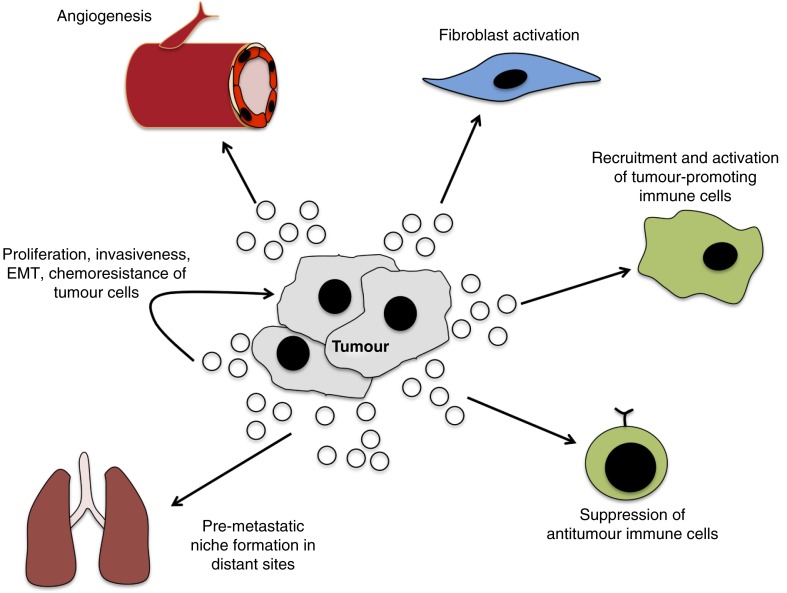
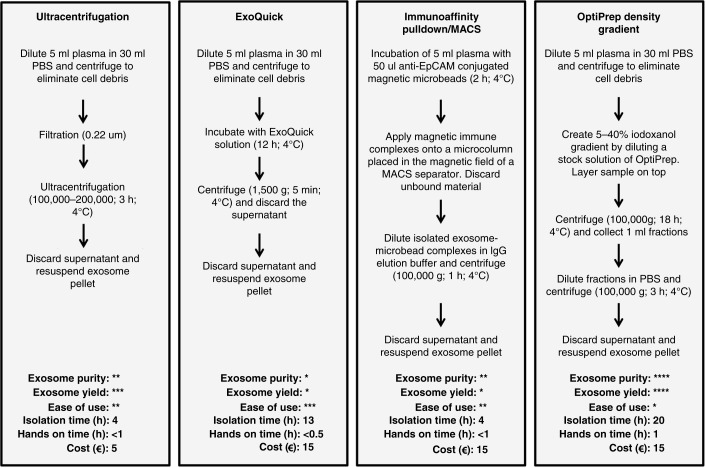
Intercommunication between cancer cells and with their surrounding and distant environments is key to the survival, progression and metastasis of the tumour. Exosomes play a role in this communication process. MicroRNA (miRNA) expression is frequently dysregulated in tumour cells and can be reflected by distinct exosomal miRNA (ex-miRNA) profiles isolated from the bodily fluids of cancer patients. Here, the potential of ex-miRNA as a cancer biomarker and therapeutic target is critically analysed. Exosomes are a stable source of miRNA in bodily fluids but, despite a number of methods for exosome extraction and miRNA quantification, their suitability for diagnostics in a clinical setting is questionable. Furthermore, exosomally transferred miRNAs can alter the behaviour of recipient tumour and stromal cells to promote oncogenesis, highlighting a role in cell communication in cancer. However, our incomplete understanding of exosome biogenesis and miRNA loading mechanisms means that strategies to target exosomes or their transferred miRNAs are limited and not specific to tumour cells. Therefore, if ex-miRNA is to be employed in novel non-invasive diagnostic approaches and as a therapeutic target in cancer, two further advances are necessary: in methods to isolate and detect ex-miRNA, and a better understanding of their biogenesis and functions in tumour-cell communication.
癌细胞与其周围和远处环境之间的相互交流是肿瘤生存、进展和转移的关键。外泌体在这种通讯过程中发挥作用。肿瘤细胞中的 microRNA(miRNA)表达经常失调,并且可以通过从癌症患者的体液中分离出的独特的外泌体 miRNA(ex-miRNA)谱来反映。在这里,批判性地分析了 ex-miRNA 作为癌症生物标志物和治疗靶标的潜力。外泌体是体液中 miRNA 的稳定来源,但尽管有许多用于外泌体提取和 miRNA 定量的方法,但它们在临床环境中的诊断适用性仍存在疑问。此外,外泌体转移的 miRNA 可以改变受体肿瘤和基质细胞的行为,促进肿瘤发生,突出了它们在癌症细胞通讯中的作用。然而,我们对外泌体生物发生和 miRNA 加载机制的理解不完整,这意味着针对外泌体或其转移 miRNA 的策略受到限制,并且不是专门针对肿瘤细胞的。因此,如果要将 ex-miRNA 应用于新型非侵入性诊断方法以及作为癌症的治疗靶标,则需要进一步推进两项进展:在外泌体 miRNA 的分离和检测方法方面,以及更好地理解它们在肿瘤细胞通讯中的生物发生和功能。