Rosli Norliana, Leduc Daniel, Rowden Ashley A, Clark Malcolm R, Probert P Keith, Berkenbusch Katrin, Neira Carlos
Department of Marine Science, University of Otago, Dunedin, New Zealand; National Institute of Water and Atmospheric Research (NIWA), Wellington, New Zealand; Department of Biology, Faculty Science & Mathematics, Universiti Pendidikan Sultan Idris, Tg. Malim, Perak, Malaysia.
National Institute of Water and Atmospheric Research (NIWA) , Wellington , New Zealand.
PeerJ. 2016 Jul 5;4:e2154. doi: 10.7717/peerj.2154. eCollection 2016.
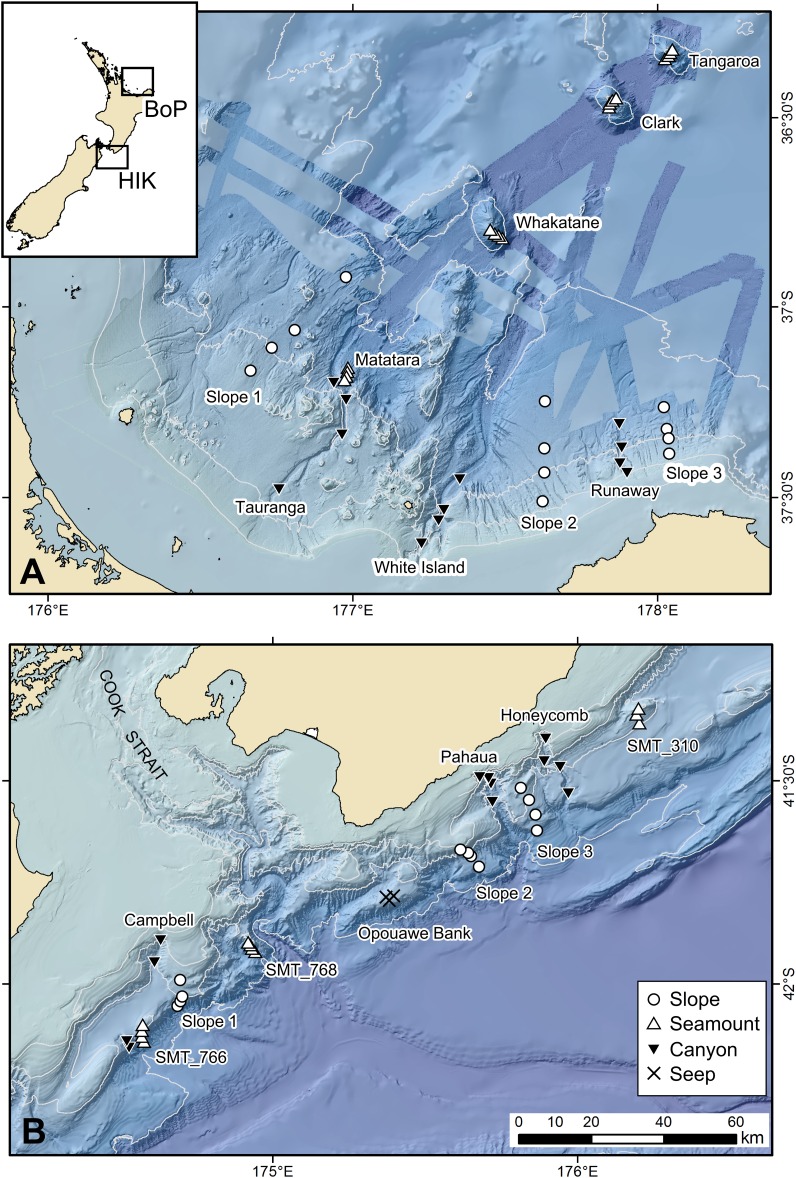
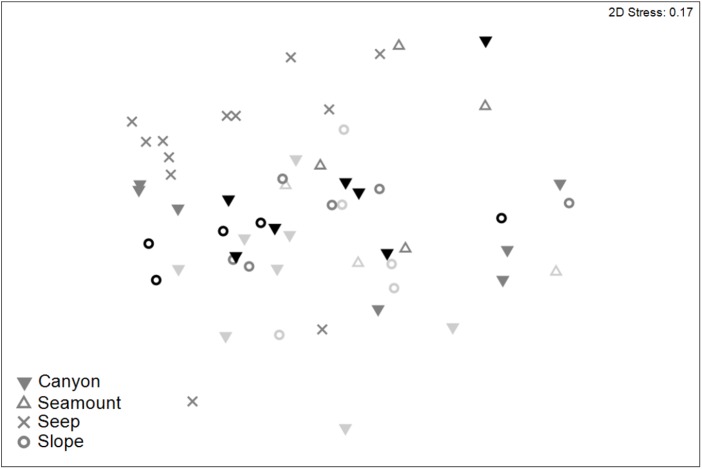
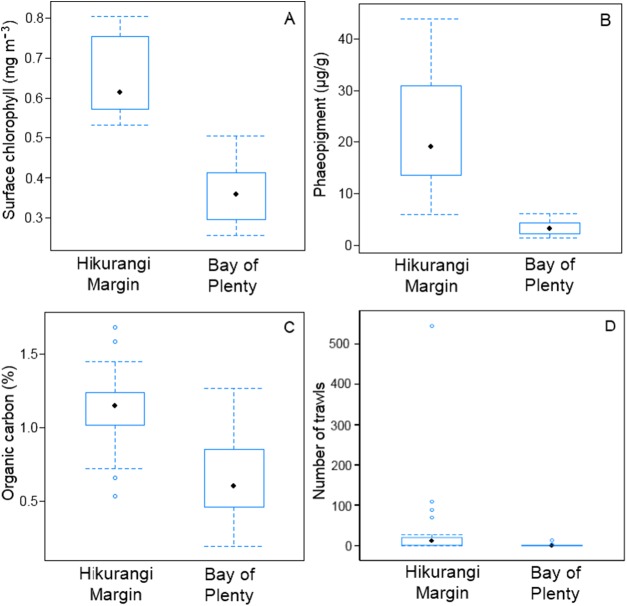
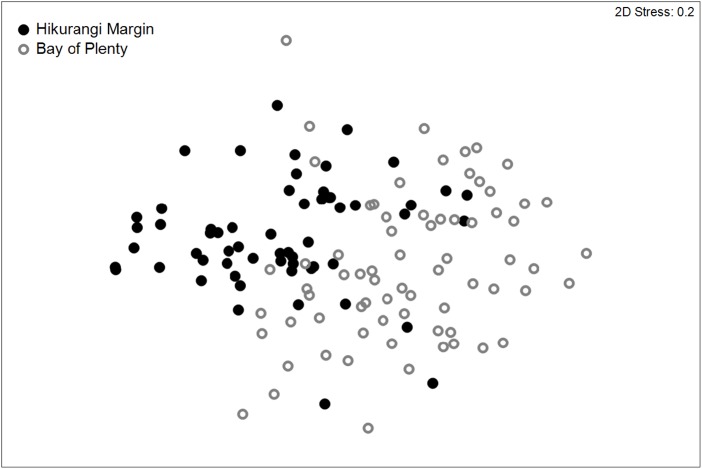
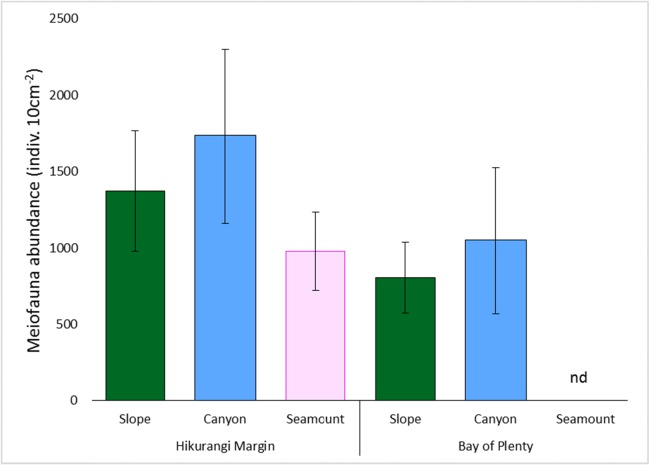
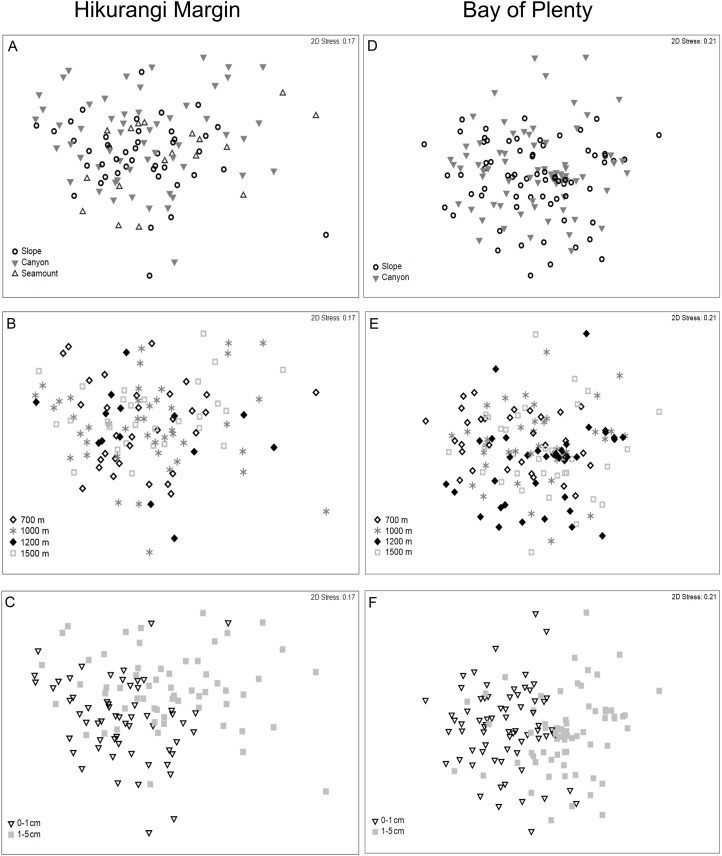
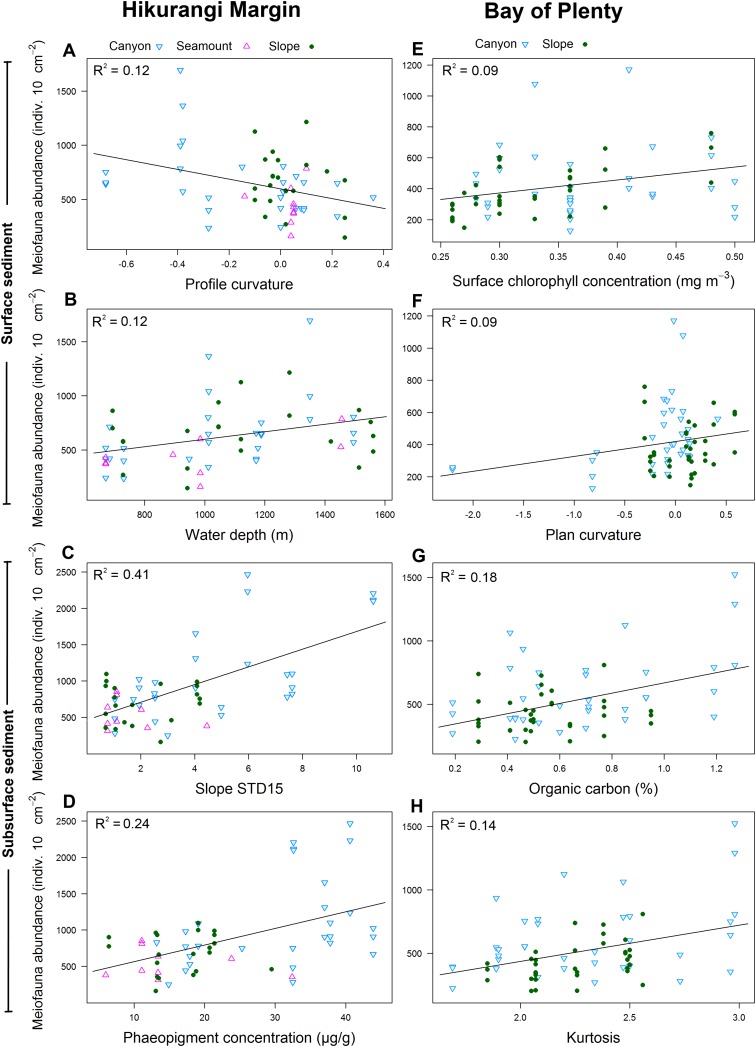
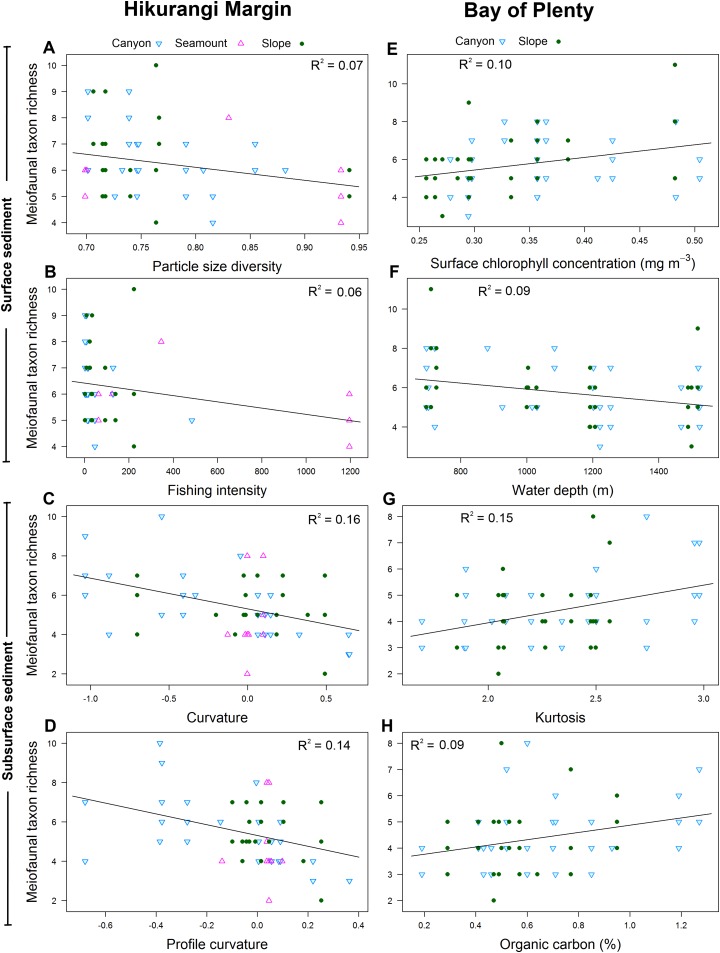
Studies of deep-sea benthic communities have largely focused on particular (macro) habitats in isolation, with few studies considering multiple habitats simultaneously in a comparable manner. Compared to mega-epifauna and macrofauna, much less is known about habitat-related variation in meiofaunal community attributes (abundance, diversity and community structure). Here, we investigated meiofaunal community attributes in slope, canyon, seamount, and seep habitats in two regions on the continental slope of New Zealand (Hikurangi Margin and Bay of Plenty) at four water depths (700, 1,000, 1,200 and 1,500 m). We found that patterns were not the same for each community attribute. Significant differences in abundance were consistent across regions, habitats, water and sediment depths, while diversity and community structure only differed between sediment depths. Abundance was higher in canyon and seep habitats compared with other habitats, while between sediment layer, abundance and diversity were higher at the sediment surface. Our findings suggest that meiofaunal community attributes are affected by environmental factors that operate on micro- (cm) to meso- (0.1-10 km), and regional scales (> 100 km). We also found a weak, but significant, correlation between trawling intensity and surface sediment diversity. Overall, our results indicate that variability in meiofaunal communities was greater at small scale than at habitat or regional scale. These findings provide new insights into the factors controlling meiofauna in these deep-sea habitats and their potential vulnerability to anthropogenic activities.
对深海底栖生物群落的研究主要集中在特定的(宏观)栖息地,很少有研究以可比较的方式同时考虑多个栖息地。与大型底栖动物和大型动物相比,关于小型底栖动物群落属性(丰度、多样性和群落结构)与栖息地相关的变化了解得要少得多。在这里,我们调查了新西兰大陆坡两个区域(希库朗伊边缘和普伦蒂湾)四个水深(700米、1000米、1200米和1500米)的斜坡、峡谷、海山和渗漏栖息地中的小型底栖动物群落属性。我们发现每个群落属性的模式并不相同。丰度的显著差异在不同区域、栖息地、水层和沉积物深度之间是一致的,而多样性和群落结构仅在沉积物深度之间有所不同。峡谷和渗漏栖息地的丰度高于其他栖息地,而在沉积物层之间,沉积物表面的丰度和多样性更高。我们的研究结果表明,小型底栖动物群落属性受到在微观(厘米)到中观(0.1 - 10千米)以及区域尺度(> 100千米)上起作用的环境因素的影响。我们还发现拖网强度与表层沉积物多样性之间存在微弱但显著的相关性。总体而言,我们的结果表明,小型底栖动物群落的变异性在小尺度上比在栖息地或区域尺度上更大。这些发现为控制这些深海栖息地中小型底栖动物的因素及其对人为活动的潜在脆弱性提供了新的见解。