Corbo Claudia, Molinaro Roberto, Taraballi Francesca, Toledano Furman Naama E, Sherman Michael B, Parodi Alessandro, Salvatore Francesco, Tasciotti Ennio
Center for Biomimetic Medicine, Houston Methodist Research Institute, Houston, TX, USA; CEINGE-Biotecnologie Avanzate s.c.a r.l., Naples, Italy.
Center for Biomimetic Medicine, Houston Methodist Research Institute, Houston, TX, USA.
Int J Nanomedicine. 2016 Jul 4;11:3049-63. doi: 10.2147/IJN.S109059. eCollection 2016.
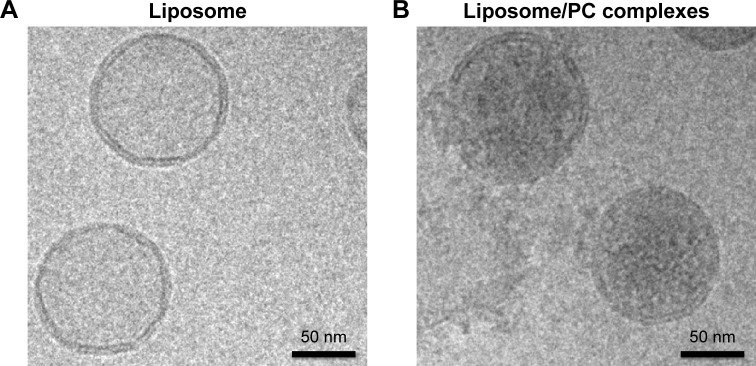
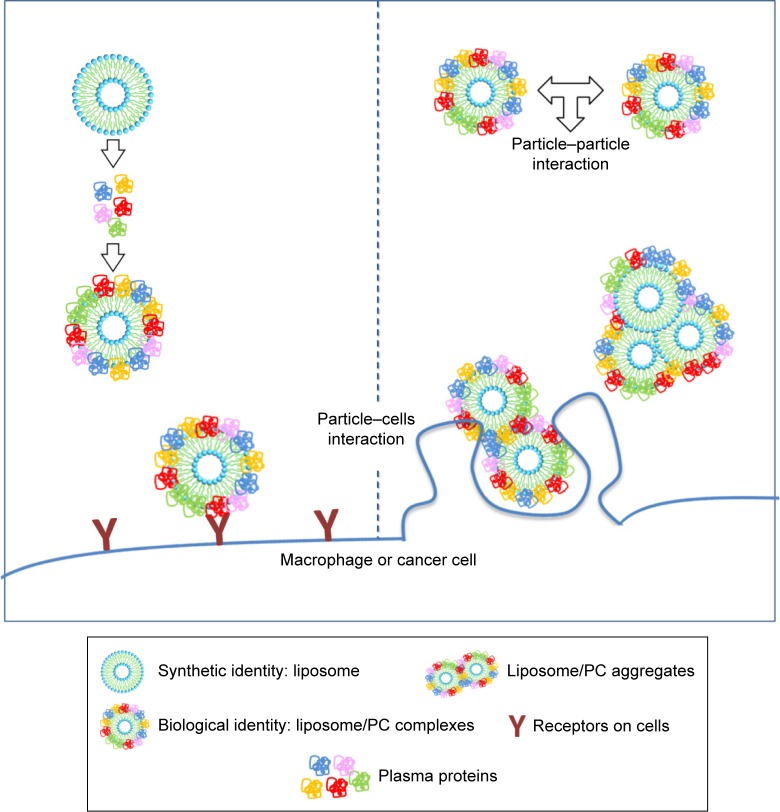
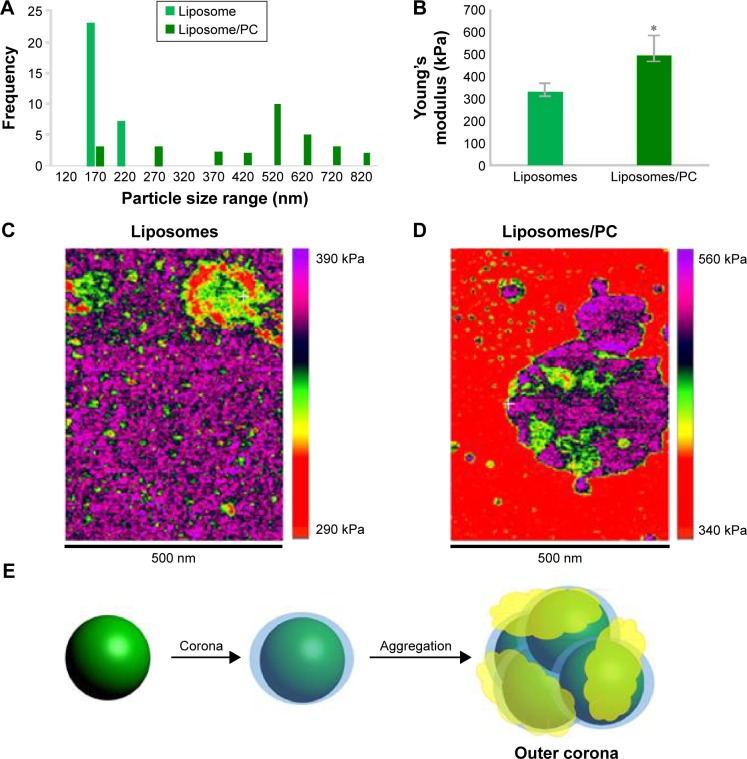
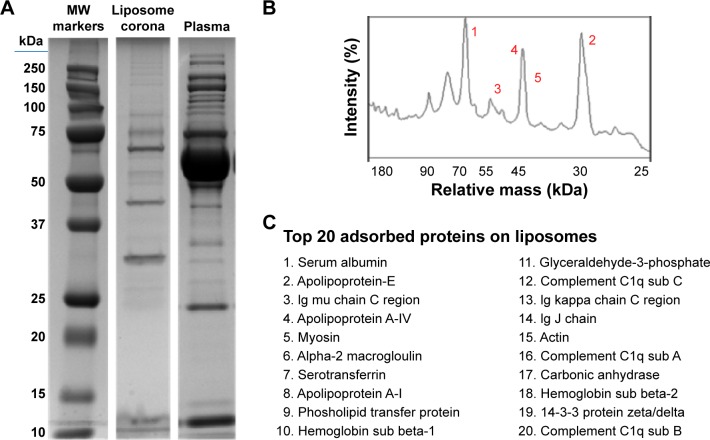
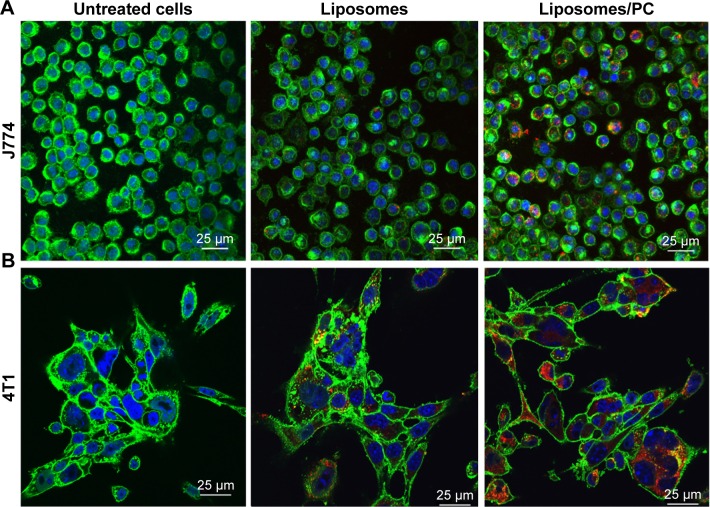
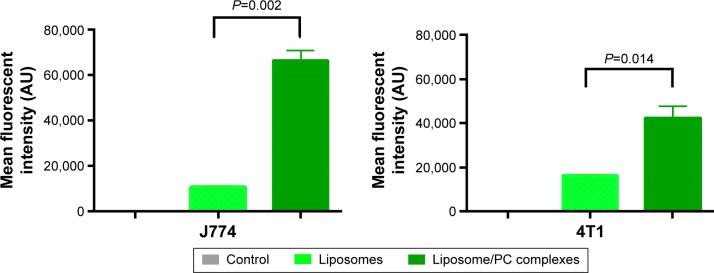
A thorough understanding of interactions occurring at the interface between nanocarriers and biological systems is crucial to predict and interpret their biodistribution, targeting, and efficacy, and thus design more effective drug delivery systems. Upon intravenous injection, nanoparticles are coated by a protein corona (PC). This confers a new biological identity on the particles that largely determines their biological fate. Liposomes have great pharmaceutical versatility, so, as proof of concept, their PC has recently been implicated in the mechanism and efficiency of their internalization into the cell. In an attempt to better understand the interactions between nanocarriers and biological systems, we analyzed the plasma proteins adsorbed on the surface of multicomponent liposomes. Specifically, we analyzed the physical properties and ultrastructure of liposome/PC complexes and the aggregation process that occurs when liposomes are dispersed in plasma. The results of combined confocal microscopy and flow cytometry experiments demonstrated that the PC favors liposome internalization by both macrophages and tumor cells. This work provides insights into the effects of the PC on liposomes' physical properties and, consequently, liposome-liposome and liposome-cell interactions.
深入了解纳米载体与生物系统界面处发生的相互作用对于预测和解释其生物分布、靶向性和疗效至关重要,从而有助于设计更有效的药物递送系统。静脉注射后,纳米颗粒会被蛋白冠(PC)包裹。这赋予了颗粒一种新的生物学特性,很大程度上决定了它们的生物学命运。脂质体具有很强的药物通用性,因此,作为概念验证,其蛋白冠最近被认为与细胞内化机制和效率有关。为了更好地理解纳米载体与生物系统之间的相互作用,我们分析了吸附在多组分脂质体表面的血浆蛋白。具体而言,我们分析了脂质体/蛋白冠复合物的物理性质和超微结构,以及脂质体分散在血浆中时发生的聚集过程。共聚焦显微镜和流式细胞术联合实验结果表明,蛋白冠有利于巨噬细胞和肿瘤细胞对脂质体的内化。这项工作为蛋白冠对脂质体物理性质的影响以及脂质体-脂质体和脂质体-细胞相互作用提供了见解。