Di Rienzo Franck, Debarnot Ursula, Daligault Sébastien, Saruco Elodie, Delpuech Claude, Doyon Julien, Collet Christian, Guillot Aymeric
Laboratoire Interuniversitaire de Biologie de la Motricité, Université de Lyon, Université Claude Bernard Lyon 1 Villeurbanne, France.
Laboratoire Interuniversitaire de Biologie de la Motricité, Université de Lyon, Université Claude Bernard Lyon 1Villeurbanne, France; Laboratoire de Neurologie et d'Imagerie Cognitive, Université de GenèveGeneva, Switzerland.
Front Hum Neurosci. 2016 Jun 28;10:315. doi: 10.3389/fnhum.2016.00315. eCollection 2016.
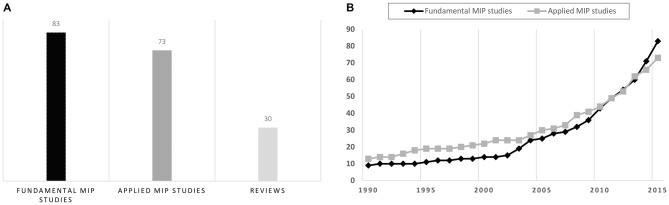
There is now compelling evidence that motor imagery (MI) promotes motor learning. While MI has been shown to influence the early stages of the learning process, recent data revealed that sleep also contributes to the consolidation of the memory trace. How such "online" and "offline" processes take place and how they interact to impact the neural underpinnings of movements has received little attention. The aim of the present review is twofold: (i) providing an overview of recent applied and fundamental studies investigating the effects of MI practice (MIP) on motor learning; and (ii) detangling applied and fundamental findings in support of a sleep contribution to motor consolidation after MIP. We conclude with an integrative approach of online and offline learning resulting from intense MIP in healthy participants, and underline research avenues in the motor learning/clinical domains.
目前有确凿证据表明运动想象(MI)能促进运动学习。虽然运动想象已被证明会影响学习过程的早期阶段,但最近的数据显示,睡眠也有助于记忆痕迹的巩固。这种“在线”和“离线”过程是如何发生的,以及它们如何相互作用以影响运动的神经基础,目前很少受到关注。本综述的目的有两个:(i)概述最近关于运动想象练习(MIP)对运动学习影响的应用研究和基础研究;(ii)梳理支持睡眠对MIP后运动巩固有贡献的应用研究和基础研究结果。我们以健康参与者高强度MIP产生的在线和离线学习的综合方法作为结论,并强调运动学习/临床领域的研究方向。