Tan Hui-Li, Chan Kok-Gan, Pusparajah Priyia, Saokaew Surasak, Duangjai Acharaporn, Lee Learn-Han, Goh Bey-Hing
Novel Bacteria and Drug Discovery Research Group, School of Pharmacy, Monash University MalaysiaBandar Sunway, Malaysia; Biomedical Research Laboratory, Jeffrey Cheah School of Medicine and Health Sciences, Monash University MalaysiaBandar Sunway, Malaysia.
Division of Genetic and Molecular Biology, Faculty of Science, Institute of Biological Sciences, University of Malaya Kuala Lumpur, Malaysia.
Front Pharmacol. 2016 Jun 29;7:191. doi: 10.3389/fphar.2016.00191. eCollection 2016.
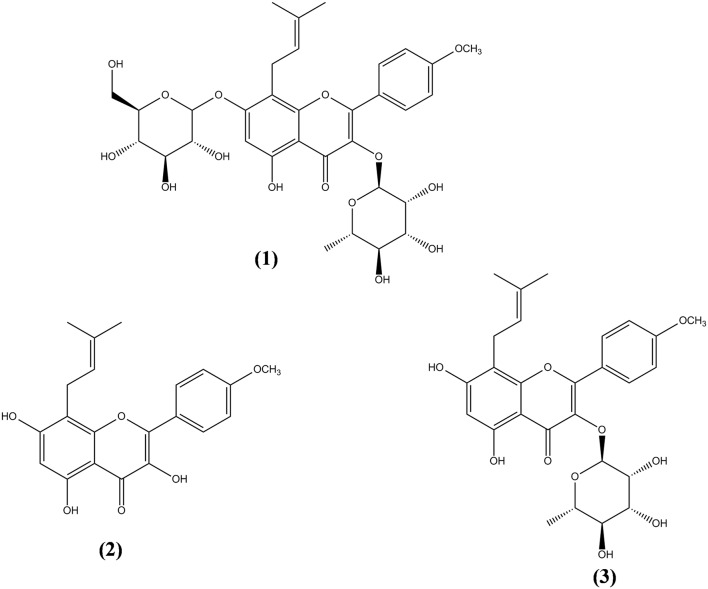
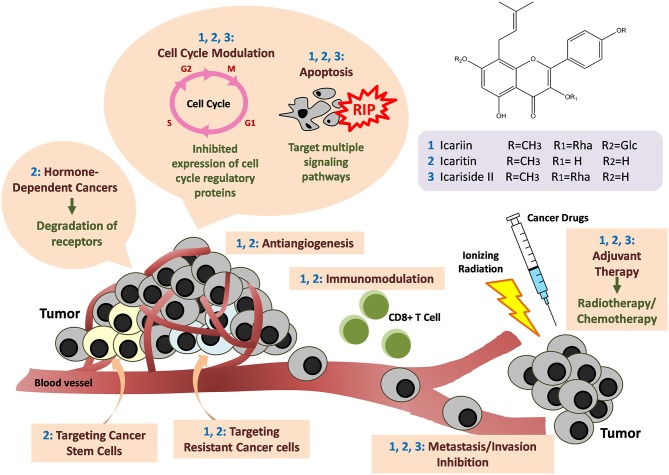
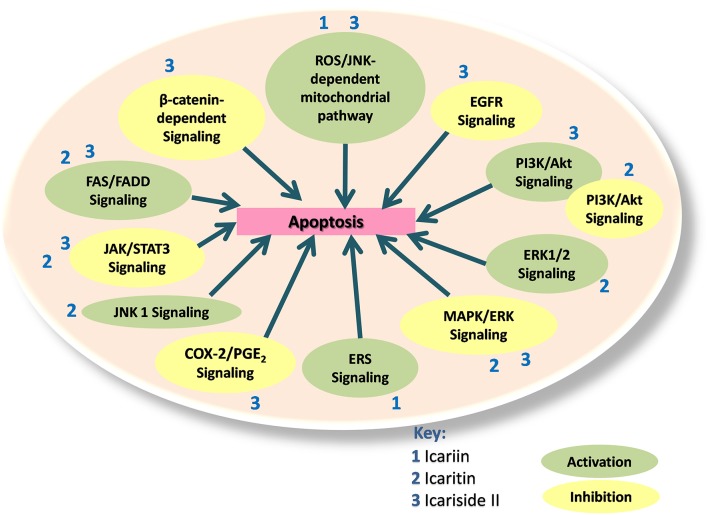
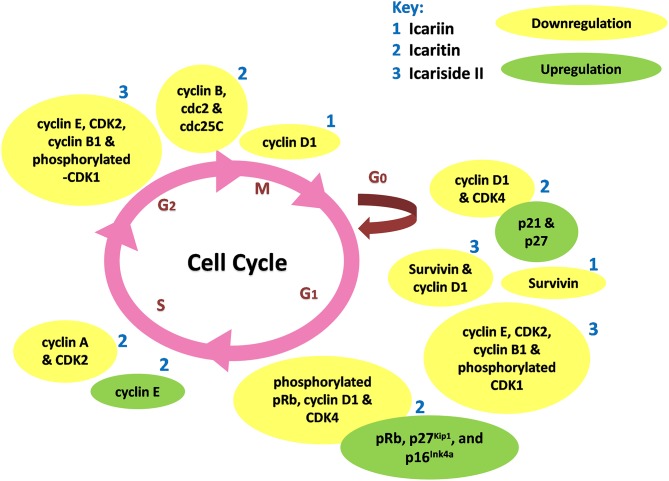
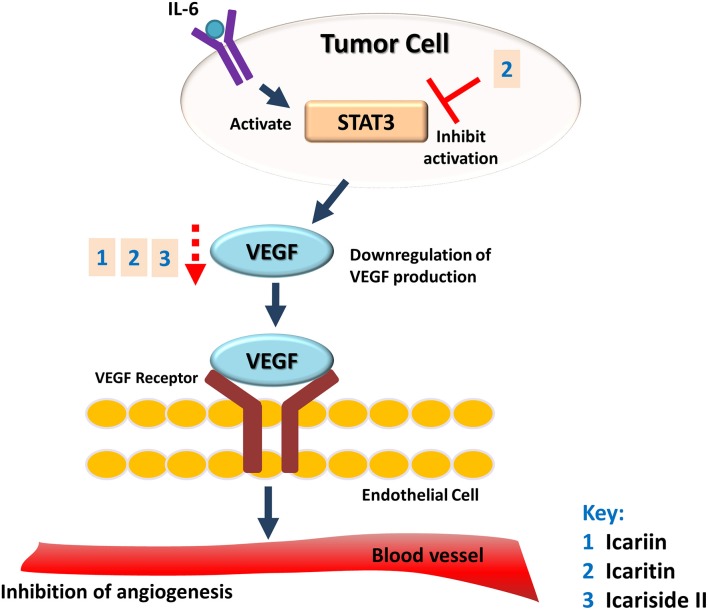
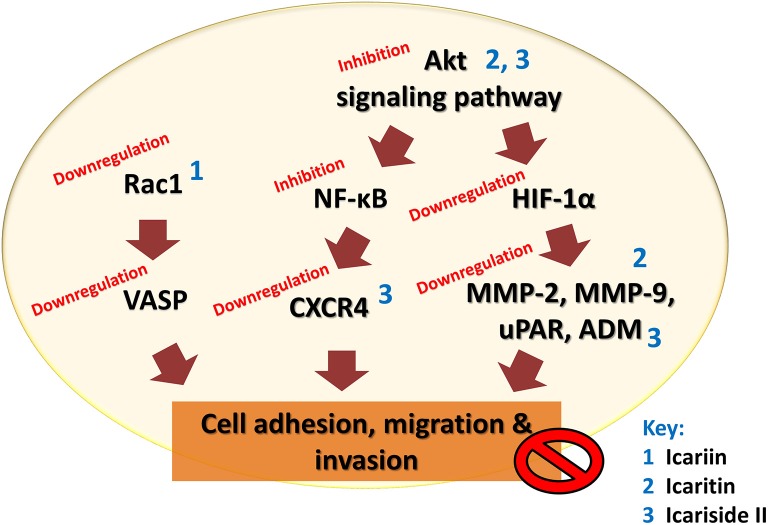
Epimedium (family Berberidaceae), commonly known as Horny Goat Weed or Yin Yang Huo, is commonly used as a tonic, aphrodisiac, anti-rheumatic and anti-cancer agent in traditional herbal formulations in Asian countries such as China, Japan, and Korea. The major bioactive compounds present within this plant include icariin, icaritin and icariside II. Although it is best known for its aphrodisiac properties, scientific and pharmacological studies suggest it possesses broad therapeutic capabilities, especially for enhancing reproductive function and osteoprotective, neuroprotective, cardioprotective, anti-inflammatory and immunoprotective effects. In recent years, there has been great interest in scientific investigation of the purported anti-cancer properties of icariin and its derivatives. Data from in vitro and in vivo studies suggests these compounds demonstrate anti-cancer activity against a wide range of cancer cells which occurs through various mechanisms such as apoptosis, cell cycle modulation, anti-angiogenesis, anti-metastasis and immunomodulation. Of note, they are efficient at targeting cancer stem cells and drug-resistant cancer cells. These are highly desirable properties to be emulated in the development of novel anti-cancer drugs in combatting the emergence of drug resistance and overcoming the limited efficacy of current standard treatment. This review aims to summarize the anti-cancer mechanisms of icariin and its derivatives with reference to the published literature. The currently utilized applications of icariin and its derivatives in cancer treatment are explored with reference to existing patents. Based on the data compiled, icariin and its derivatives are shown to be compounds with tremendous potential for the development of new anti-cancer drugs.
淫羊藿(小檗科),俗称淫羊藿或阴阳火,在中国、日本和韩国等亚洲国家的传统草药配方中,通常用作滋补剂、壮阳剂、抗风湿剂和抗癌剂。该植物中存在的主要生物活性化合物包括淫羊藿苷、淫羊藿素和淫羊藿次苷II。尽管它最出名的是其壮阳特性,但科学和药理学研究表明它具有广泛的治疗能力,特别是在增强生殖功能以及骨保护、神经保护、心脏保护、抗炎和免疫保护作用方面。近年来,人们对淫羊藿苷及其衍生物所谓的抗癌特性进行科学研究产生了浓厚兴趣。体外和体内研究数据表明,这些化合物对多种癌细胞具有抗癌活性,其作用机制包括凋亡、细胞周期调节、抗血管生成、抗转移和免疫调节等。值得注意的是,它们在靶向癌症干细胞和耐药癌细胞方面很有效。在开发新型抗癌药物以对抗耐药性的出现和克服当前标准治疗有限疗效方面,这些都是非常理想的特性。本综述旨在参考已发表的文献,总结淫羊藿苷及其衍生物的抗癌机制。参考现有专利,探讨淫羊藿苷及其衍生物目前在癌症治疗中的应用。根据汇编的数据,淫羊藿苷及其衍生物显示出具有开发新型抗癌药物的巨大潜力。