Marshall Najja, Timme Nicholas M, Bennett Nicholas, Ripp Monica, Lautzenhiser Edward, Beggs John M
Department of Neuroscience, Columbia University New York, NY, USA.
Department of Psychology, Indiana University - Purdue University Indianapolis Indianapolis, IN, USA.
Front Physiol. 2016 Jun 27;7:250. doi: 10.3389/fphys.2016.00250. eCollection 2016.
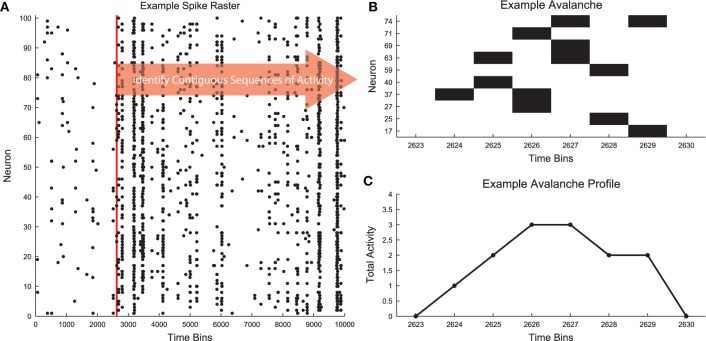
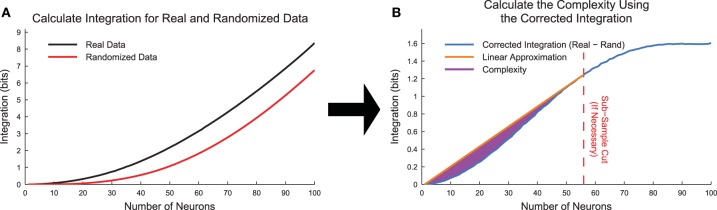
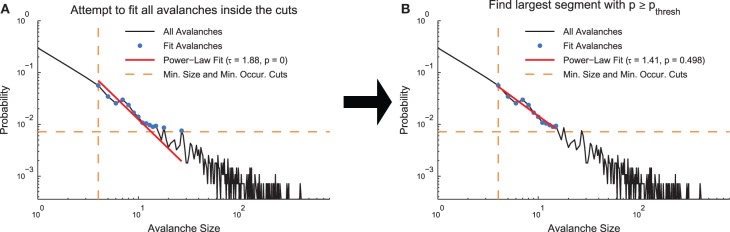
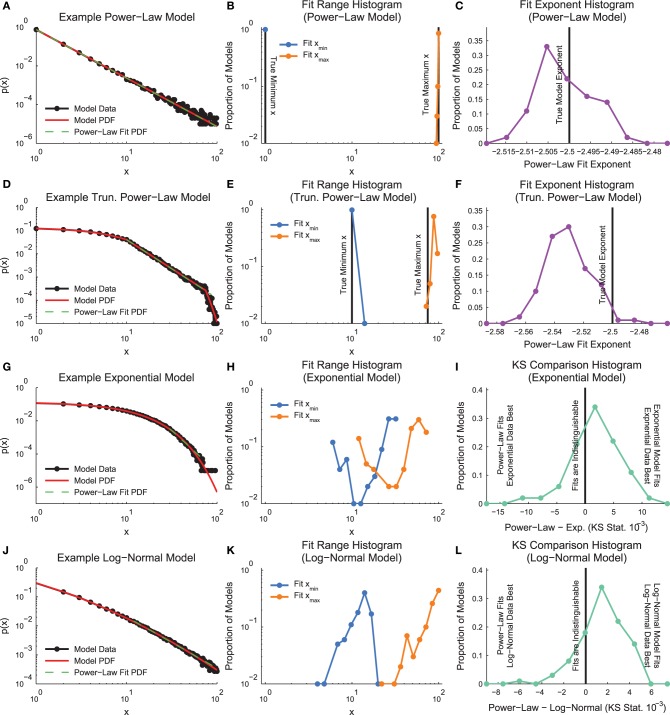
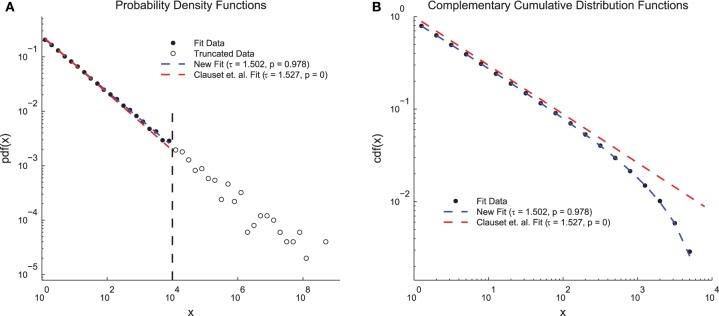
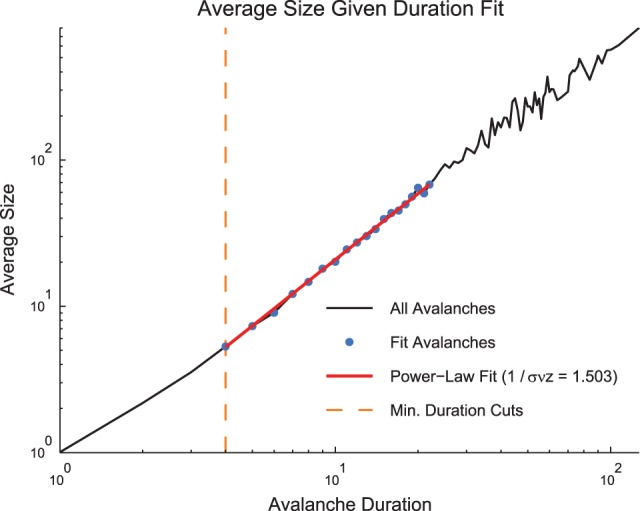
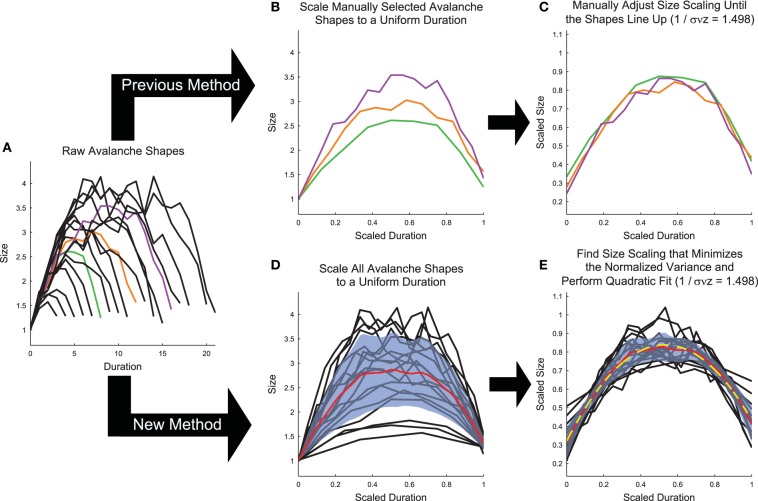
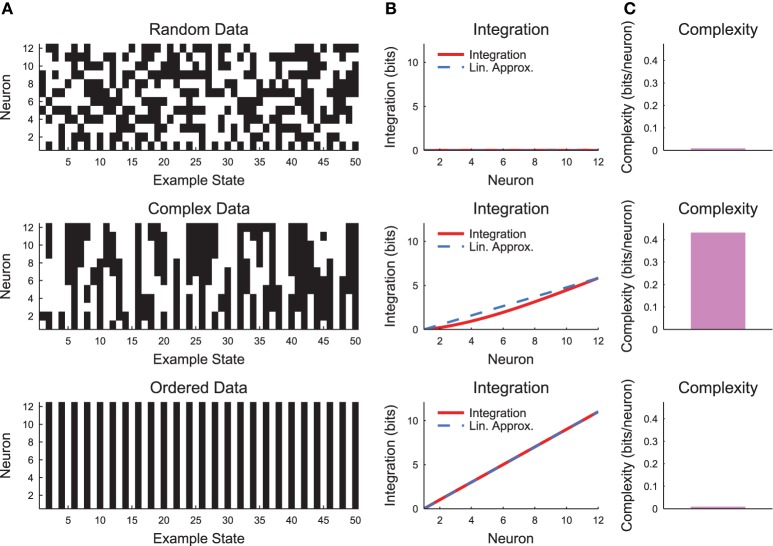
Neural systems include interactions that occur across many scales. Two divergent methods for characterizing such interactions have drawn on the physical analysis of critical phenomena and the mathematical study of information. Inferring criticality in neural systems has traditionally rested on fitting power laws to the property distributions of "neural avalanches" (contiguous bursts of activity), but the fractal nature of avalanche shapes has recently emerged as another signature of criticality. On the other hand, neural complexity, an information theoretic measure, has been used to capture the interplay between the functional localization of brain regions and their integration for higher cognitive functions. Unfortunately, treatments of all three methods-power-law fitting, avalanche shape collapse, and neural complexity-have suffered from shortcomings. Empirical data often contain biases that introduce deviations from true power law in the tail and head of the distribution, but deviations in the tail have often been unconsidered; avalanche shape collapse has required manual parameter tuning; and the estimation of neural complexity has relied on small data sets or statistical assumptions for the sake of computational efficiency. In this paper we present technical advancements in the analysis of criticality and complexity in neural systems. We use maximum-likelihood estimation to automatically fit power laws with left and right cutoffs, present the first automated shape collapse algorithm, and describe new techniques to account for large numbers of neural variables and small data sets in the calculation of neural complexity. In order to facilitate future research in criticality and complexity, we have made the software utilized in this analysis freely available online in the MATLAB NCC (Neural Complexity and Criticality) Toolbox.
神经系统包括在多个尺度上发生的相互作用。用于表征此类相互作用的两种不同方法分别借鉴了临界现象的物理分析和信息的数学研究。传统上,推断神经系统中的临界性依赖于将幂律拟合到“神经雪崩”(连续的活动爆发)的属性分布上,但最近雪崩形状的分形性质已成为临界性的另一个标志。另一方面,神经复杂性是一种信息论度量,已被用于捕捉脑区功能定位与其在更高认知功能中的整合之间的相互作用。不幸的是,这三种方法——幂律拟合、雪崩形状坍缩和神经复杂性——的处理都存在缺陷。经验数据往往包含偏差,这些偏差会在分布的尾部和头部引入与真实幂律的偏离,但尾部的偏差常常被忽视;雪崩形状坍缩需要手动调整参数;并且为了计算效率,神经复杂性的估计依赖于小数据集或统计假设。在本文中,我们展示了神经系统临界性和复杂性分析方面的技术进步。我们使用最大似然估计来自动拟合带有左右截断的幂律,提出了首个自动形状坍缩算法,并描述了在神经复杂性计算中考虑大量神经变量和小数据集的新技术。为了促进未来在临界性和复杂性方面的研究,我们已将本分析中使用的软件在MATLAB NCC(神经复杂性与临界性)工具箱中免费在线提供。