Bachmann Katharina, Lam Alexandra P, Philipsen Alexandra
School of Medicine & Health Sciences, University of Oldenburg , Oldenburg , Germany.
School of Medicine & Health Sciences, University of Oldenburg, Oldenburg, Germany; Psychiatry and Psychotherapy, University Hospital, Karl-Jaspers-Klinik, Bad Zwischenahn, Germany.
Front Psychiatry. 2016 Jun 27;7:117. doi: 10.3389/fpsyt.2016.00117. eCollection 2016.
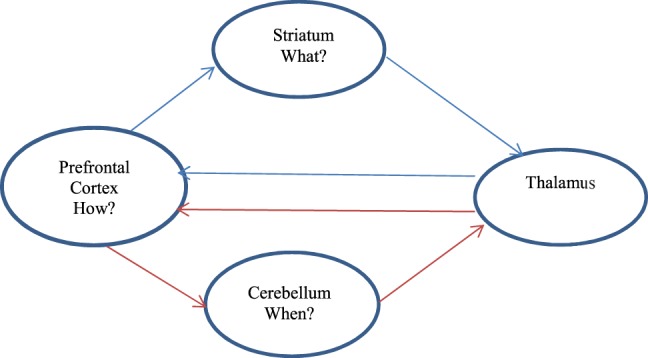
Attention-deficit/hyperactivity disorder (ADHD) is a recognized serious mental disorder that often persists into adulthood. The symptoms and impairments associated with ADHD often cause significant mental suffering in affected individuals. ADHD has been associated with abnormal neuronal activity in various neuronal circuits, such as the dorsofrontostriatal, orbitofrontostriatal, and frontocerebellar circuits. Psychopharmacological treatment with methylphenidate hydrochloride is recommended as the first-line treatment for ADHD. It is assumed that medication ameliorates ADHD symptoms by improving the functioning of the brain areas affected in the condition. However, side effects, contraindications, or non-response can limit the effectiveness of a psychopharmacological treatment for ADHD. It is therefore necessary to develop non-pharmacological interventions that target neuronal mechanisms associated with the condition in the same way as pharmacological treatment. We think that mindfulness meditation employed as a neuropsychotherapeutic intervention could help patients with ADHD to regulate impaired brain functioning and thereby reduce ADHD symptoms. In this paper, we highlight the mechanisms of such mindfulness meditation, and thus provide a rationale for further research and treatment development from a neuropsychotherapeutic perspective. We conclude that mindfulness meditation employed as a neuropsychotherapeutic intervention in therapy is a promising treatment approach in ADHD.
注意力缺陷多动障碍(ADHD)是一种公认的严重精神障碍,常常持续至成年期。与ADHD相关的症状和损害往往给受影响个体带来巨大的精神痛苦。ADHD与多种神经回路中的异常神经元活动有关,如背侧前额叶纹状体、眶额纹状体和额叶小脑回路。推荐使用盐酸哌甲酯进行心理药物治疗作为ADHD的一线治疗方法。据推测,药物通过改善该病所影响脑区的功能来缓解ADHD症状。然而,副作用、禁忌症或无反应可能会限制ADHD心理药物治疗的有效性。因此,有必要开发与药物治疗同样针对与该病相关神经机制的非药物干预措施。我们认为,将正念冥想用作一种神经心理治疗干预手段,可能有助于ADHD患者调节受损的脑功能,从而减轻ADHD症状。在本文中,我们着重介绍这种正念冥想的机制,从而从神经心理治疗角度为进一步研究和治疗发展提供理论依据。我们得出结论,在治疗中使用正念冥想作为一种神经心理治疗干预手段,在ADHD治疗中是一种很有前景的治疗方法。