Vargas Valeria, Moreno-García Miguel, Duarte-Elguea Erika, Lanz-Mendoza Humberto
Centro de Investigaciones Sobre Enfermedades Infecciosas, Instituto Nacional de Salud PúblicaCuernavaca, Mexico; Posgrado de Ciencias Biológicas, Universidad Nacional Autónoma de MéxicoMexico City, Mexico.
Centro de Investigaciones Sobre Enfermedades Infecciosas, Instituto Nacional de Salud PúblicaCuernavaca, Mexico; Department of Microbiology, Immunology and Pathology, Colorado State UniversityFort Collins, CO, USA.
Front Microbiol. 2016 Jun 22;7:975. doi: 10.3389/fmicb.2016.00975. eCollection 2016.
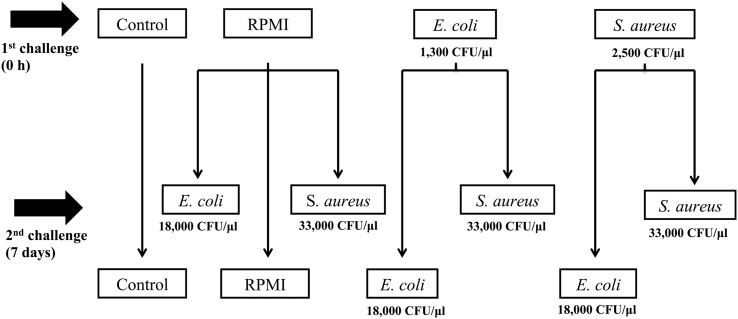
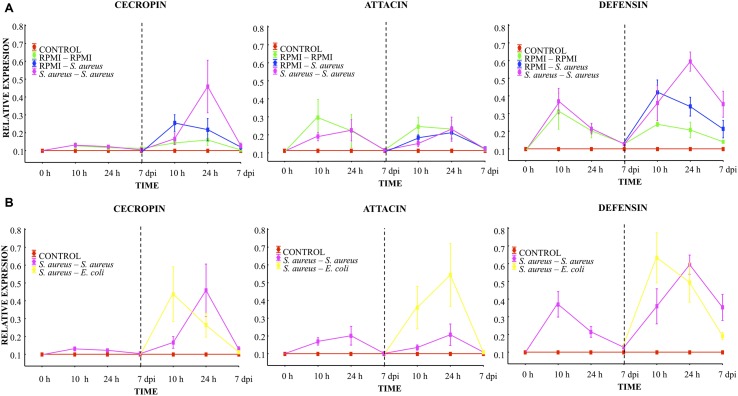
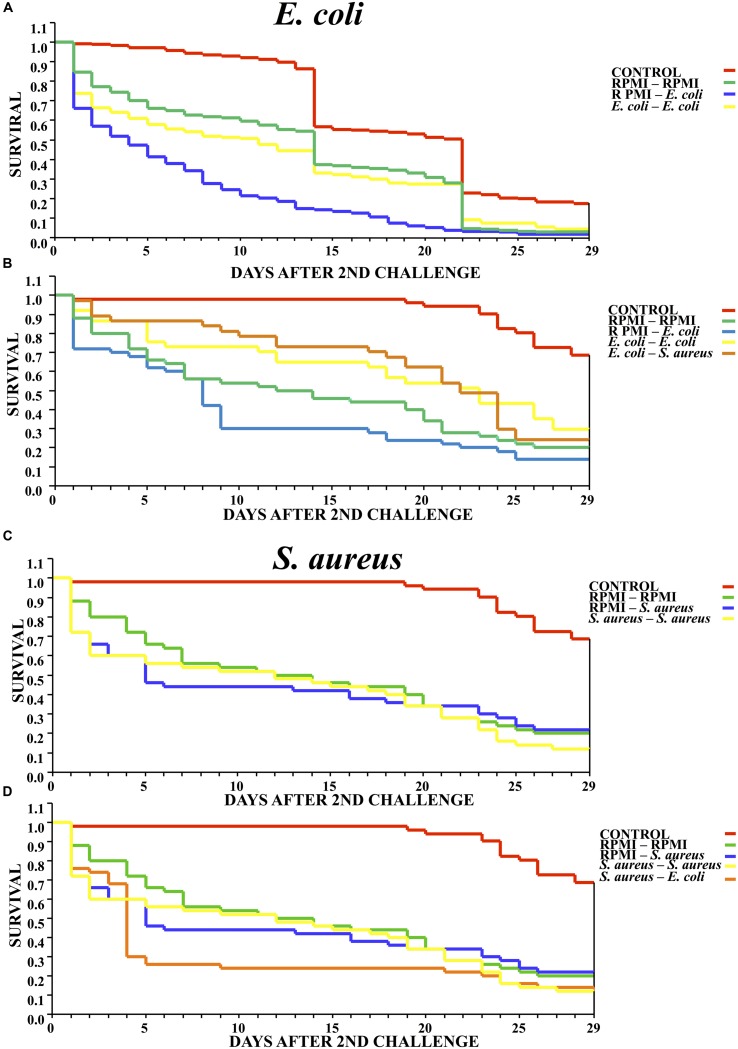
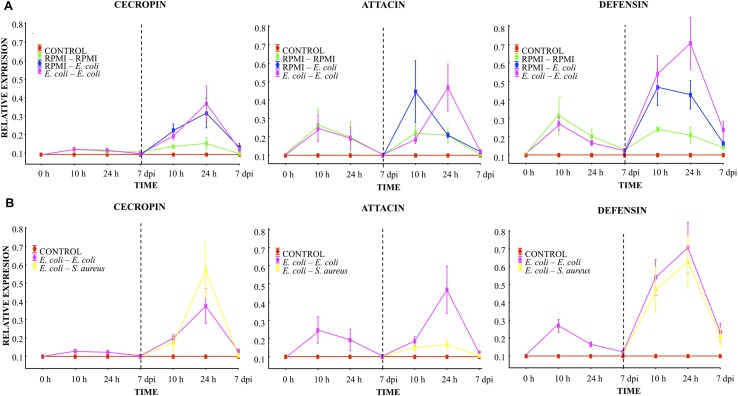
Injury and infection priming has been observed in several insect groups, reported as host immune protection against contact with a pathogen caused by a previous infection with the same. However, the specific response against a pathogen has not been demonstrated in all insect species. Investigating the specific priming response in insects is important because their immune strategies probably reflect particular selective pressures exerted by different pathogens. Here, we determined whether previous infection of Aedes aegypti would enhance survival and/or lead to greater and specific AMP expression after a second exposure to the same or a distinct bacterium. Mosquitoes previously immunized with a low dose of Escherichia coli, but not Staphylococcus aureus, showed increased survival. Although the host protection herein demonstrated was not specific, each bacterium elicited differential AMP expression. These results can be explained by the susceptible-primed-infected (SPI) epidemiological model, which poses that in the evolution of memory-like responses (priming), a pivotal role is played by pathogen virulence, associated host damage, and the host capacity of pathogen recognition.
在几个昆虫群体中已观察到损伤和感染引发现象,据报道这是宿主针对因先前感染同一病原体而接触该病原体时的免疫保护。然而,并非所有昆虫物种都已证明对病原体有特异性反应。研究昆虫中的特异性引发反应很重要,因为它们的免疫策略可能反映了不同病原体施加的特定选择压力。在此,我们确定埃及伊蚊先前感染是否会在再次接触相同或不同细菌后提高存活率和/或导致更强且特异性的抗菌肽(AMP)表达。先前用低剂量大肠杆菌而非金黄色葡萄球菌免疫的蚊子存活率增加。尽管此处证明的宿主保护并非特异性的,但每种细菌引发了不同的抗菌肽表达。这些结果可以通过易感性引发感染(SPI)流行病学模型来解释,该模型认为在类似记忆反应(引发)的进化中,病原体毒力、相关的宿主损伤以及宿主对病原体的识别能力起着关键作用。