Dubuffet Aurore, Zanchi Caroline, Boutet Gwendoline, Moreau Jérôme, Teixeira Maria, Moret Yannick
Équipe Écologie Évolutive, UMR CNRS 6282 BioGéoSciences, Université Bourgogne-Franche Comté, Dijon, France.
PLoS Pathog. 2015 Oct 2;11(10):e1005178. doi: 10.1371/journal.ppat.1005178. eCollection 2015 Oct.
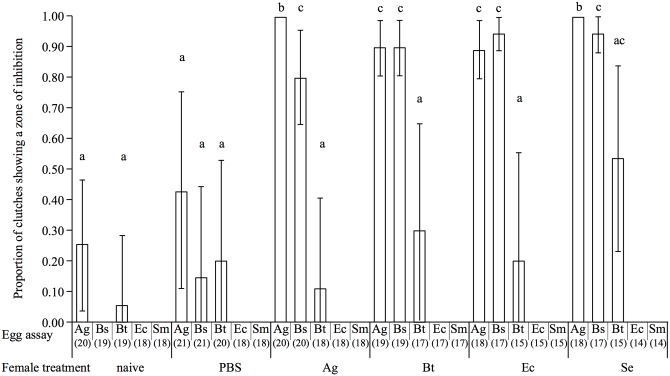
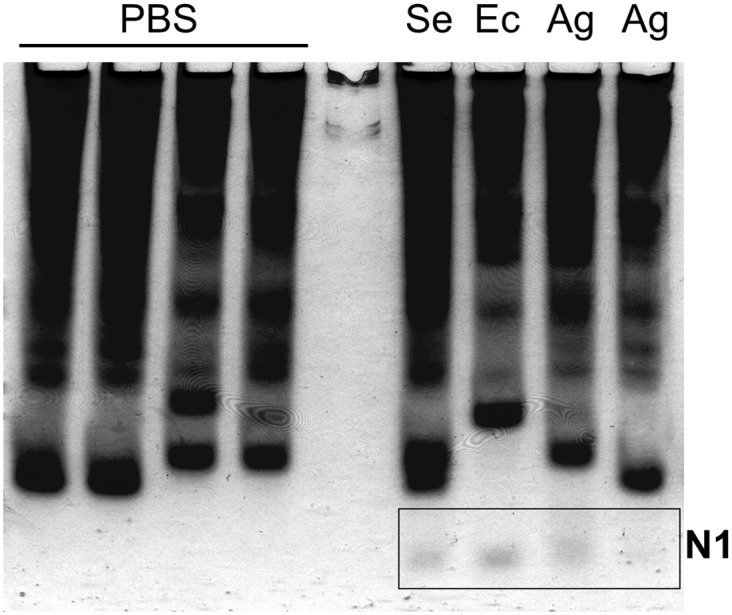
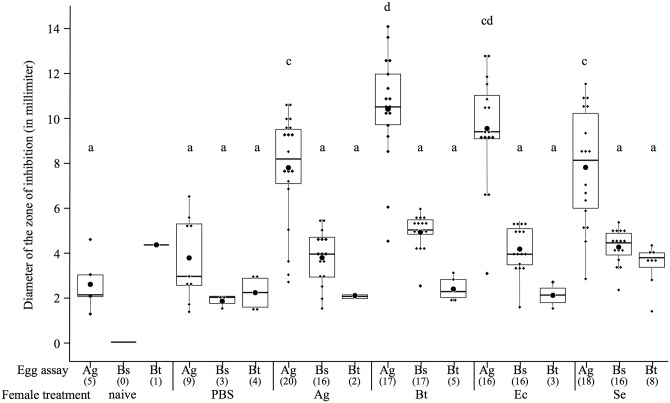
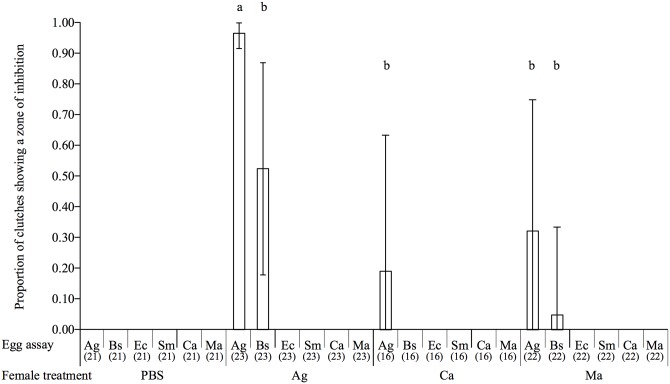
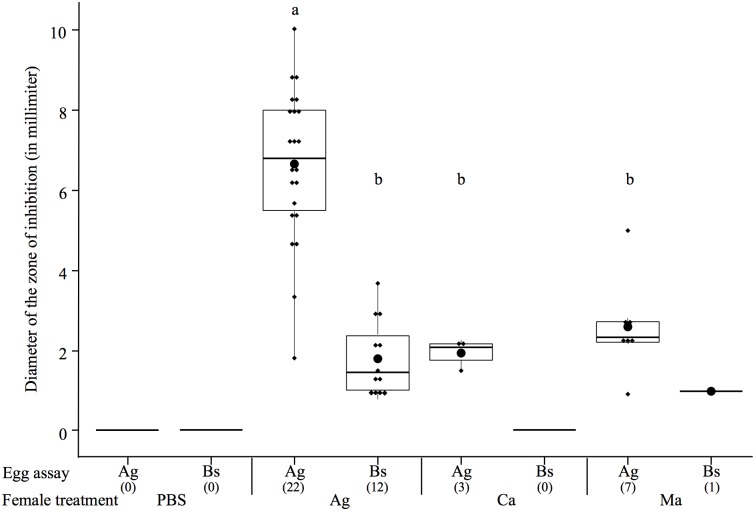
In many vertebrates and invertebrates, offspring whose mothers have been exposed to pathogens can exhibit increased levels of immune activity and/or increased survival to infection. Such phenomena, called "Trans-generational immune priming" (TGIP) are expected to provide immune protection to the offspring. As the offspring and their mother may share the same environment, and consequently similar microbial threats, we expect the immune molecules present in the progeny to be specific to the microbes that immune challenged the mother. We provide evidence in the mealworm beetle Tenebrio molitor that the antimicrobial activity found in the eggs is only active against Gram-positive bacteria, even when females were exposed to Gram-negative bacteria or fungi. Fungi were weak inducers of TGIP while we obtained similar levels of anti-Gram-positive activity using different bacteria for the maternal challenge. Furthermore, we have identified an antibacterial peptide from the defensin family, the tenecin 1, which spectrum of activity is exclusively directed toward Gram-positive bacteria as potential contributor to this antimicrobial activity. We conclude that maternal transfer of antimicrobial activity in the eggs of T. molitor might have evolved from persistent Gram-positive bacterial pathogens between insect generations.
在许多脊椎动物和无脊椎动物中,其母亲接触过病原体的后代可能会表现出免疫活性水平提高和/或对感染的存活率增加。这种被称为“跨代免疫致敏”(TGIP)的现象有望为后代提供免疫保护。由于后代与其母亲可能共享相同的环境,因此也会面临类似的微生物威胁,我们预计后代中存在的免疫分子会针对那些对母亲进行免疫挑战的微生物具有特异性。我们在黄粉虫(Tenebrio molitor)中提供了证据,即卵中发现的抗菌活性仅对革兰氏阳性菌有活性,即使雌性接触的是革兰氏阴性菌或真菌。真菌是TGIP的弱诱导剂,而我们使用不同细菌对母体进行挑战时,获得了相似水平的抗革兰氏阳性菌活性。此外,我们从防御素家族中鉴定出一种抗菌肽——黄粉虫抗菌肽1(tenecin 1),其活性谱专门针对革兰氏阳性菌,它可能是这种抗菌活性的潜在贡献者。我们得出结论,黄粉虫卵中抗菌活性的母体传递可能是在昆虫世代之间由持续存在的革兰氏阳性细菌病原体进化而来的。