HanumanthaRao Bindumadhava, Nair Ramakrishnan M, Nayyar Harsh
Plant Physiology, World Vegetable Center, South Asia Hyderabad, India.
Vegetable Breeding - Legumes, World Vegetable Center, South Asia Hyderabad, India.
Front Plant Sci. 2016 Jun 29;7:957. doi: 10.3389/fpls.2016.00957. eCollection 2016.
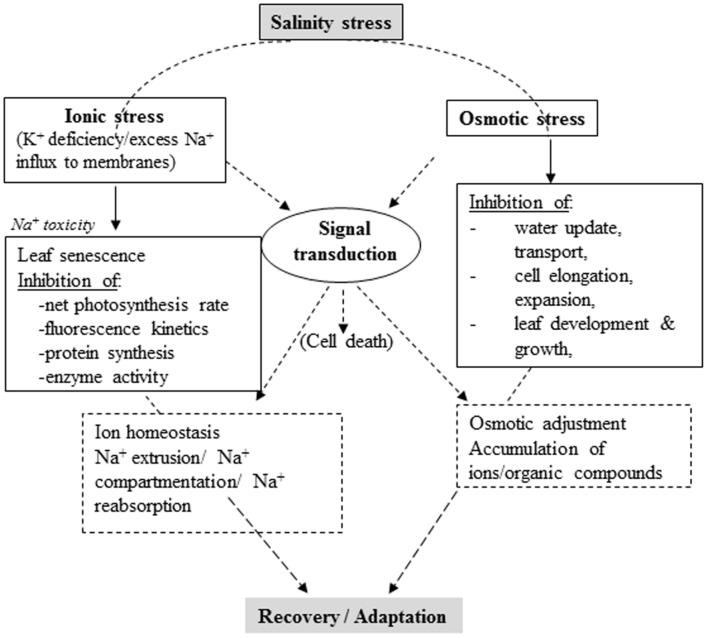
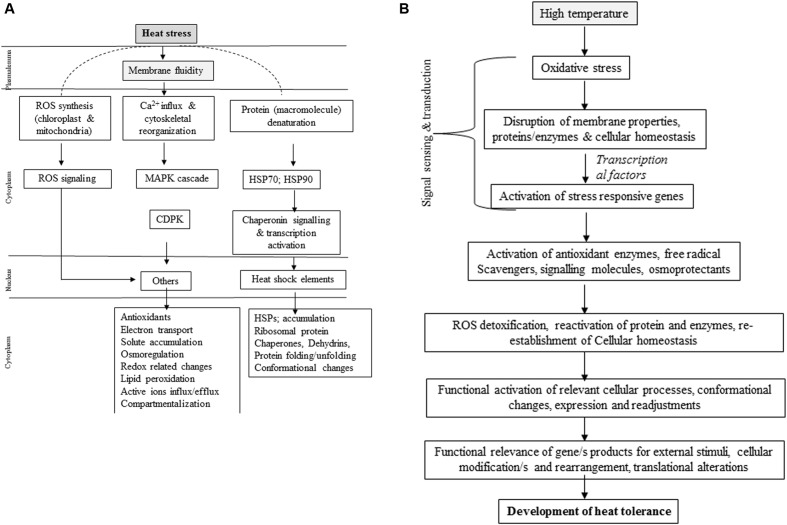
Biotic and abiotic constraints seriously affect the productivity of agriculture worldwide. The broadly recognized benefits of legumes in cropping systems-biological nitrogen fixation, improving soil fertility and broadening cereal-based agro-ecologies, are desirable now more than ever. Legume production is affected by hostile environments, especially soil salinity and high temperatures (HTs). Among legumes, mungbean has acceptable intrinsic tolerance mechanisms, but many agro-physiological characteristics of the Vigna species remain to be explored. Mungbean has a distinct advantage of being short-duration and can grow in wide range of soils and environments (as mono or relay legume). This review focuses on salinity and HT stresses on mungbean grown as a fallow crop (mungbean-rice-wheat to replace fallow-rice-wheat) and/or a relay crop in cereal cropping systems. Salinity tolerance comprises multifaceted responses at the molecular, physiological and plant canopy levels. In HTs, adaptation of physiological and biochemical processes gradually may lead to improvement of heat tolerance in plants. At the field level, managing or manipulating cultural practices can mitigate adverse effects of salinity and HT. Greater understanding of physiological and biochemical mechanisms regulating these two stresses will contribute to an evolving profile of the genes, proteins, and metabolites responsible for mungbean survival. We focus on abiotic stresses in legumes in general and mungbean in particular, and highlight gaps that need to be bridged through future mungbean research. Recent findings largely from physiological and biochemical fronts are examined, along with a few agronomic and farm-based management strategies to mitigate stress under field conditions.
生物和非生物胁迫严重影响着全球农业的生产力。豆类作物在种植系统中具有广泛认可的益处——生物固氮、改善土壤肥力以及拓宽以谷物为主的农业生态系统,如今这些益处比以往任何时候都更具吸引力。豆类生产受到恶劣环境的影响,尤其是土壤盐分和高温。在豆类中,绿豆具有可接受的内在耐受机制,但豇豆属物种的许多农业生理特性仍有待探索。绿豆具有生育期短的明显优势,并且能够在多种土壤和环境中生长(作为单作或间作豆类)。本综述聚焦于绿豆作为休闲作物(绿豆 - 水稻 - 小麦轮作以替代休闲 - 水稻 - 小麦轮作)和/或谷类作物种植系统中间作作物时所面临的盐分和高温胁迫。耐盐性包括分子、生理和植物冠层水平上的多方面反应。在高温条件下,生理和生化过程的适应性变化可能会逐渐提高植物的耐热性。在田间层面,管理或调整栽培措施可以减轻盐分和高温的不利影响。对调控这两种胁迫的生理和生化机制有更深入的了解,将有助于明确负责绿豆存活的基因、蛋白质和代谢产物的变化情况。我们总体关注豆类作物尤其是绿豆所面临的非生物胁迫,并强调需要通过未来的绿豆研究来填补的空白。本文审视了近期主要来自生理和生化领域的研究发现,以及一些在田间条件下减轻胁迫的农艺和基于农场的管理策略。