Liu Zanhua, Liu Jinjie, Wang Suping, Liu Sibo, Zhao Yongbo
Department of Neurology, Dalian Municipal Central Hospital Affiliated to Dalian Medical University, Dalian, Liaoning 11600, P.R. China.
No. 2 VIP Ward, Dalian Municipal Central Hospital Affiliated to Dalian Medical University, Dalian, Liaoning 11600, P.R. China.
Exp Ther Med. 2016 Aug;12(2):695-701. doi: 10.3892/etm.2016.3397. Epub 2016 May 26.
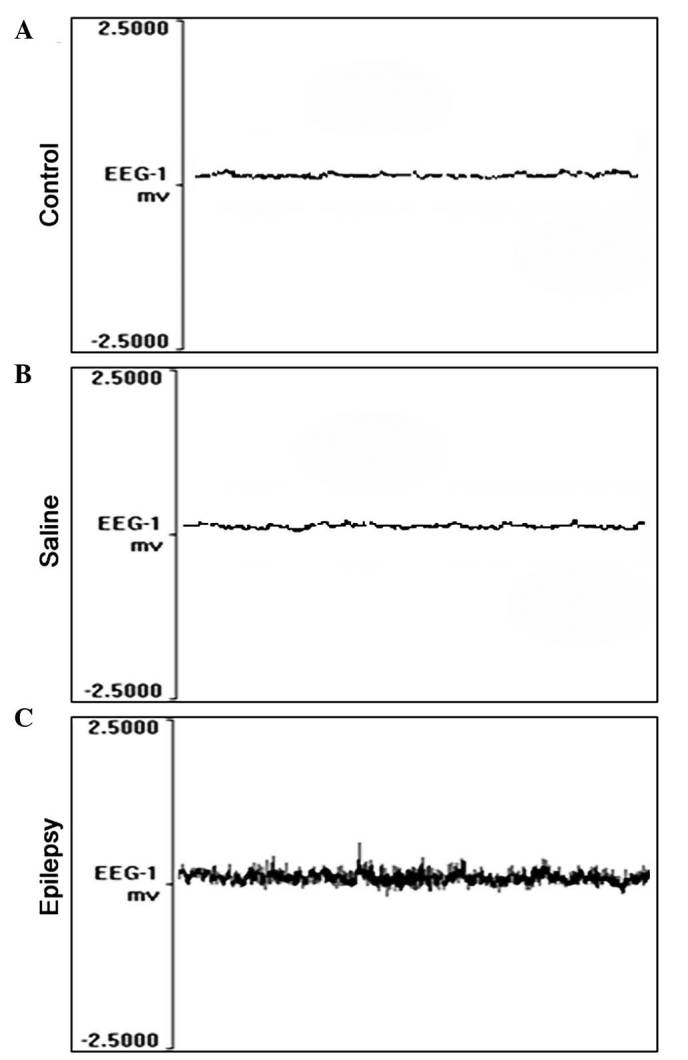
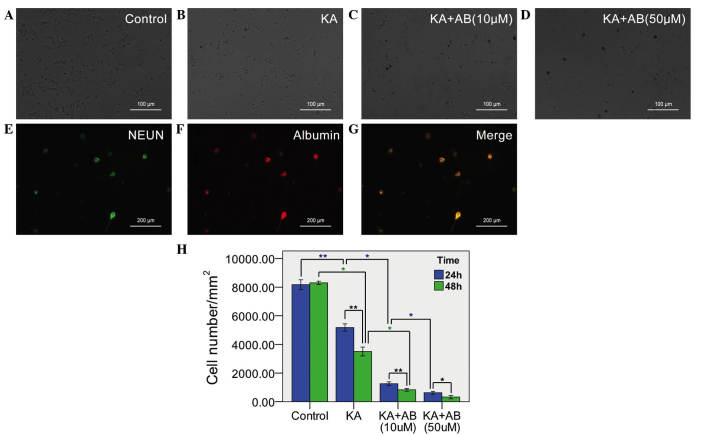
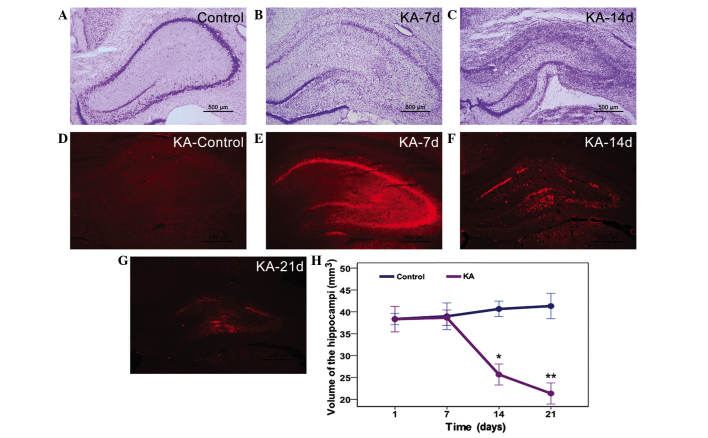
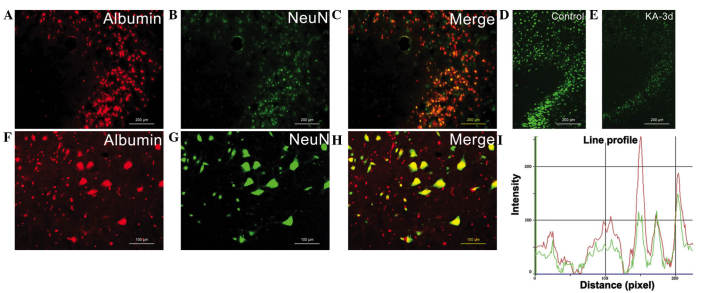
It is well established that brain blood barrier dysfunction following the onset of seizures may lead to serum albumin extravasation into the brain. However, the effect of albumin extravasation on the development of epilepsy is yet to be fully elucidated. Previous studies have predominantly focused on the effect of albumin absorption by astrocytes; however, the present study investigated the effects of neuronal uptake of albumin and in kainic acid-induced Sprague-Dawley rat models of temporal lobe epilepsy. In the present study, electroencephalogram recordings were conducted to record seizure onset, Nissl and Evans blue staining were used to detect neuronal damage and albumin extravasation, respectively, and double immunofluorescence was used to explore neuronal absorption of albumin. Cell counting was also conducted to determine whether albumin contributes to neuronal death. The results of the present study indicated that extravasated serum albumin was absorbed by neurons, and the neurons that had absorbed albumin died and were dissolved 28 days after seizure onset . Furthermore, significant neuronal death was detected after albumin absorption in a dose- and time-dependent manner. These results suggested that albumin may be absorbed by neurons following the onset of seizures. Furthermore, the results indicated that neuronal albumin uptake may be associated with neuronal damage and death in epileptic seizures. Therefore, attenuating albumin extravasation following epileptic seizures may reduce brain damage and slow the development of epilepsy.
癫痫发作后血脑屏障功能障碍会导致血清白蛋白渗入大脑,这一点已得到充分证实。然而,白蛋白渗出对癫痫发展的影响尚未完全阐明。以往的研究主要集中在星形胶质细胞对白蛋白的吸收作用;然而,本研究在 kainic 酸诱导的颞叶癫痫 Sprague-Dawley 大鼠模型中,研究了神经元摄取白蛋白的影响。在本研究中,进行脑电图记录以记录癫痫发作起始,分别使用尼氏染色和伊文思蓝染色检测神经元损伤和白蛋白渗出,并使用双重免疫荧光法探究神经元对白蛋白的摄取。还进行了细胞计数以确定白蛋白是否导致神经元死亡。本研究结果表明,渗出的血清白蛋白被神经元吸收,吸收白蛋白的神经元在癫痫发作后 28 天死亡并溶解。此外,在白蛋白吸收后检测到明显的神经元死亡,呈剂量和时间依赖性。这些结果表明,癫痫发作后白蛋白可能被神经元吸收。此外,结果表明神经元摄取白蛋白可能与癫痫发作时的神经元损伤和死亡有关。因此,减轻癫痫发作后的白蛋白渗出可能会减少脑损伤并减缓癫痫的发展。