Cabrera-Perez Javier, Babcock Jeffrey C, Dileepan Thamotharampillai, Murphy Katherine A, Kucaba Tamara A, Badovinac Vladimir P, Griffith Thomas S
Microbiology, Immunology, and Cancer Biology Graduate Program, University of Minnesota, Minneapolis, MN 55455; Medical Scientist Training Program, University of Minnesota, Minneapolis, MN 55455;
Medical Student Summer Research Program in Infection and Immunity, University of Minnesota, Minneapolis, MN 55455;
J Immunol. 2016 Sep 1;197(5):1692-8. doi: 10.4049/jimmunol.1600940. Epub 2016 Jul 22.
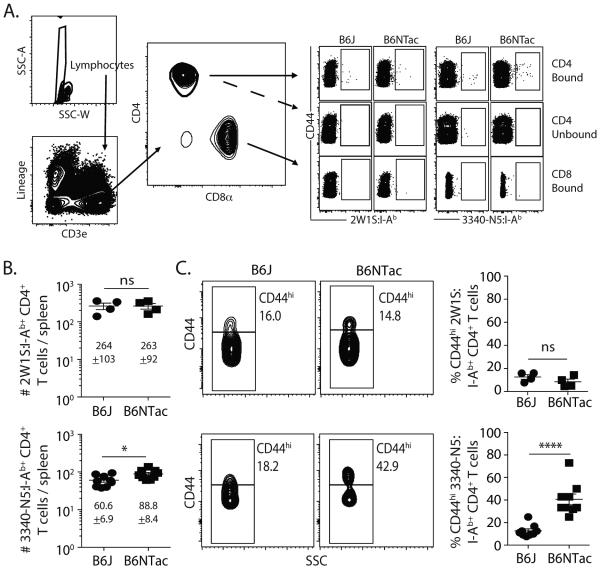
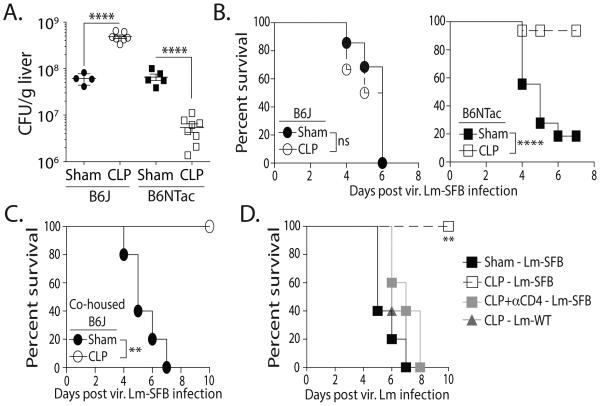
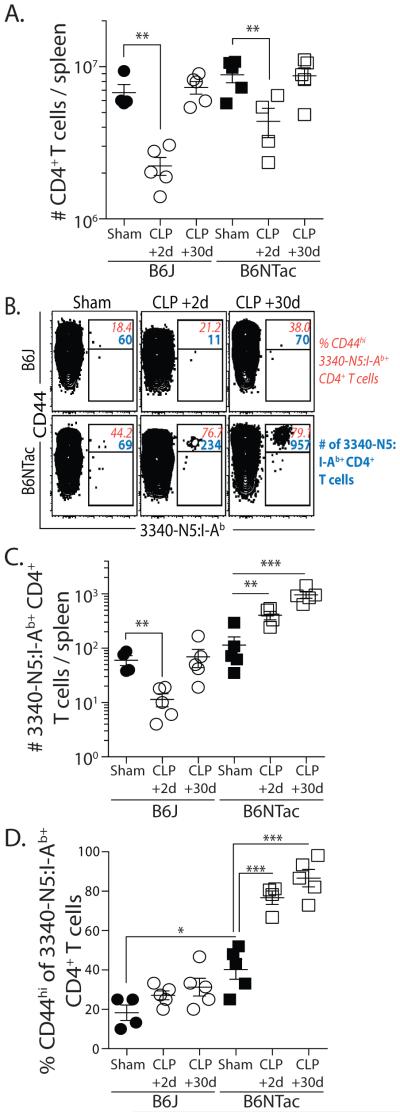
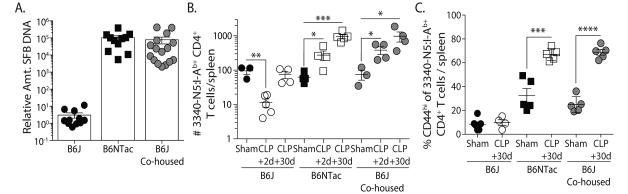
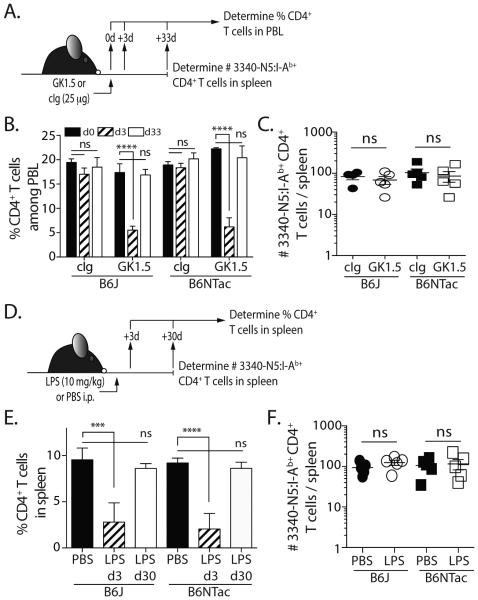
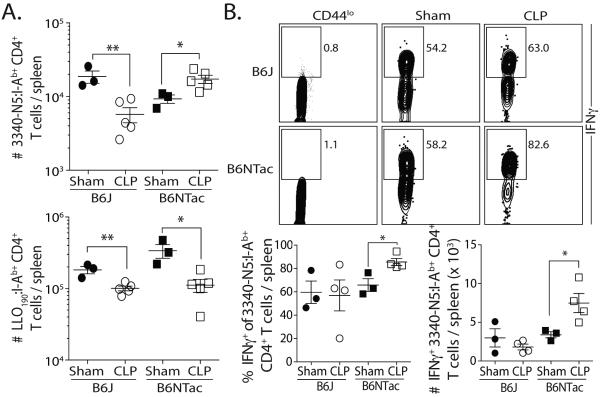
Transient lymphopenia is one hallmark of sepsis, and emergent data indicate the CD4 T cell compartment in sepsis survivors is numerically and functionally altered (when examined at the Ag-specific level) compared with nonseptic control subjects. Previous data from our laboratory demonstrated Ag-independent, lymphopenia-induced homeostatic proliferation to be a contributing mechanism by which CD4 T cells numerically recover in sepsis survivors. However, we reasoned it is also formally possible that some CD4 T cells respond directly to Ag expressed by gut-resident microbes released during polymicrobial sepsis. The effect of gut microbiome leakage on CD4 T cells is currently unknown. In this study, we explored the number and function of endogenous CD4 T cells specific for segmented filamentous bacterium (SFB) after cecal ligation and puncture (CLP)-induced sepsis using mice that either contained or lacked SFB as a normal gut-resident microbe. Interestingly, SFB-specific CD4 T cells underwent Ag-driven proliferation in CLP-treated SFB(+), but not in SFB(-), mice. Moreover, CLP-treated SFB(+) mice showed resistance to secondary lethal infection with recombinant SFB Ag-expressing virulent Listeria (but not wild-type virulent Listeria), suggesting the CLP-induced polymicrobial sepsis primed for a protective response by the SFB-specific CD4 T cells. Thus, our data demonstrate that the numerical recovery and functional responsiveness of Ag-specific CD4 T cells in sepsis survivors is, in part, modulated by the intestinal barrier's health discreetly defined by individual bacterial populations of the host's microbiome.
短暂性淋巴细胞减少是脓毒症的一个标志,最新数据表明,与非脓毒症对照受试者相比,脓毒症幸存者的CD4 T细胞区室在数量和功能上发生了改变(在抗原特异性水平上进行检测时)。我们实验室之前的数据表明,脓毒症幸存者中CD4 T细胞数量恢复的一个促成机制是淋巴细胞减少诱导的非抗原依赖性稳态增殖。然而,我们推断,也有可能一些CD4 T细胞直接对多微生物脓毒症期间释放的肠道常驻微生物表达的抗原作出反应。目前尚不清楚肠道微生物群泄漏对CD4 T细胞的影响。在本研究中,我们使用含有或缺乏作为正常肠道常驻微生物的分节丝状菌(SFB)的小鼠,探讨了盲肠结扎和穿刺(CLP)诱导的脓毒症后,内源性SFB特异性CD4 T细胞的数量和功能。有趣的是,SFB特异性CD4 T细胞在CLP处理的SFB(+)小鼠中发生了抗原驱动的增殖,但在SFB(-)小鼠中未发生。此外,CLP处理的SFB(+)小鼠对表达重组SFB抗原的强毒李斯特菌(而非野生型强毒李斯特菌)的二次致死性感染具有抵抗力,这表明CLP诱导的多微生物脓毒症引发了SFB特异性CD4 T细胞的保护性反应。因此,我们的数据表明,脓毒症幸存者中抗原特异性CD4 T细胞的数量恢复和功能反应性部分受宿主微生物群中各个细菌群体谨慎定义的肠道屏障健康状况的调节。