Center for Autoimmune, Musculoskeletal and Hematopoietic Diseases, The Feinstein Institute for Medical Research, Manhasset, NY, United States.
Center for Immunology and Inflammation, The Feinstein Institute for Medical Research, Manhasset, NY, United States.
Front Immunol. 2018 Sep 6;9:2032. doi: 10.3389/fimmu.2018.02032. eCollection 2018.
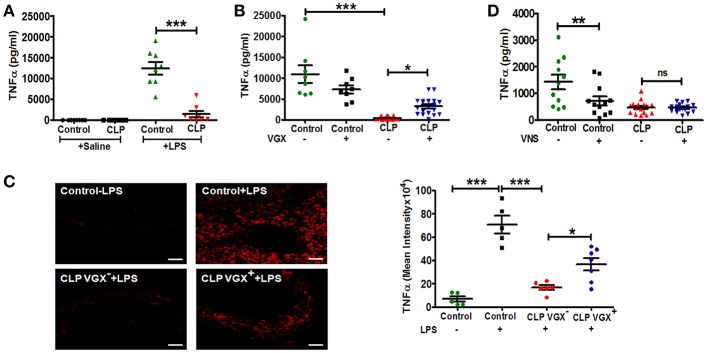
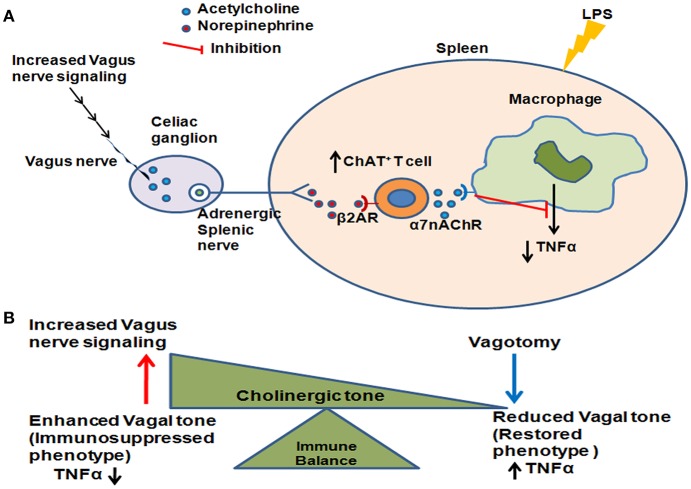
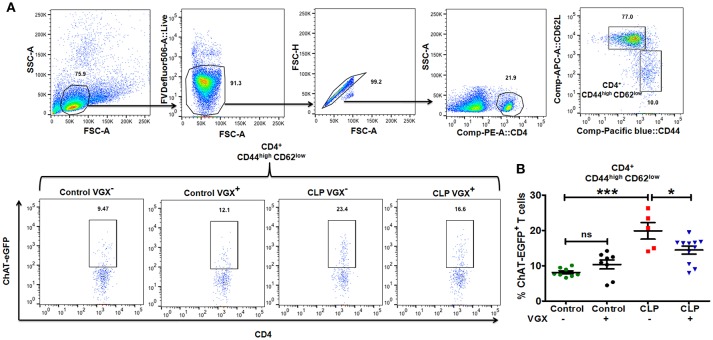
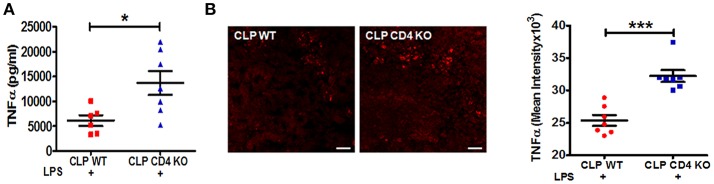
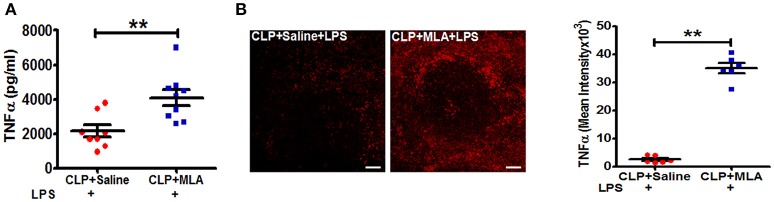
Patients surviving a septic episode exhibit persistent immune impairment and increased mortality due to enhanced vulnerability to infections. In the present study, using the cecal ligation and puncture (CLP) model of polymicrobial sepsis, we addressed the hypothesis that altered vagus nerve activity contributes to immune impairment in sepsis survivors. CLP-surviving mice exhibited less TNFα in serum following administration of LPS, a surrogate for an infectious challenge, than control-operated (control) mice. To evaluate the role of the vagus nerve in the diminished response to LPS, mice were subjected to bilateral subdiaphragmatic vagotomy at 2 weeks post-CLP. CLP-surviving vagotomized mice exhibited increased serum and tissue TNFα levels in response to LPS-challenge compared to CLP-surviving, non-vagotomized mice. Moreover, vagus nerve stimulation in control mice diminished the LPS-induced TNFα responses while having no effect in CLP mice, suggesting constitutive activation of vagus nerve signaling in CLP-survivors. The percentage of splenic CD4 ChAT-EGFP T cells that relay vagus signals to macrophages was increased in CLP-survivors compared to control mice, and vagotomy in CLP-survivors resulted in a reduced percentage of ChAT-EGFP cells. Moreover, CD4 knockout CLP-surviving mice exhibited an enhanced LPS-induced TNFα response compared to wild-type mice, supporting a functional role for CD4 ChAT T cells in mediating inhibition of LPS-induced TNFα responses in CLP-survivors. Blockade of the cholinergic anti-inflammatory pathway with methyllcaconitine, an α7 nicotinic acetylcholine receptor antagonist, restored LPS-induced TNFα responses in CLP-survivors. Our study demonstrates that the vagus nerve is constitutively active in CLP-survivors and contributes to the immune impairment.
患有败血症的患者由于对感染的易感性增加,会持续存在免疫功能受损和死亡率增加。在本研究中,我们使用复杂微生物败血症的盲肠结扎和穿刺 (CLP) 模型,提出了假设,即迷走神经活动的改变导致败血症幸存者的免疫功能受损。与对照(对照)小鼠相比,CLP 存活小鼠在给予脂多糖(感染挑战的替代物)后血清中 TNFα 减少。为了评估迷走神经在 LPS 反应减弱中的作用,在 CLP 后 2 周对小鼠进行双侧膈下迷走神经切断术。与 CLP 存活、未迷走神经切断的小鼠相比,CLP 存活迷走神经切断的小鼠在 LPS 挑战时血清和组织 TNFα 水平增加。此外,在对照小鼠中刺激迷走神经可减弱 LPS 诱导的 TNFα 反应,而在 CLP 小鼠中没有作用,这表明 CLP 幸存者的迷走神经信号持续激活。与对照小鼠相比,CLP 幸存者中脾脏 CD4 ChAT-EGFP T 细胞向巨噬细胞传递迷走神经信号的比例增加,CLP 幸存者的迷走神经切断导致 ChAT-EGFP 细胞的比例降低。此外,与野生型小鼠相比,CD4 敲除 CLP 幸存者的 LPS 诱导的 TNFα 反应增强,支持 CD4 ChAT T 细胞在介导 CLP 幸存者中 LPS 诱导的 TNFα 反应抑制中的功能作用。用烟碱型乙酰胆碱受体 α7 拮抗剂甲基可乐定阻断胆碱能抗炎途径,可恢复 CLP 幸存者中 LPS 诱导的 TNFα 反应。我们的研究表明,迷走神经在 CLP 幸存者中持续活跃,并导致免疫功能受损。