Pérez-Escobar José Antonio, Kornienko Olga, Latuske Patrick, Kohler Laura, Allen Kevin
Department of Clinical Neurobiology, Medical Faculty of Heidelberg University, Heidelberg, Germany.
German Cancer Research Center, Heidelberg, Germany.
Elife. 2016 Jul 23;5:e16937. doi: 10.7554/eLife.16937.
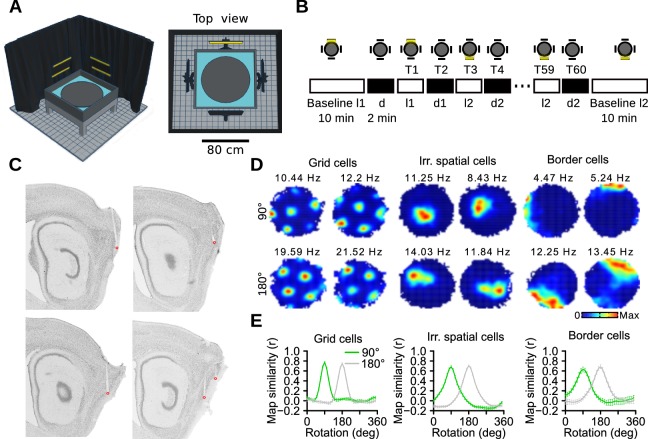
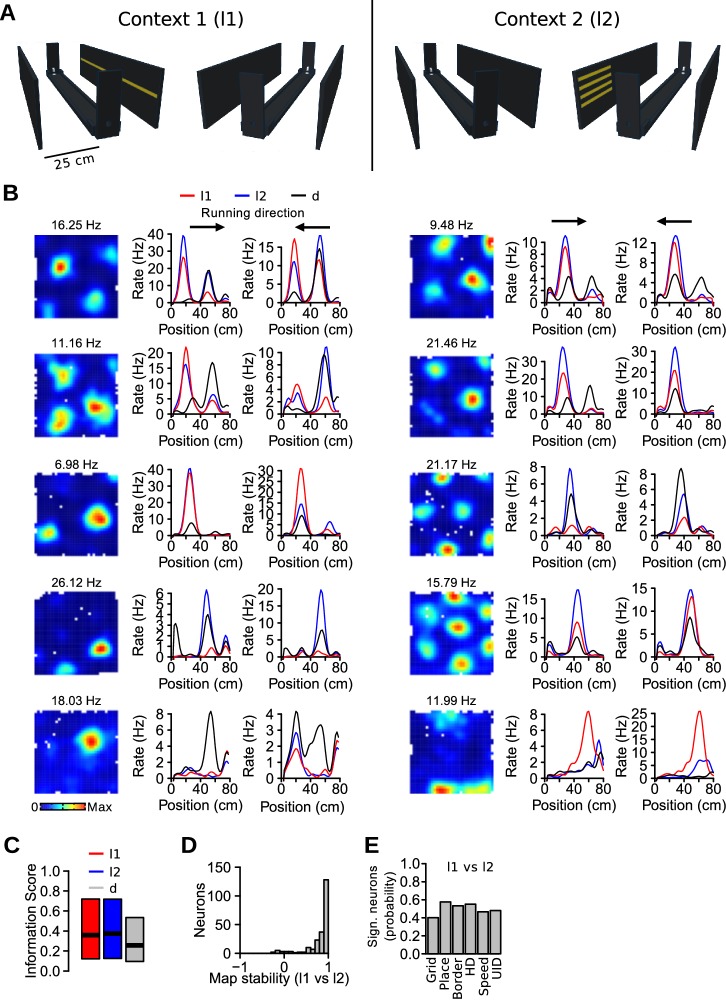
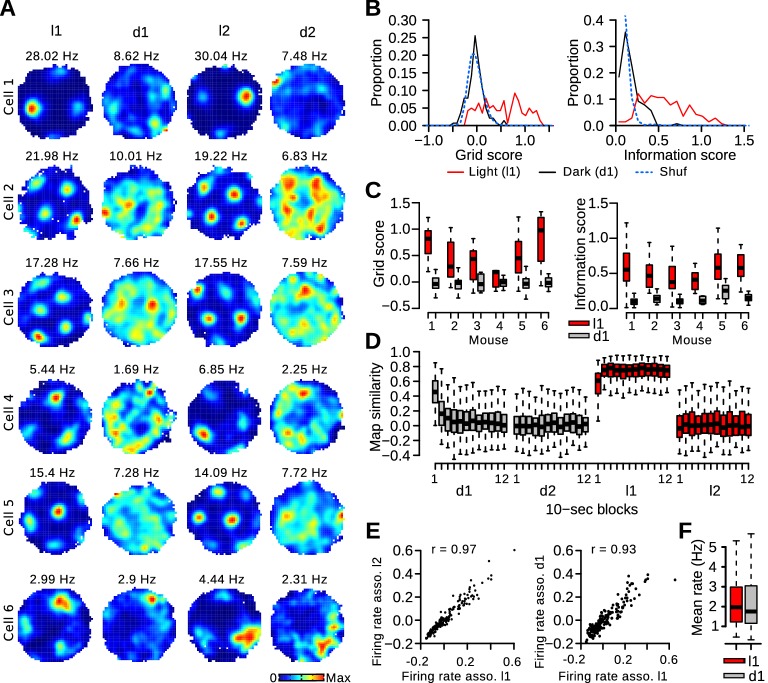
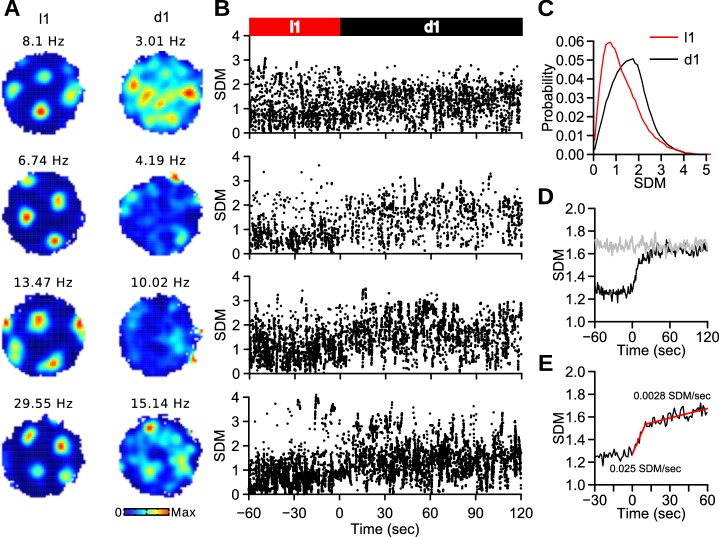
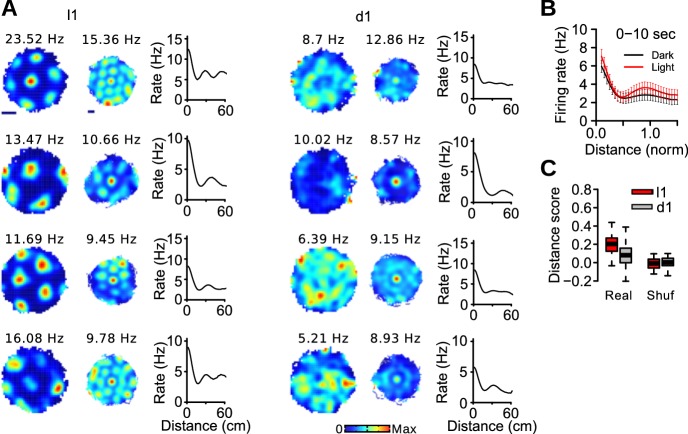
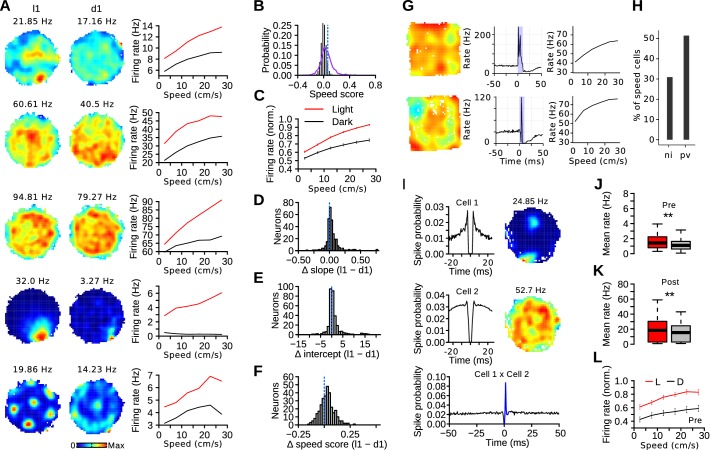
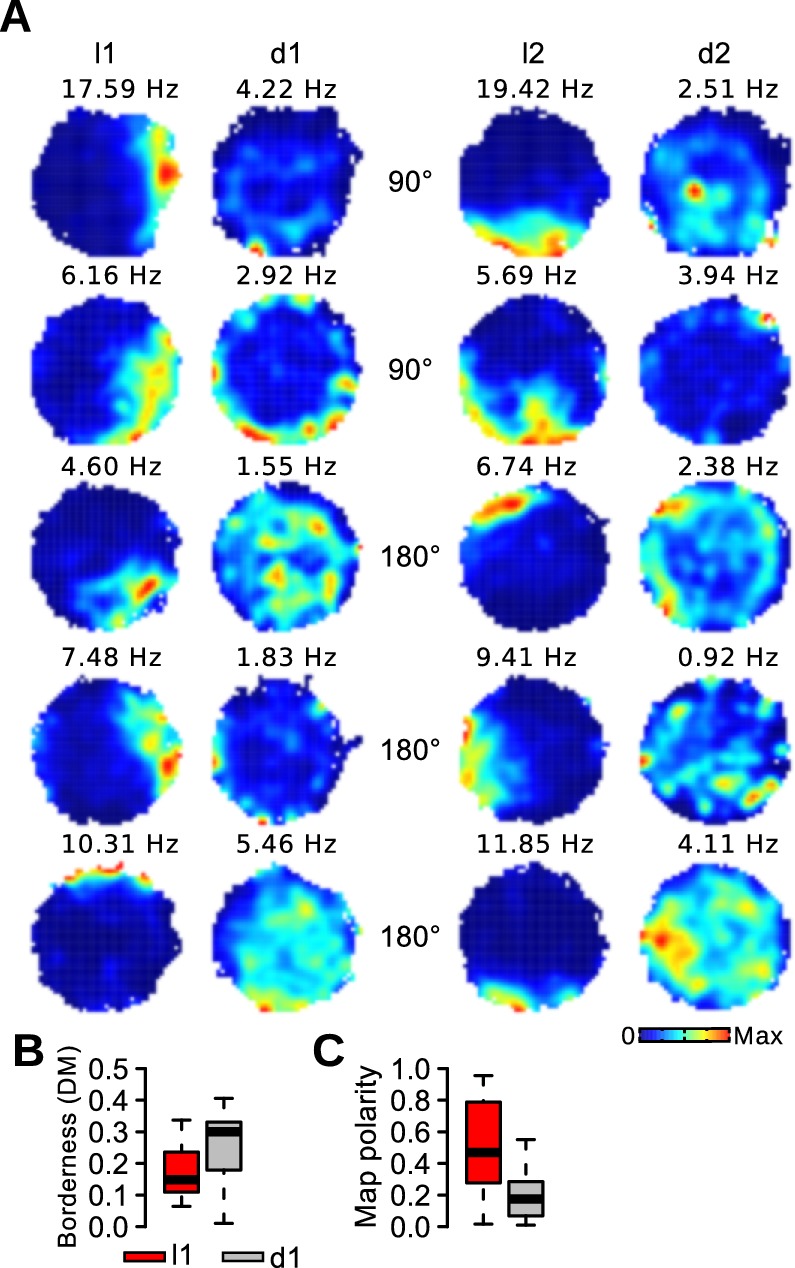
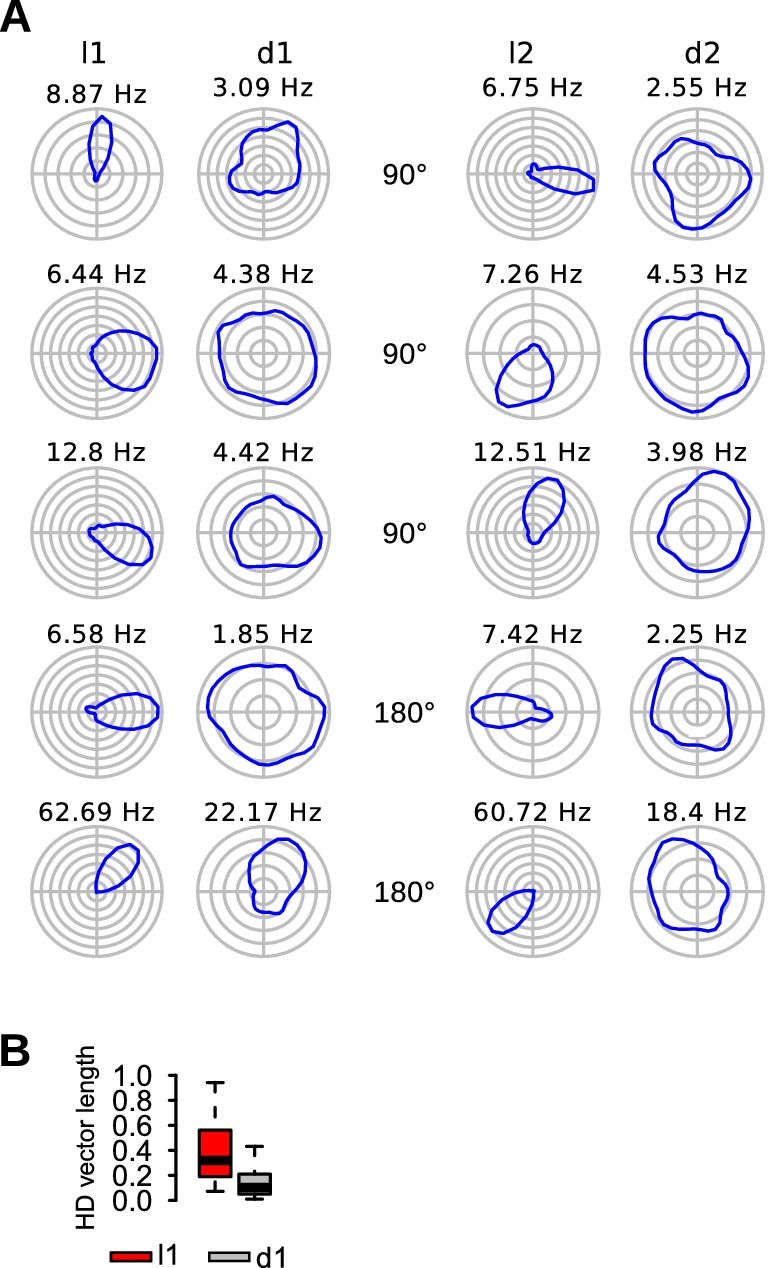
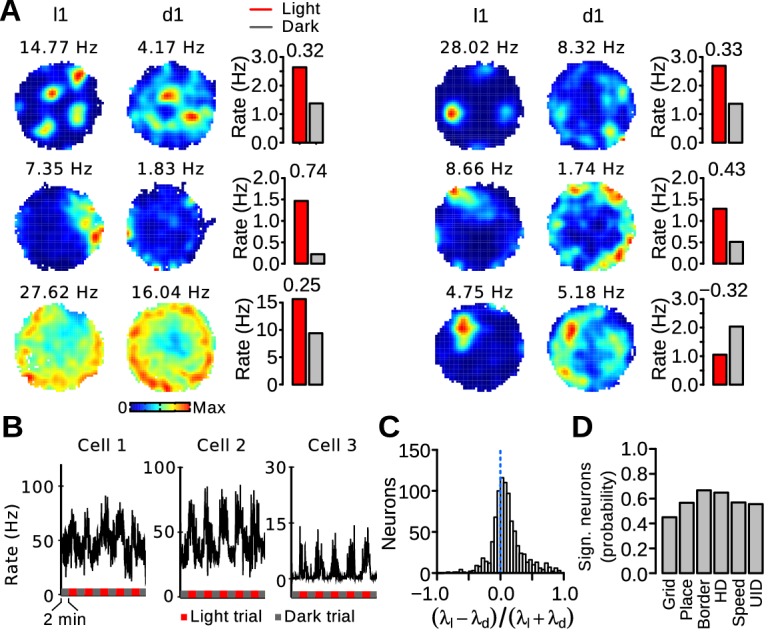
Neurons of the medial entorhinal cortex (MEC) provide spatial representations critical for navigation. In this network, the periodic firing fields of grid cells act as a metric element for position. The location of the grid firing fields depends on interactions between self-motion information, geometrical properties of the environment and nonmetric contextual cues. Here, we test whether visual information, including nonmetric contextual cues, also regulates the firing rate of MEC neurons. Removal of visual landmarks caused a profound impairment in grid cell periodicity. Moreover, the speed code of MEC neurons changed in darkness and the activity of border cells became less confined to environmental boundaries. Half of the MEC neurons changed their firing rate in darkness. Manipulations of nonmetric visual cues that left the boundaries of a 1D environment in place caused rate changes in grid cells. These findings reveal context specificity in the rate code of MEC neurons.
内嗅皮层(MEC)的神经元提供对导航至关重要的空间表征。在这个网络中,网格细胞的周期性放电场充当位置的度量元素。网格放电场的位置取决于自我运动信息、环境的几何属性和非度量性上下文线索之间的相互作用。在这里,我们测试包括非度量性上下文线索在内的视觉信息是否也调节MEC神经元的放电率。移除视觉地标会导致网格细胞周期性出现严重受损。此外,MEC神经元的速度编码在黑暗中发生变化,边界细胞的活动变得不那么局限于环境边界。一半的MEC神经元在黑暗中改变了它们的放电率。对一维环境边界保持不变的非度量性视觉线索进行操作会导致网格细胞的放电率发生变化。这些发现揭示了MEC神经元放电编码中的上下文特异性。