Princeton Neuroscience Institute, Princeton University, Princeton, United States.
Bezos Center for Neural Circuit Dynamics, Princeton University, Princeton, United States.
Elife. 2020 Mar 9;9:e43140. doi: 10.7554/eLife.43140.
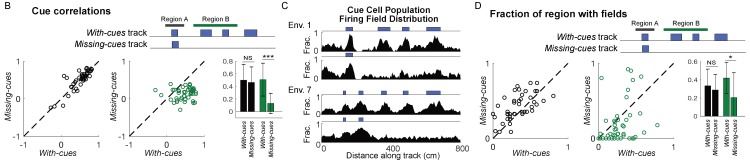
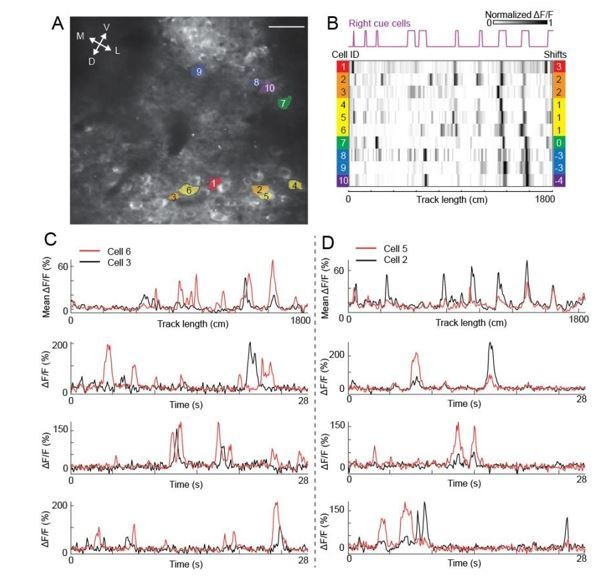
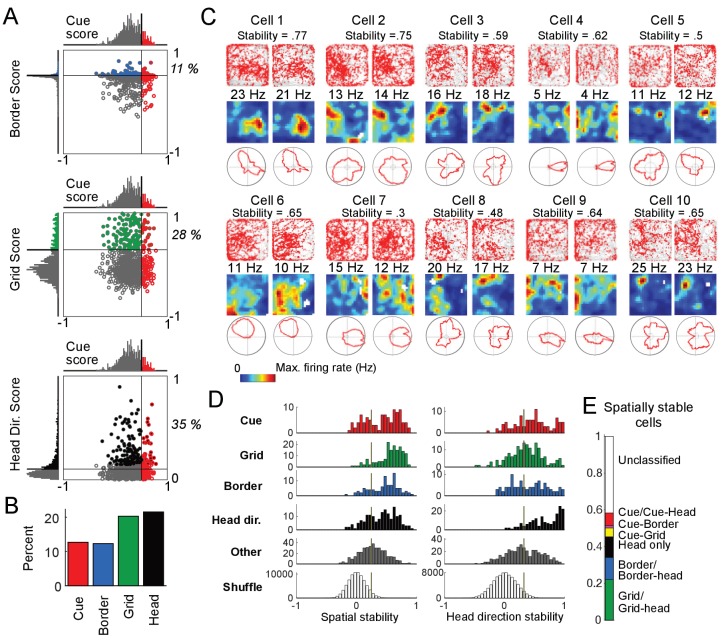
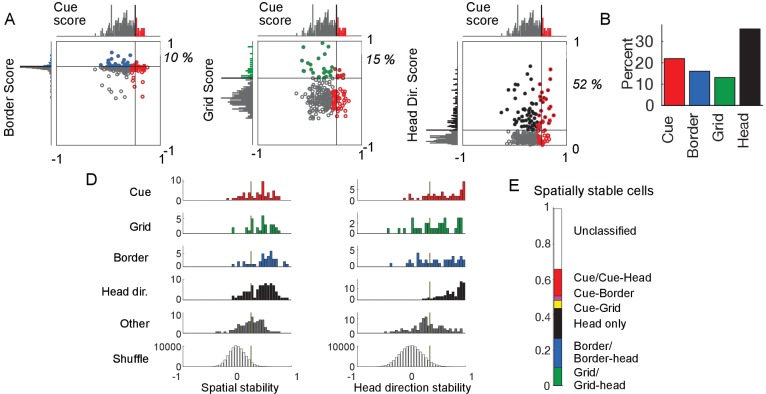
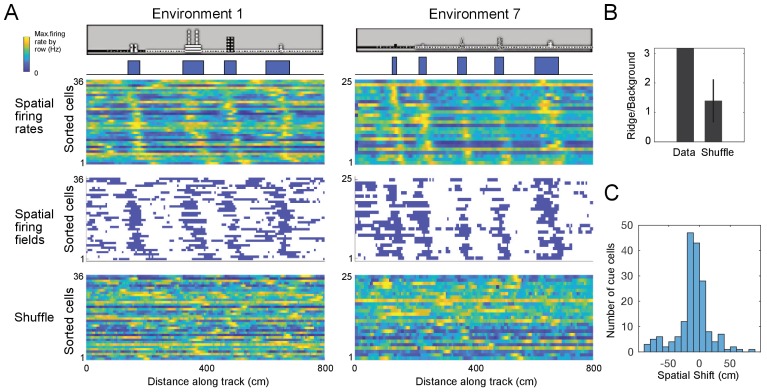
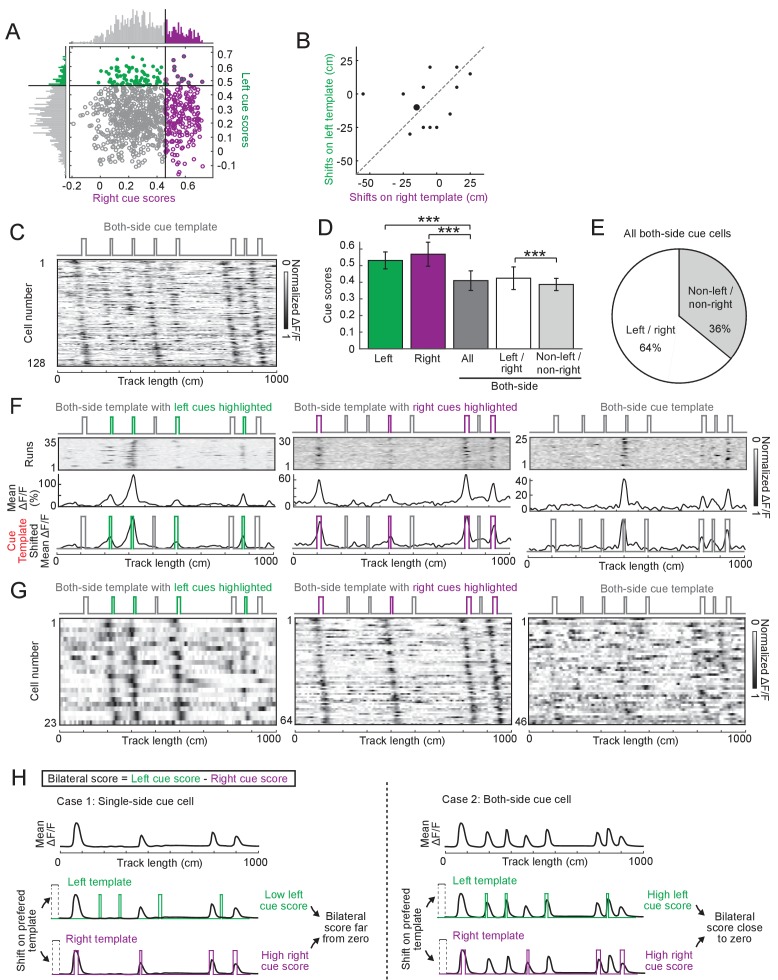
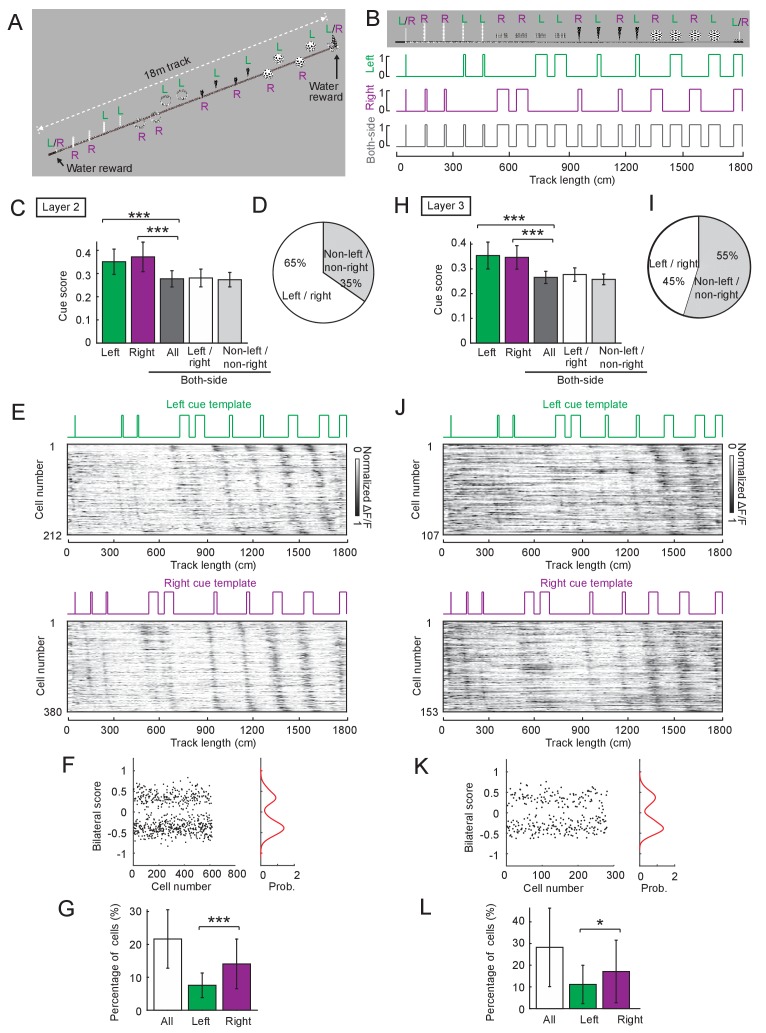
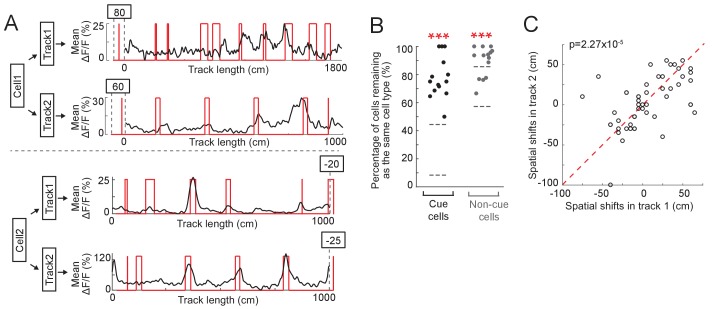
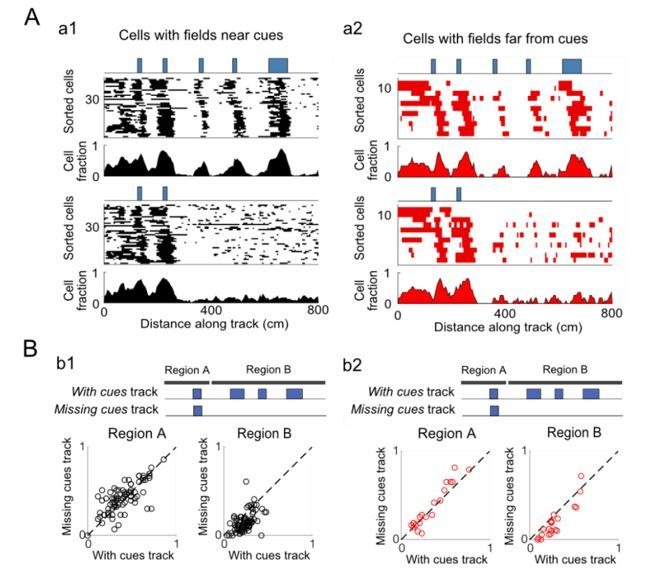
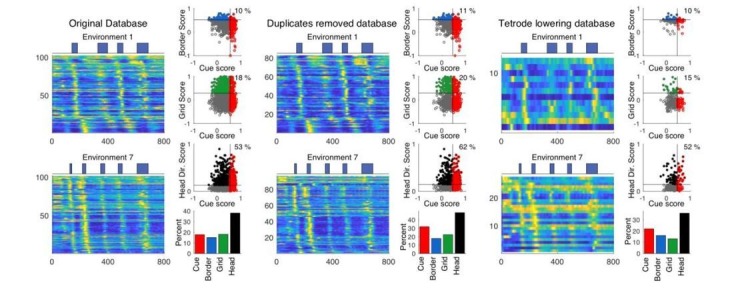
During spatial navigation, animals use self-motion to estimate positions through path integration. However, estimation errors accumulate over time and it is unclear how they are corrected. Here we report a new cell class ('cue cell') encoding visual cues that could be used to correct errors in path integration in mouse medial entorhinal cortex (MEC). During virtual navigation, individual cue cells exhibited firing fields only near visual cues and their population response formed sequences repeated at each cue. These cells consistently responded to cues across multiple environments. On a track with cues on left and right sides, most cue cells only responded to cues on one side. During navigation in a real arena, they showed spatially stable activity and accounted for 32% of unidentified, spatially stable MEC cells. These cue cell properties demonstrate that the MEC contains a code representing spatial landmarks, which could be important for error correction during path integration.
在空间导航过程中,动物通过自身运动来通过路径整合估计位置。然而,随着时间的推移,估计误差会累积,目前尚不清楚它们是如何被修正的。在这里,我们报告了一种新的细胞类群(“提示细胞”),它们可以用来纠正小鼠内侧内嗅皮层(MEC)中路径整合的误差。在虚拟导航中,单个提示细胞仅在视觉提示附近表现出放电场,并且它们的群体反应形成在每个提示处重复的序列。这些细胞在多个环境中始终对提示做出反应。在带有左右两侧提示的轨道上,大多数提示细胞仅对一侧的提示做出反应。在真实竞技场的导航中,它们表现出空间稳定的活动,占未识别的、空间稳定的 MEC 细胞的 32%。这些提示细胞特性表明 MEC 中包含表示空间地标位置的代码,这对于路径整合中的误差修正可能很重要。