Merry Callie R, McMahon Sarah, Forrest Megan E, Bartels Cynthia F, Saiakhova Alina, Bartel Courtney A, Scacheri Peter C, Thompson Cheryl L, Jackson Mark W, Harris Lyndsay N, Khalil Ahmad M
Department of Genetics and Genome Sciences, Case Western Reserve University, Cleveland, OH 44106, USA.
Department of Biochemistry, Case Western Reserve University, Cleveland, OH 44106, USA.
Oncotarget. 2016 Aug 16;7(33):53230-53244. doi: 10.18632/oncotarget.10637.
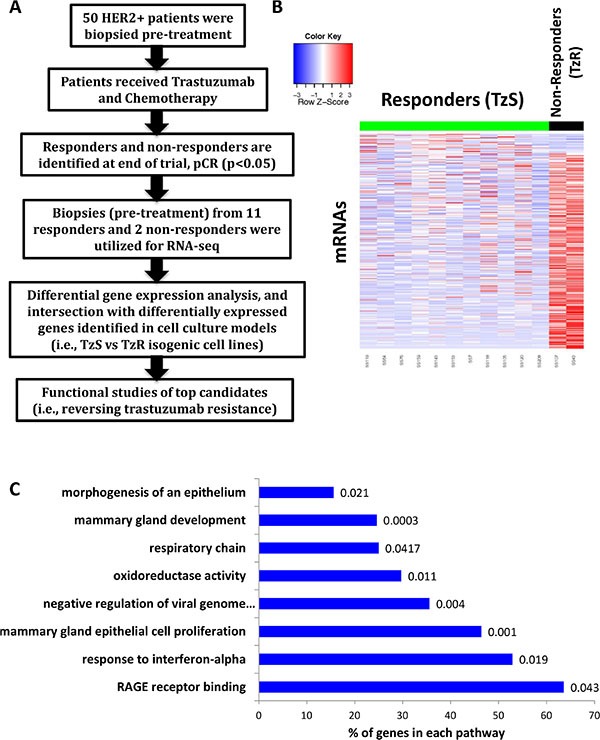
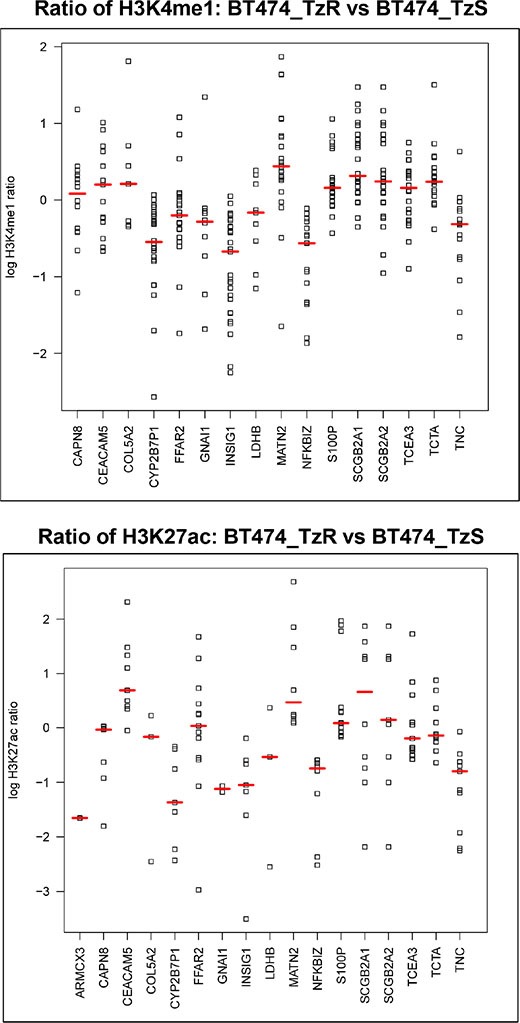
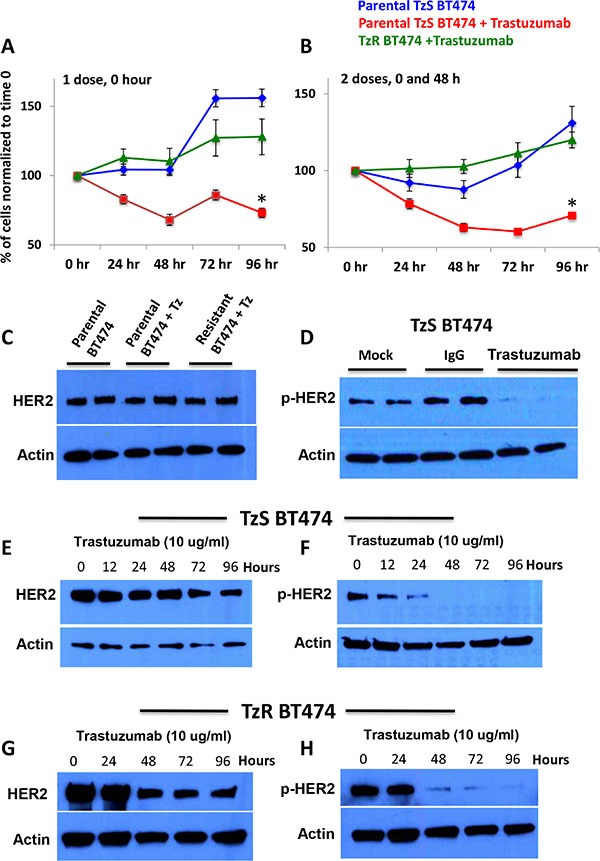
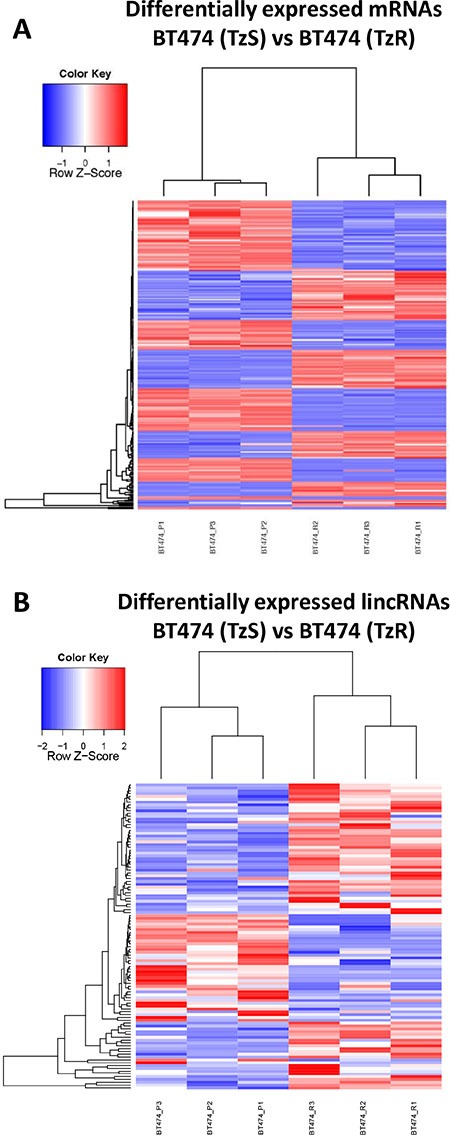
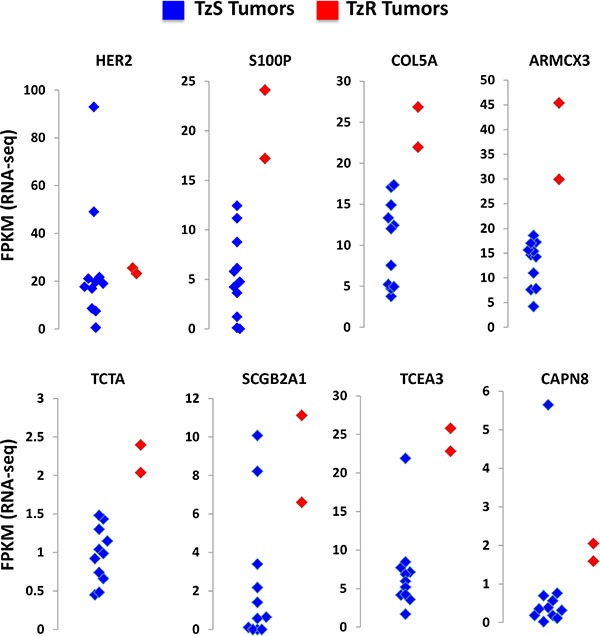
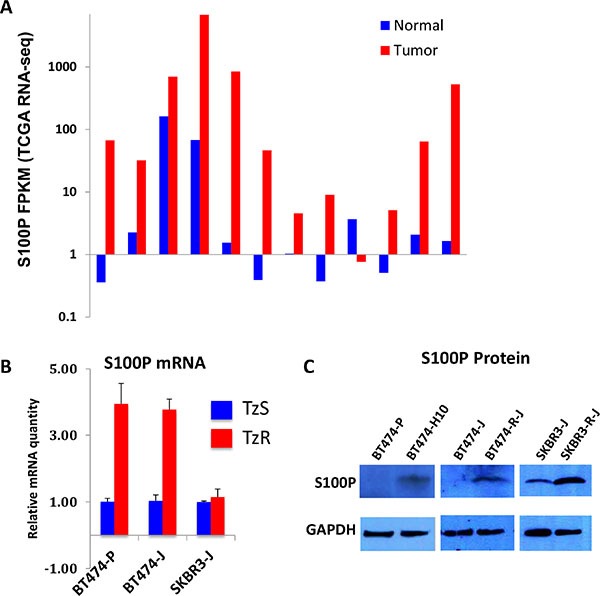
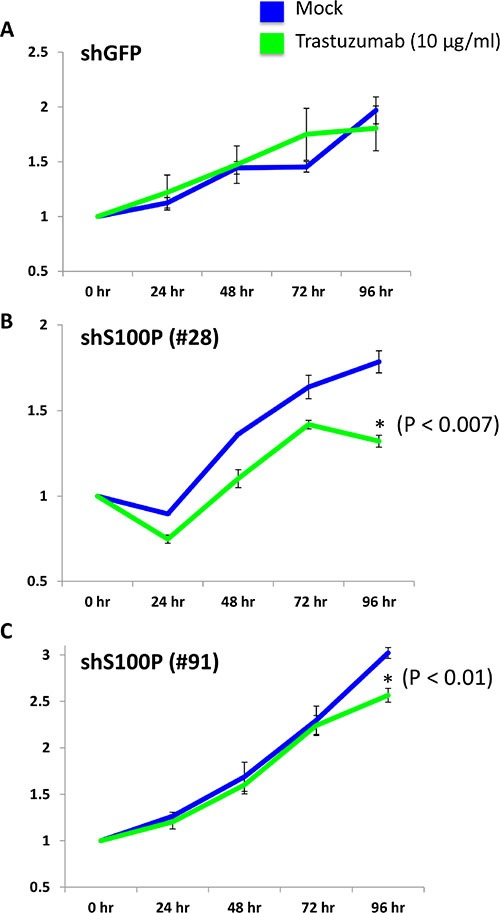
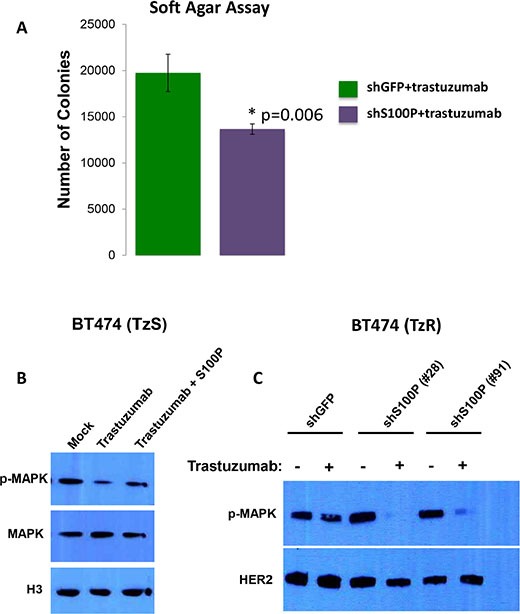
Approximately, 25-30% of early-stage breast tumors are classified at the molecular level as HER2-positive, which is an aggressive subtype of breast cancer. Amplification of the HER2 gene in these tumors results in a substantial increase in HER2 mRNA levels, and consequently, HER2 protein levels. HER2, a transmembrane receptor tyrosine kinase (RTK), is targeted therapeutically by a monoclonal antibody, trastuzumab (Tz), which has dramatically improved the prognosis of HER2-driven breast cancers. However, ~30% of patients develop resistance to trastuzumab and recur; and nearly all patients with advanced disease develop resistance over time and succumb to the disease. Mechanisms of trastuzumab resistance (TzR) are not well understood, although some studies suggest that growth factor signaling through other receptors may be responsible. However, these studies were based on cell culture models of the disease, and thus, it is not known which pathways are driving the resistance in vivo. Using an integrative transcriptomic approach of RNA isolated from trastuzumab-sensitive and trastuzumab-resistant HER2+ tumors, and isogenic cell culture models, we identified a small set of mRNAs and lincRNAs that are associated with trastuzumab-resistance (TzR). Functional analysis of a top candidate gene, S100P, demonstrated that inhibition of S100P results in reversing TzR. Mechanistically, S100P activates the RAS/MEK/MAPK pathway to compensate for HER2 inhibition by trastuzumab. Finally, we demonstrated that the upregulation of S100P appears to be driven by epigenomic changes at the enhancer level. Our current findings should pave the path toward new therapies for breast cancer patients.
大约25%-30%的早期乳腺癌肿瘤在分子水平上被归类为HER2阳性,这是一种侵袭性乳腺癌亚型。这些肿瘤中HER2基因的扩增导致HER2 mRNA水平大幅增加,进而导致HER2蛋白水平升高。HER2是一种跨膜受体酪氨酸激酶(RTK),可通过单克隆抗体曲妥珠单抗(Tz)进行靶向治疗,这显著改善了HER2驱动的乳腺癌的预后。然而,约30%的患者会对曲妥珠单抗产生耐药并复发;几乎所有晚期疾病患者最终都会随着时间的推移产生耐药并死于该疾病。尽管一些研究表明通过其他受体的生长因子信号传导可能是导致曲妥珠单抗耐药(TzR)的原因,但曲妥珠单抗耐药的机制尚未完全明确。然而,这些研究是基于该疾病的细胞培养模型,因此,尚不清楚哪些途径在体内驱动耐药性。通过对从曲妥珠单抗敏感和耐药的HER2+肿瘤以及同基因细胞培养模型中分离的RNA进行综合转录组学分析,我们确定了一小部分与曲妥珠单抗耐药(TzR)相关的mRNA和长链非编码RNA(lincRNA)。对顶级候选基因S100P的功能分析表明,抑制S100P可逆转TzR。从机制上讲,S100P激活RAS/MEK/MAPK途径以补偿曲妥珠单抗对HER2的抑制作用。最后,我们证明S100P的上调似乎是由增强子水平的表观基因组变化驱动的。我们目前的研究结果应为乳腺癌患者的新疗法铺平道路。