Wang Heping, Li Yinhu, Feng Xin, Li Yufeng, Wang Wenjian, Qiu Chuangzhao, Xu Jianqiang, Yang Zhenyu, Li Zhichuan, Zhou Qian, Yao Kaihu, Wang Hongmei, Li Yuzheng, Li Dongfang, Dai Wenkui, Zheng Yuejie
Shenzhen Children's Hospital, No. 7019 Yitian Road, Shenzhen, 518026 China.
WeHealthGene, No. 118 Wuhe Road, Shenzhen, 518129 China.
Gut Pathog. 2016 Jul 22;8:36. doi: 10.1186/s13099-016-0118-0. eCollection 2016.
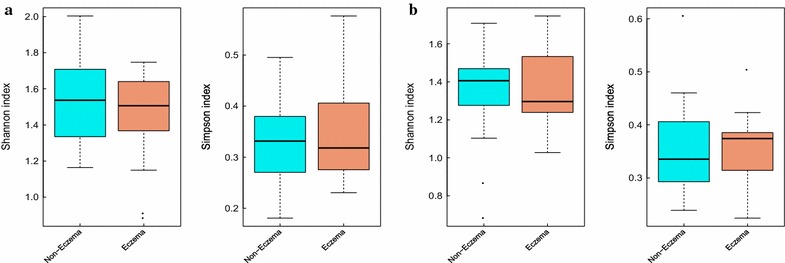
Infantile eczema is an immunological disease that is characterized by itchy and dry skin. Recent studies have suggested that gut microbiota (GM) plays a role in the development and progression of eczema. To further evaluate this potential link, we collected feces from 19 infants with eczema and 14 infants without eczema and analyzed the molecular discrepancies between the two groups using 16S rDNA analysis.
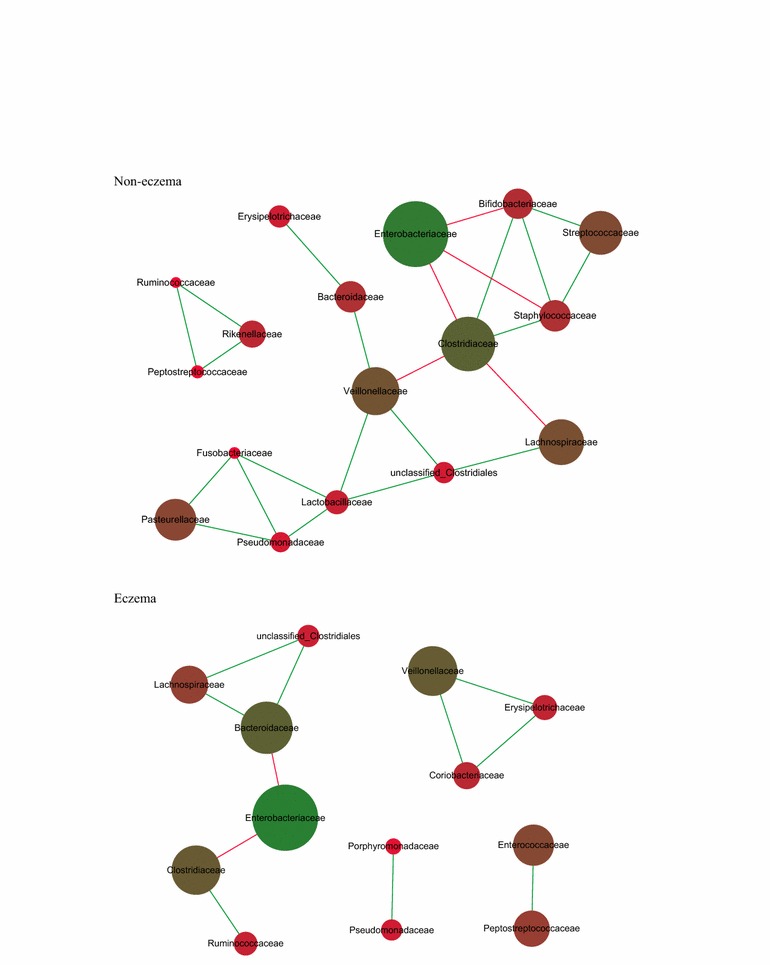
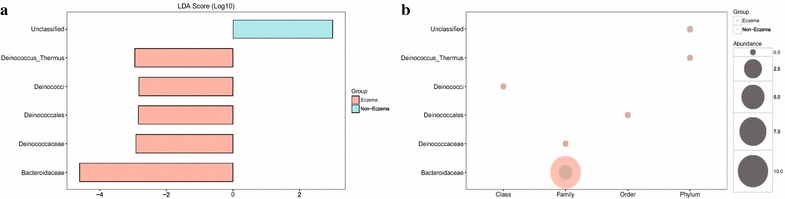
Bacteroidaceae and Deinococcaceae were significantly enriched in eczema infants, and Bacteroidaceae was potentially involved in autoimmune diseases by promoting the Th17 (T helper cell 17) secretion of IL-17 (interleukin-17). In the infants without eczema, the co-abundance network featured three core nodes: Clostridiaceae, Veillonellaceae, and Lactobacillaceae, all of which were lacking in the infants with eczema. Furthermore, our data suggested that Enterobacteriaceae was the core of the co-abundance network for the diseased subjects.
GM is closely connected to the human immune system, and the dysbiotic GM network plays a role in eczema. This study furthered our understanding of the dynamic GM network and its correlation to the occurrence of eczema.
婴儿湿疹是一种以皮肤瘙痒和干燥为特征的免疫性疾病。最近的研究表明,肠道微生物群(GM)在湿疹的发生和发展中起作用。为了进一步评估这种潜在联系,我们收集了19名湿疹婴儿和14名非湿疹婴儿的粪便,并使用16S rDNA分析来分析两组之间的分子差异。
拟杆菌科和异常球菌科在湿疹婴儿中显著富集,拟杆菌科可能通过促进Th17(辅助性T细胞17)分泌IL-17(白细胞介素-17)而参与自身免疫性疾病。在非湿疹婴儿中,共丰度网络有三个核心节点:梭菌科、韦荣球菌科和乳杆菌科,而这些在湿疹婴儿中均不存在。此外,我们的数据表明肠杆菌科是患病受试者共丰度网络的核心。
肠道微生物群与人类免疫系统密切相关,失调的肠道微生物群网络在湿疹中起作用。本研究进一步加深了我们对动态肠道微生物群网络及其与湿疹发生相关性的理解。