Nyberg Lena K, Quaderi Saair, Emilsson Gustav, Karami Nahid, Lagerstedt Erik, Müller Vilhelm, Noble Charleston, Hammarberg Susanna, Nilsson Adam N, Sjöberg Fei, Fritzsche Joachim, Kristiansson Erik, Sandegren Linus, Ambjörnsson Tobias, Westerlund Fredrik
Department of Biology and Biological Engineering, Chalmers University of Technology, Gothenburg, Sweden.
Department of Astronomy and Theoretical Physics, Lund University, Lund, Sweden.
Sci Rep. 2016 Jul 27;6:30410. doi: 10.1038/srep30410.
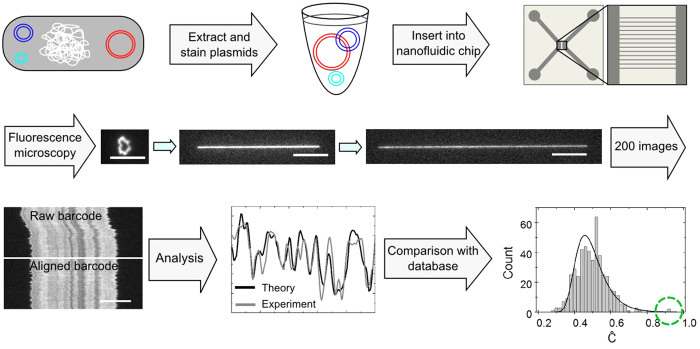
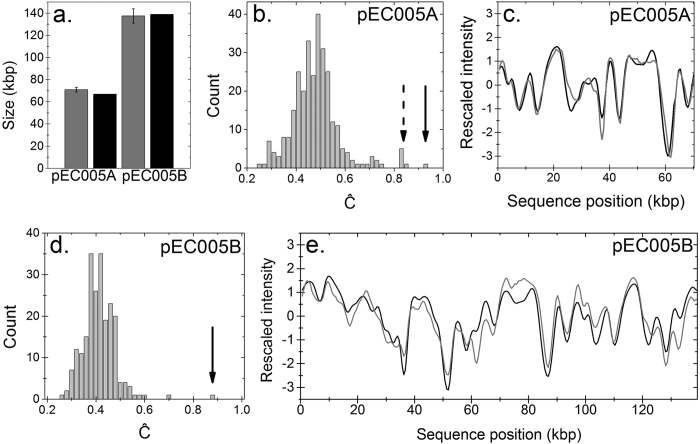
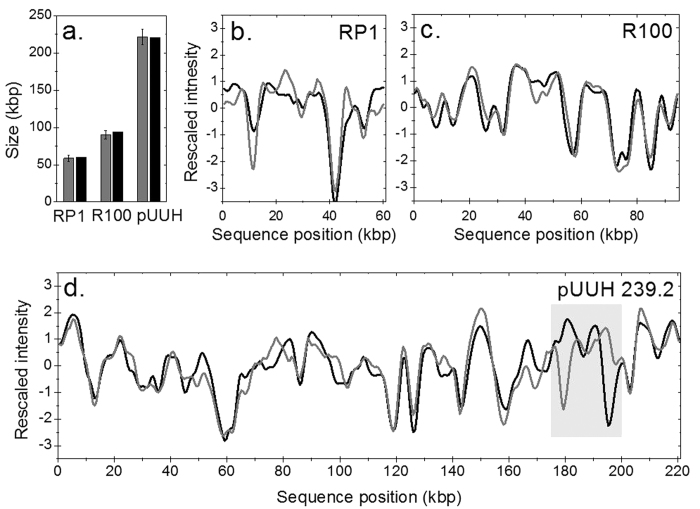
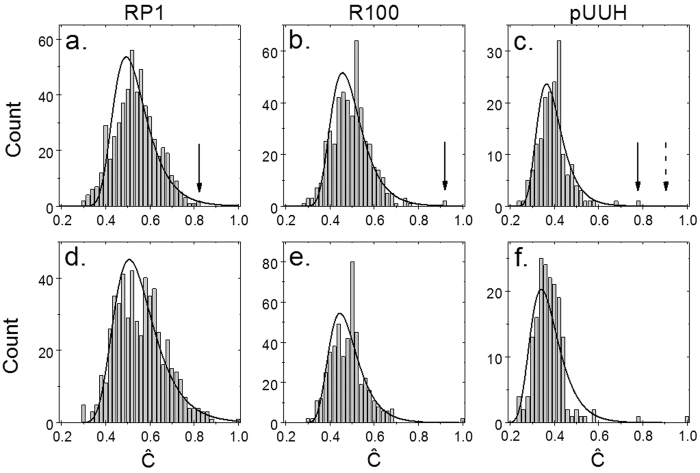
The rapid spread of antibiotic resistance - currently one of the greatest threats to human health according to WHO - is to a large extent enabled by plasmid-mediated horizontal transfer of resistance genes. Rapid identification and characterization of plasmids is thus important both for individual clinical outcomes and for epidemiological monitoring of antibiotic resistance. Toward this aim, we have developed an optical DNA mapping procedure where individual intact plasmids are elongated within nanofluidic channels and visualized through fluorescence microscopy, yielding barcodes that reflect the underlying sequence. The assay rapidly identifies plasmids through statistical comparisons with barcodes based on publicly available sequence repositories and also enables detection of structural variations. Since the assay yields holistic sequence information for individual intact plasmids, it is an ideal complement to next generation sequencing efforts which involve reassembly of sequence reads from fragmented DNA molecules. The assay should be applicable in microbiology labs around the world in applications ranging from fundamental plasmid biology to clinical epidemiology and diagnostics.
抗生素耐药性的迅速传播——据世界卫生组织称,这是目前对人类健康的最大威胁之一——在很大程度上是由质粒介导的耐药基因水平转移造成的。因此,快速鉴定和表征质粒对于个体临床结果以及抗生素耐药性的流行病学监测都很重要。为了实现这一目标,我们开发了一种光学DNA图谱绘制程序,其中单个完整质粒在纳米流体通道内拉长,并通过荧光显微镜观察,生成反映基础序列的条形码。该检测方法通过与基于公开可用序列库的条形码进行统计比较来快速鉴定质粒,还能够检测结构变异。由于该检测方法可为单个完整质粒提供整体序列信息,因此它是对涉及从片段化DNA分子重新组装序列读数的下一代测序工作的理想补充。该检测方法应适用于世界各地的微生物实验室,其应用范围从基础质粒生物学到临床流行病学和诊断。