Franchini Michela, Pieroni Stefania, Fortunato Loredana, Knezevic Tamara, Liebman Michael, Molinaro Sabrina
Institute of Clinical Physiology, Italian National Research Council-CNR, Via Moruzzi, 1, 56124, Pisa, Italy.
IPQ Analytics, LLC/Strategic Medicine, Philadelphia, Pennsylvania, USA.
Clin Transl Med. 2016 Dec;5(1):24. doi: 10.1186/s40169-016-0105-6. Epub 2016 Jul 27.
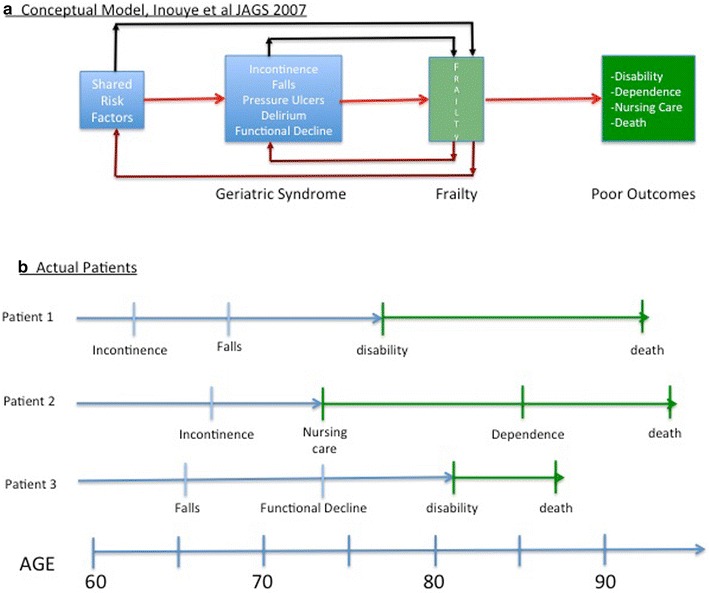
Frailty has been defined in different ways and several diagnostic tools exist, but most of them are not applicable in routine primary care. Nonetheless, general practitioners (GPs) have a natural advantage in identifying frailty, due to their continued access to patients, patient-centered approach and training. GPs have also an advantage in conducting population-based evaluation as consequence of their role of gatekeepers of the health care system. This paper aims to identify those socio-demographic and clinical profiles and the relative information sources that, from the GPs' perspective, act as frailty markers, not solely as a diagnosis of state but as the ability to identify a patient's trajectory, over time, through the aging process.
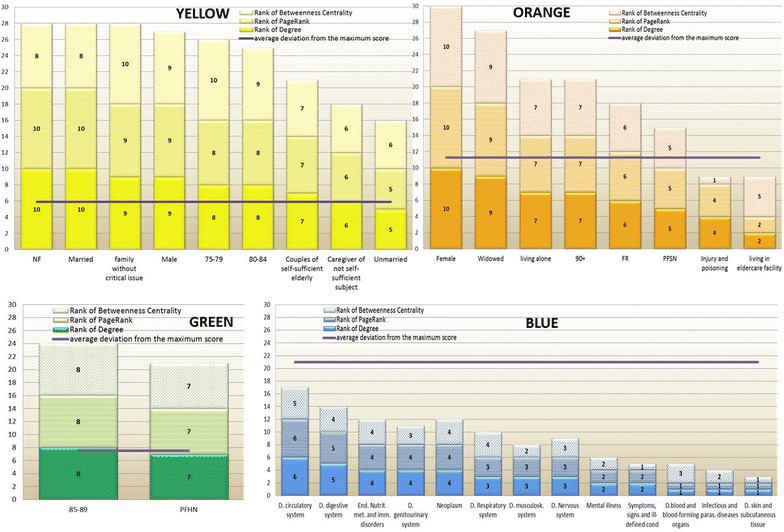
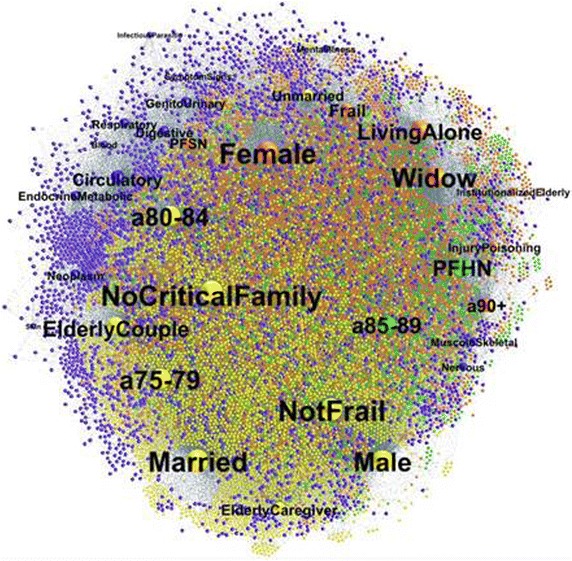
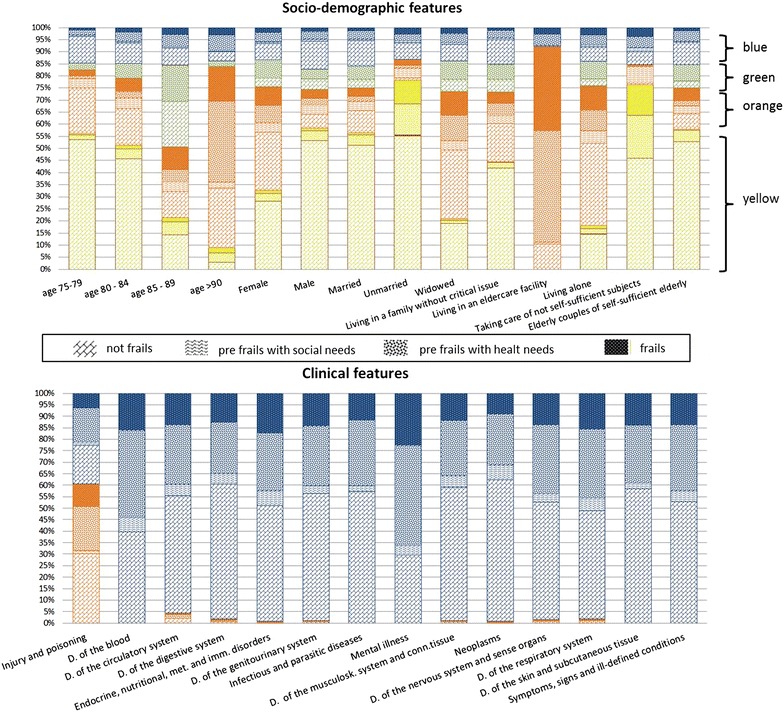
This study was performed as a survey within a population aged 75 and over, attending 148 GPs in Italy. A total of 23,996 patients were classified by GPs in distinct frailty status, without the use of a specific evaluation tool, but only referring to general indications. Co-morbidity was objectively assessed by a record-linkage with previous hospitalizations, in order to assess the occurrence of previous illnesses that could be associated with the likelihood of being identified as frails or at risk. The methodological approach is based on social network analysis (SNA), suited to explore relational aspects of complex phenomena.
Our findings reveal that GPs are able to perform low cost population-based evaluation, by exploiting the advantages of their approach to patients, combined with the information derived from their daily practice and from other sources currently available.
We believe that informative integration among different sources of available data can provide a comprehensive picture of the health state of patients in a shorter time and at lower cost. The identification of limited patient trajectories based on these observations can enable the development of critical biomarkers/diagnostics and prognostic indicators that will enhance patient care and potentially reduce inappropriate healthcare use. We also believe that network analysis is an extremely flexible research tool and a rich theoretical paradigm, and it may be used in the healthcare planning.
衰弱的定义方式多种多样,且存在多种诊断工具,但其中大多数并不适用于常规初级保健。尽管如此,全科医生(GPs)在识别衰弱方面具有天然优势,这得益于他们能够持续接触患者、以患者为中心的方法以及相关培训。由于全科医生在医疗保健系统中扮演着守门人的角色,他们在进行基于人群的评估方面也具有优势。本文旨在确定从全科医生的角度来看,那些社会人口统计学和临床特征以及相关信息来源,这些不仅作为一种状态诊断,更作为一种随着时间推移识别患者在衰老过程中的轨迹的能力,充当衰弱标志物。
本研究是在意大利148名全科医生所接诊的75岁及以上人群中进行的一项调查。共有23996名患者被全科医生分类为不同的衰弱状态,未使用特定评估工具,仅参考一般指征。通过与既往住院记录进行关联客观评估共病情况,以评估可能与被认定为衰弱或处于风险状态的可能性相关的既往疾病的发生情况。该方法基于社会网络分析(SNA),适用于探索复杂现象的关系方面。
我们的研究结果表明,全科医生能够利用他们对待患者的方法优势,结合日常实践以及当前其他可用来源所获得的信息,进行低成本的基于人群的评估。
我们认为,不同可用数据源之间的信息整合能够在更短时间内以更低成本提供患者健康状况的全面图景。基于这些观察结果识别有限的患者轨迹能够促成关键生物标志物/诊断方法和预后指标的开发,这将改善患者护理并可能减少不适当的医疗保健使用。我们还认为网络分析是一种极其灵活的研究工具和丰富的理论范式,可用于医疗保健规划。