Di Siena S, Gimmelli R, Nori S L, Barbagallo F, Campolo F, Dolci S, Rossi P, Venneri M A, Giannetta E, Gianfrilli D, Feigenbaum L, Lenzi A, Naro F, Cianflone E, Mancuso T, Torella D, Isidori A M, Pellegrini M
Department of Anatomical, Histological, Forensic and Orthopedic Sciences, Sapienza University, Rome, Italy.
Department of Experimental Medicine, Sapienza University, Rome, Italy.
Cell Death Dis. 2016 Jul 28;7(7):e2317. doi: 10.1038/cddis.2016.205.
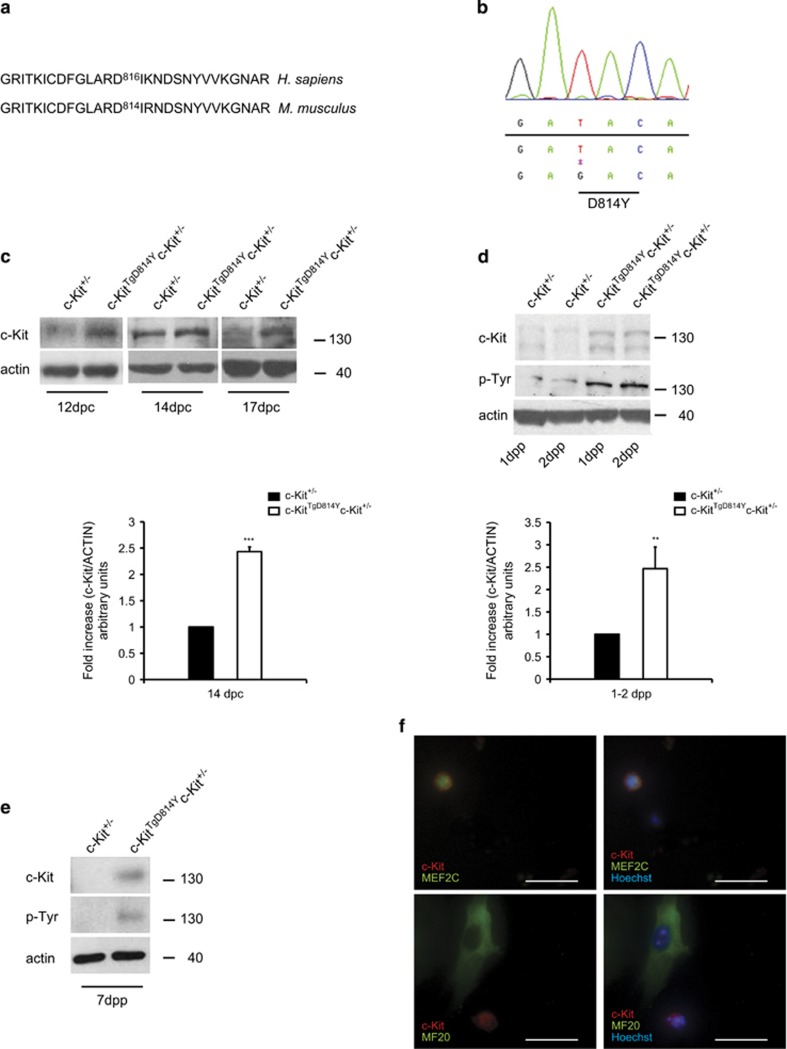
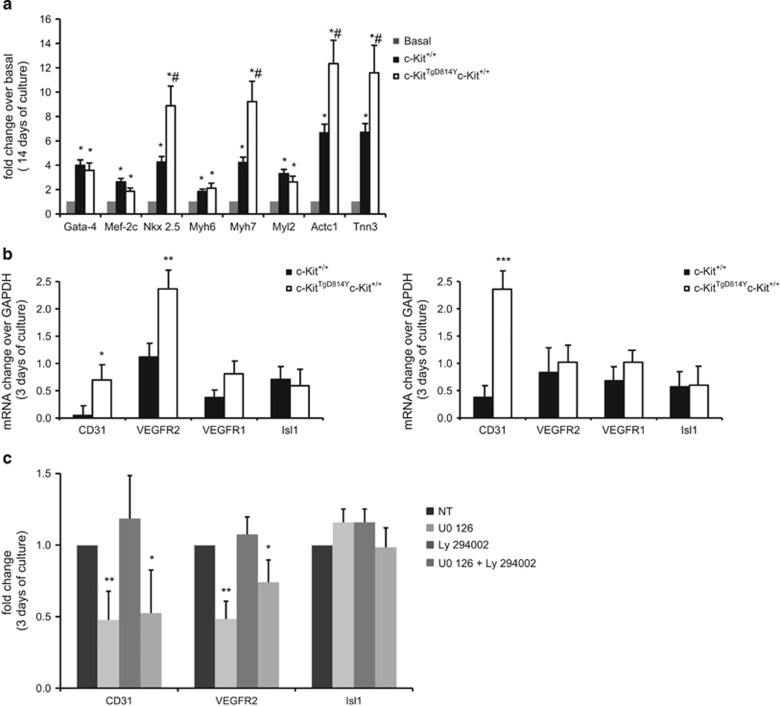
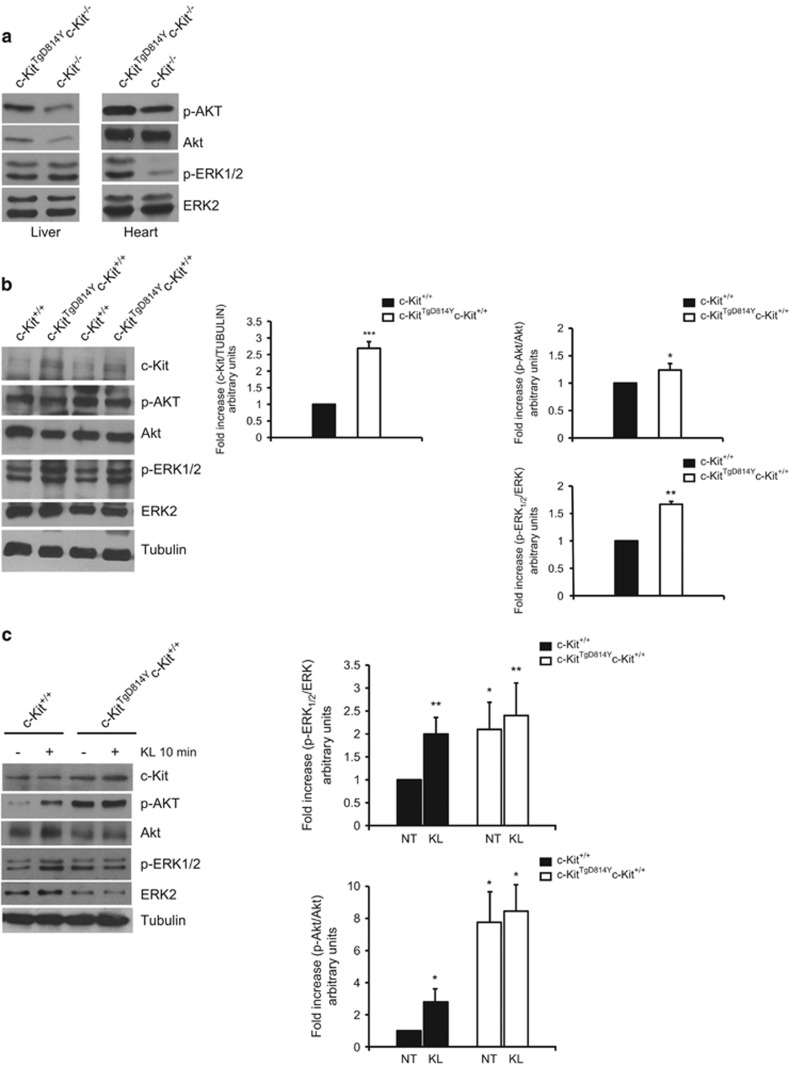
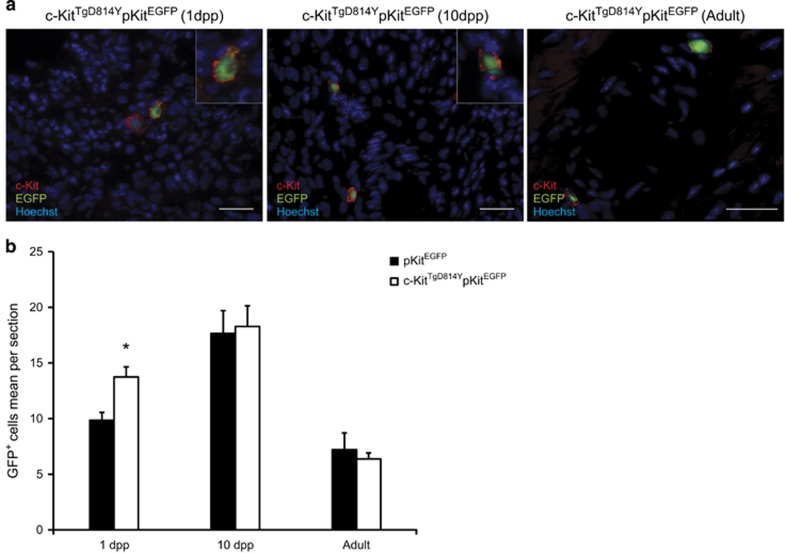
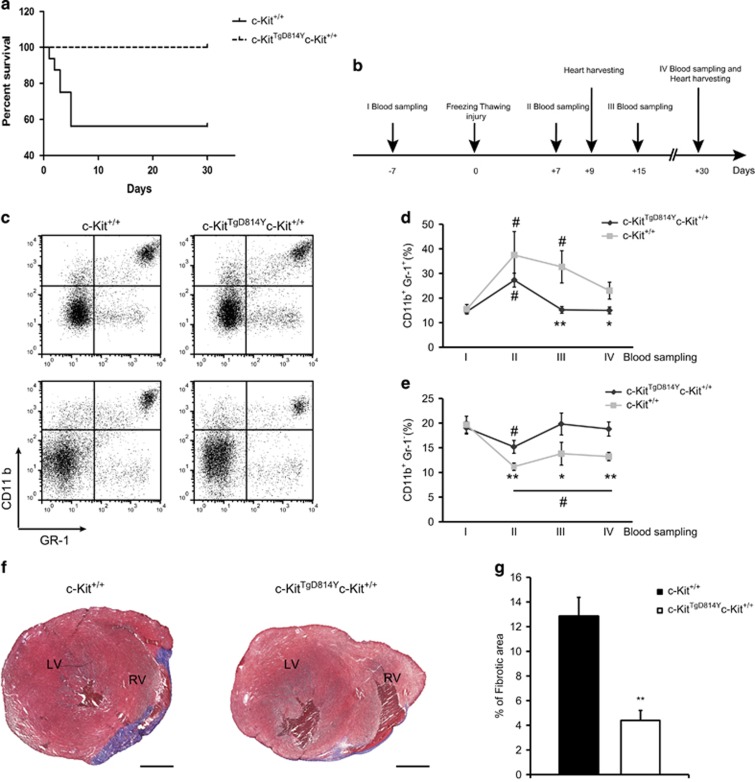
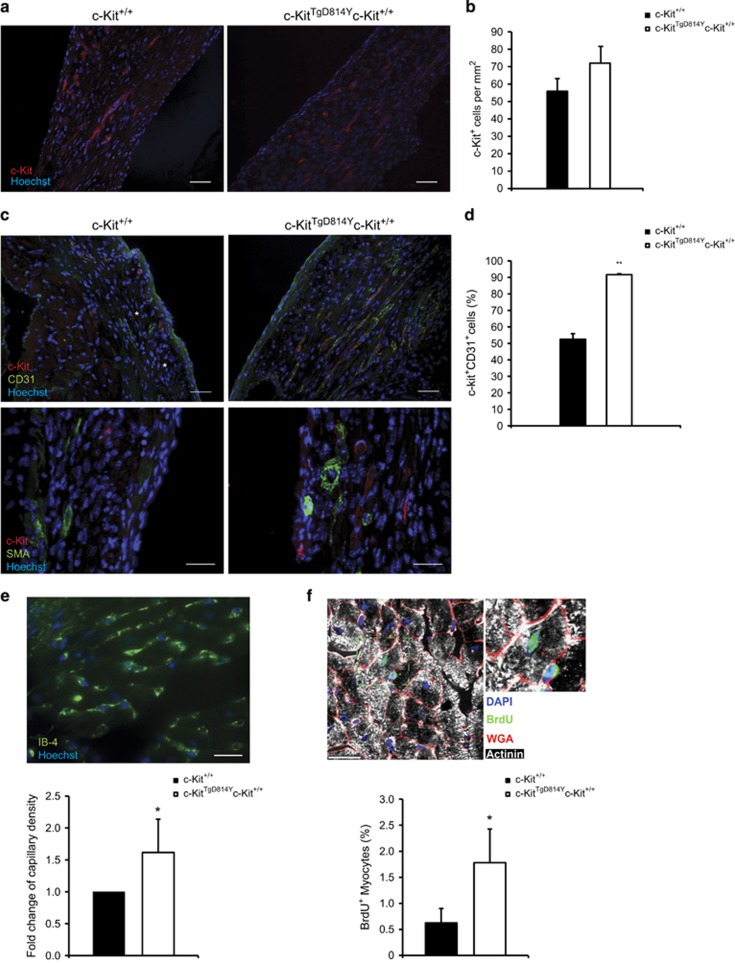
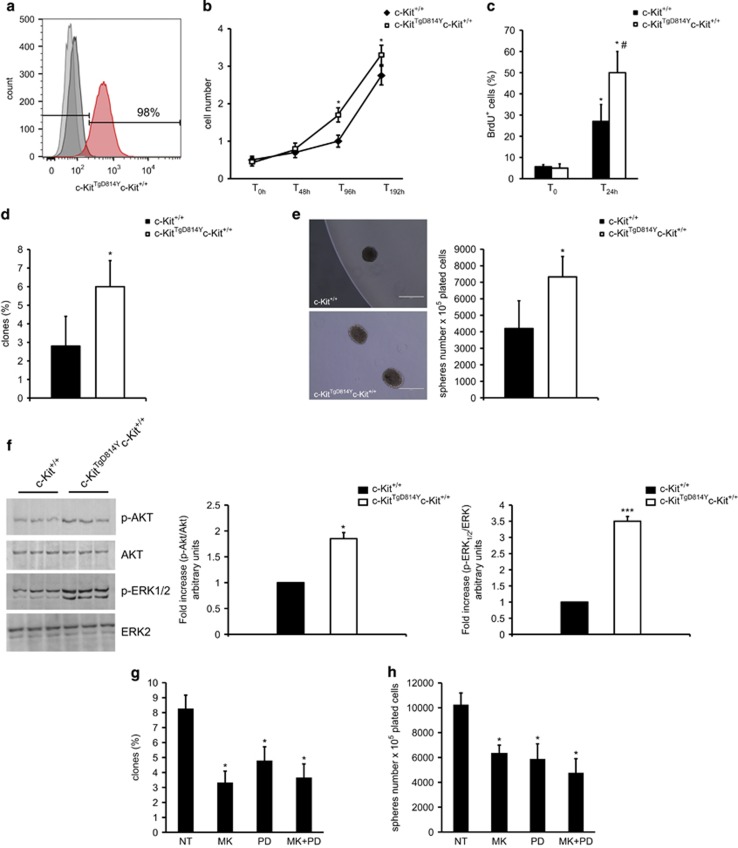
The role of endogenous c-Kit receptor activation on cardiac cell homeostasis and repair remains largely unexplored. Transgenic mice carrying an activating point mutation (TgD814Y) in the kinase domain of the c-Kit gene were generated. c-Kit(TgD814Y) receptor was expressed in the heart during embryonic development and postnatal life, in a similar timing and expression pattern to that of the endogenous gene, but not in the hematopoietic compartment allowing the study of a cardiac-specific phenotype. c-Kit(TgD814Y) mutation produced a constitutive active c-Kit receptor in cardiac tissue and cells from transgenic mice as demonstrated by the increased phosphorylation of ERK1/2 and AKT, which are the main downstream molecular effectors of c-Kit receptor signaling. In adult transgenic hearts, cardiac morphology, size and total c-Kit(+) cardiac cell number was not different compared with wt mice. However, when c-Kit(TgD814Y) mice were subjected to transmural necrotic heart damage by cryoinjury (CI), all transgenic survived, compared with half of wt mice. In the sub-acute phase after CI, transgenic and wt mice showed similar heart damage. However, 9 days after CI, transgenic mice exhibited an increased number of c-Kit(+)CD31(+) endothelial progenitor cells surrounding the necrotic area. At later follow-up, a consistent reduction of fibrotic area, increased capillary density and increased cardiomyocyte replenishment rate (as established by BrdU incorporation) were observed in transgenic compared with wt mice. Consistently, CD45(-)c-Kit(+) cardiac stem cells isolated from transgenic c-Kit(TgD814Y) mice showed an enhanced endothelial and cardiomyocyte differentiation potential compared with cells isolated from the wt. Constitutive activation of c-Kit receptor in mice is associated with an increased cardiac myogenic and vasculogenic reparative potential after injury, with a significant improvement of survival.
内源性c-Kit受体激活在心脏细胞稳态和修复中的作用在很大程度上仍未得到探索。我们构建了在c-Kit基因激酶结构域携带激活点突变(TgD814Y)的转基因小鼠。c-Kit(TgD814Y)受体在胚胎发育和出生后心脏中表达,其时间和表达模式与内源性基因相似,但在造血区室中不表达,从而能够研究心脏特异性表型。如ERK1/2和AKT磷酸化增加所示,c-Kit(TgD814Y)突变在转基因小鼠的心脏组织和细胞中产生了组成型活性c-Kit受体,ERK1/2和AKT是c-Kit受体信号传导的主要下游分子效应器。在成年转基因心脏中,心脏形态、大小和总的c-Kit(+)心脏细胞数量与野生型小鼠相比没有差异。然而,当c-Kit(TgD814Y)小鼠通过冷冻损伤(CI)遭受透壁性坏死性心脏损伤时,所有转基因小鼠都存活了下来,而野生型小鼠只有一半存活。在CI后的亚急性期,转基因小鼠和野生型小鼠表现出相似的心脏损伤。然而,CI后9天,转基因小鼠坏死区域周围的c-Kit(+)CD31(+)内皮祖细胞数量增加。在随后的随访中,与野生型小鼠相比,转基因小鼠的纤维化面积持续减少、毛细血管密度增加以及心肌细胞补充率增加(通过BrdU掺入确定)。同样,与从野生型小鼠分离的细胞相比,从转基因c-Kit(TgD814Y)小鼠分离的CD45(-)c-Kit(+)心脏干细胞显示出增强的内皮细胞和心肌细胞分化潜能。小鼠中c-Kit受体的组成型激活与损伤后心脏生肌和血管生成修复潜能增加以及存活率显著提高有关。