Liu Xuehua, Li Mengmeng, Peng Yuzhu, Hu Xiaoshan, Xu Jing, Zhu Shasha, Yu Zhangbin, Han Shuping
Department of Cardiology, Nanjing Drum Tower Hospital, The Affiliated Hospital of Nanjing University Medical School, Nanjing, China.
State Key Laboratory of Reproductive Medicine, Department of Pediatrics, Nanjing Maternity and Child Health Care Hospital Affiliated with Nanjing Medical University, Nanjing, China.
Exp Mol Med. 2016 Jul 29;48(7):e248. doi: 10.1038/emm.2016.57.
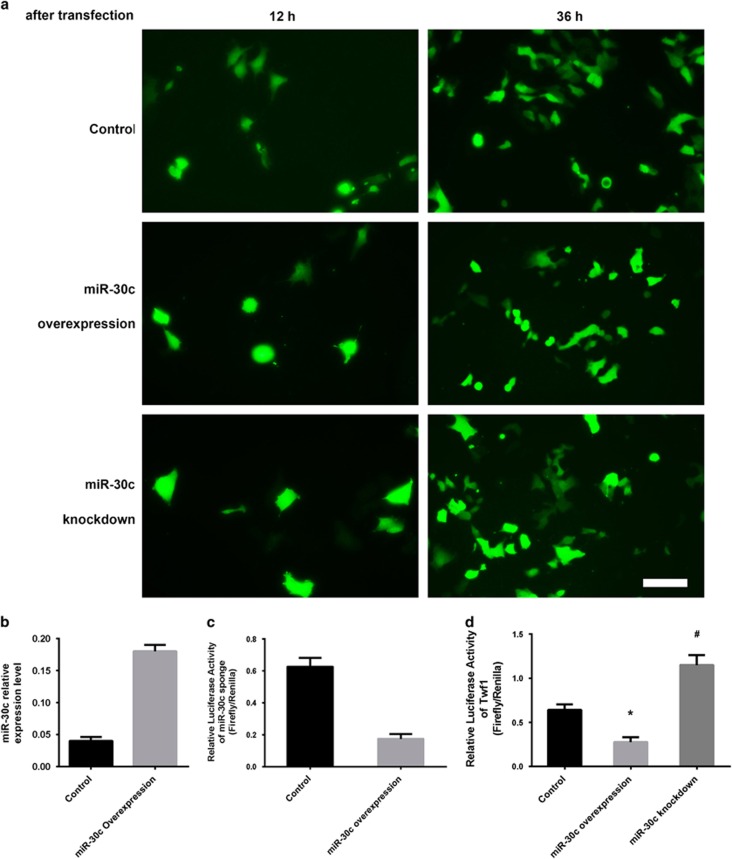
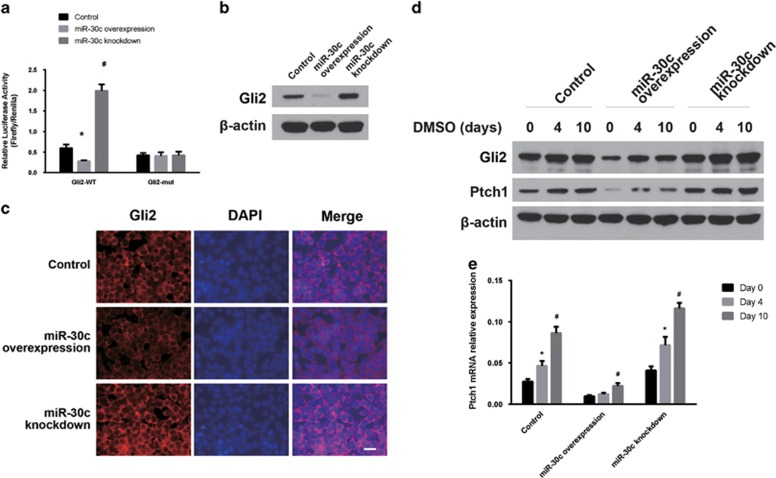
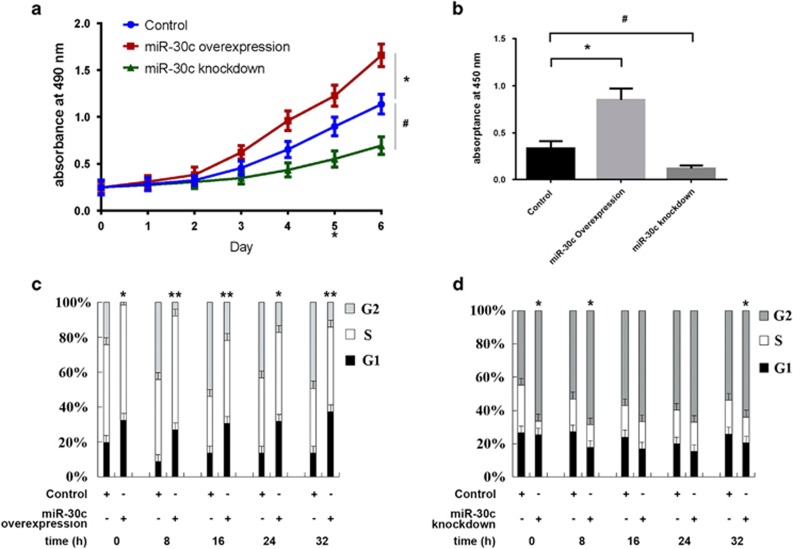
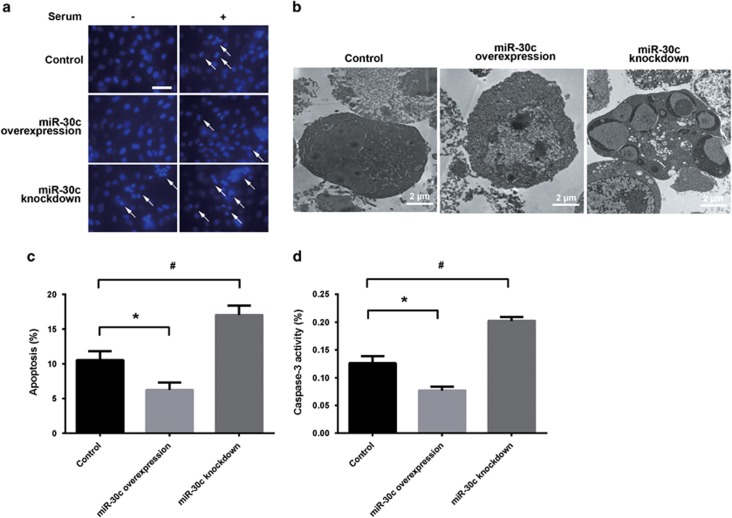
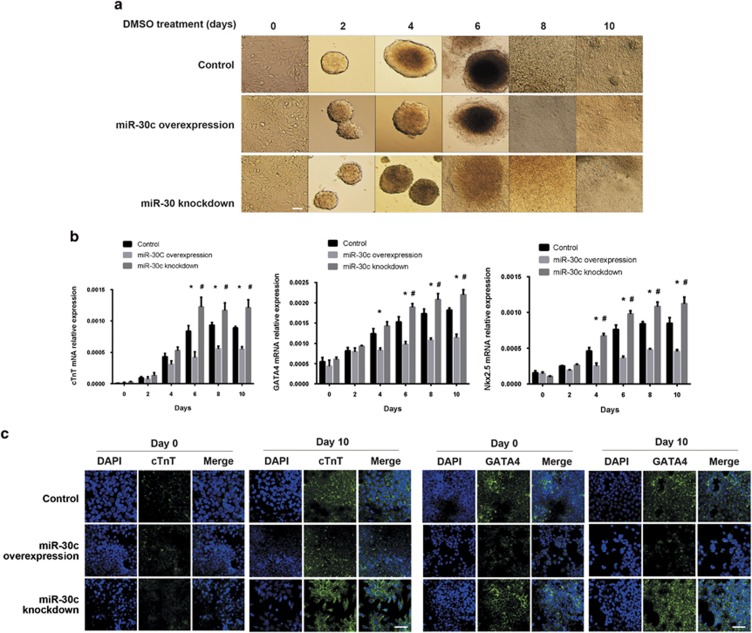
MicroRNAs (miRNAs) are small, non-coding single-stranded RNAs that suppress protein expression by binding to the 3' untranslated regions of their target genes. Many studies have shown that miRNAs have important roles in congenital heart diseases (CHDs) by regulating gene expression and signaling pathways. We previously found that miR-30c was highly expressed in the heart tissues of aborted embryos with ventricular septal defects. Therefore, this study aimed to explore the effects of miR-30c in CHDs. miR-30c was overexpressed or knocked down in P19 cells, a myocardial cell model that is widely used to study cardiogenesis. We found that miR-30c overexpression not only increased cell proliferation by promoting cell entry into S phase but also suppressed cell apoptosis. In addition, we found that miR-30c inhibited dimethyl sulfoxide-induced differentiation of P19 cells. miR-30c knockdown, in contrast, inhibited cell proliferation and increased apoptosis and differentiation. The Sonic hedgehog (Shh) signaling pathway is essential for normal embryonic development. Western blotting and luciferase assays revealed that Gli2, a transcriptional factor that has essential roles in the Shh signaling pathway, was a potential target gene of miR-30c. Ptch1, another important player in the Shh signaling pathway and a transcriptional target of Gli2, was downregulated by miR-30c overexpression and upregulated by miR-30c knockdown. Collectively, our study revealed that miR-30c suppressed P19 cell differentiation by inhibiting the Shh signaling pathway and altered the balance between cell proliferation and apoptosis, which may result in embryonic cardiac malfunctions.
微小RNA(miRNA)是一类小的、非编码单链RNA,通过与靶基因的3'非翻译区结合来抑制蛋白质表达。许多研究表明,miRNA通过调节基因表达和信号通路在先天性心脏病(CHD)中发挥重要作用。我们之前发现miR-30c在患有室间隔缺损的流产胚胎的心脏组织中高表达。因此,本研究旨在探讨miR-30c在CHD中的作用。在P19细胞(一种广泛用于研究心脏发生的心肌细胞模型)中过表达或敲低miR-30c。我们发现miR-30c过表达不仅通过促进细胞进入S期增加细胞增殖,还抑制细胞凋亡。此外,我们发现miR-30c抑制二甲基亚砜诱导的P19细胞分化。相反,miR-30c敲低抑制细胞增殖并增加凋亡和分化。 Sonic hedgehog(Shh)信号通路对正常胚胎发育至关重要。蛋白质印迹和荧光素酶测定显示,Gli2(一种在Shh信号通路中起关键作用的转录因子)是miR-30c的潜在靶基因。Ptch1是Shh信号通路中的另一个重要参与者,也是Gli2的转录靶点,它在miR-30c过表达时下调,在miR-30c敲低时上调。总的来说,我们的研究表明,miR-30c通过抑制Shh信号通路抑制P19细胞分化,并改变细胞增殖和凋亡之间的平衡,这可能导致胚胎心脏功能障碍。