Peng Tingting, Lin Shiqi, Niu Boyi, Wang Xinyi, Huang Ying, Zhang Xuejuan, Li Ge, Pan Xin, Wu Chuanbin
School of Pharmaceutical Sciences, Sun Yat-Sen University, Guangzhou 510006, China.
Guangzhou Neworld Pharm. Co. Ltd., Guangzhou 51006, China.
Acta Pharm Sin B. 2016 Jul;6(4):308-18. doi: 10.1016/j.apsb.2016.03.011. Epub 2016 May 4.
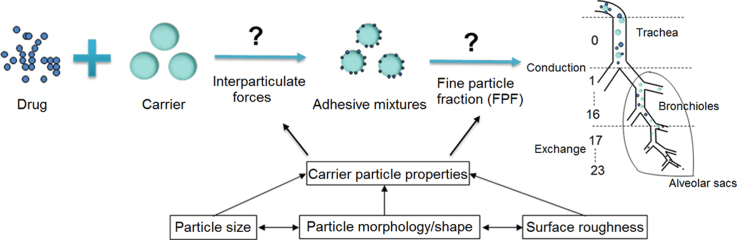
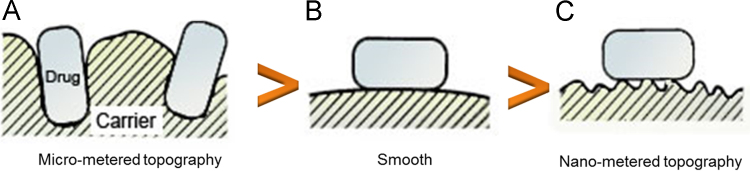
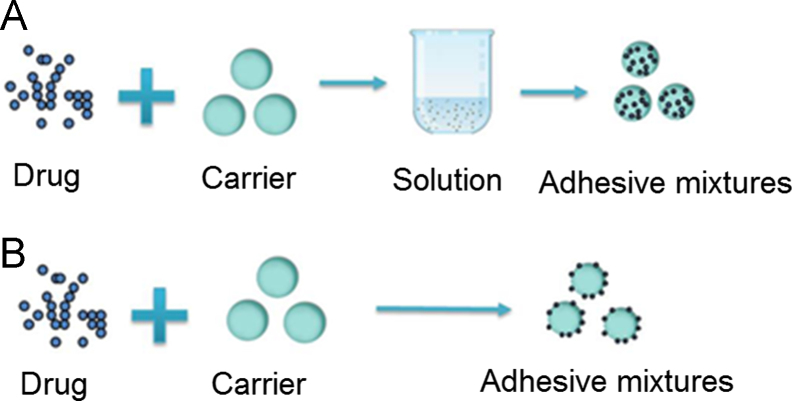
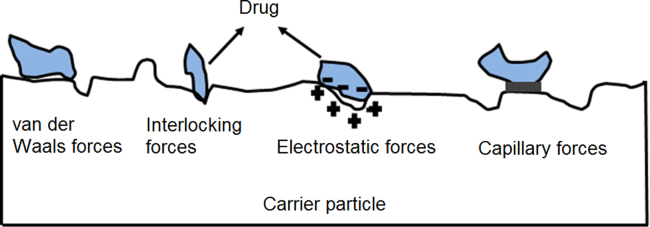
Dry powder inhalers (DPIs) offer distinct advantages as a means of pulmonary drug delivery and have attracted much attention in the field of pharmaceutical science. DPIs commonly contain micronized drug particles which, because of their cohesiveness and strong propensity to aggregate, have poor aerosolization performance. Thus carriers with a larger particle size are added to address this problem. However, the performance of DPIs is profoundly influenced by the physical properties of the carrier, particularly their particle size, morphology/shape and surface roughness. Because these factors are interdependent, it is difficult to completely understand how they individually influence DPI performance. The purpose of this review is to summarize and illuminate how these factors affect drug-carrier interaction and influence the performance of DPIs.
干粉吸入器(DPIs)作为一种肺部给药方式具有显著优势,在制药科学领域备受关注。DPIs通常含有微粉化药物颗粒,由于其粘性和强烈的聚集倾向,雾化性能较差。因此,添加粒径较大的载体来解决这个问题。然而,DPIs的性能受到载体物理性质的深刻影响,特别是其粒径、形态/形状和表面粗糙度。由于这些因素相互依存,很难完全理解它们如何分别影响DPIs的性能。本综述的目的是总结并阐明这些因素如何影响药物-载体相互作用并影响DPIs的性能。