Rayegan Samira, Dehpour Ahmad Reza, Sharifi Ali Mohammad
Razi Drug Research Center and Dept. of Pharmacology, Iran University of Medical Sciences, Tehran, Iran.
Department of Pharmacology, School of Medicine, Tehran University of Medical Sciences, Tehran, Iran.
Metab Brain Dis. 2017 Feb;32(1):41-49. doi: 10.1007/s11011-016-9883-1. Epub 2016 Aug 1.
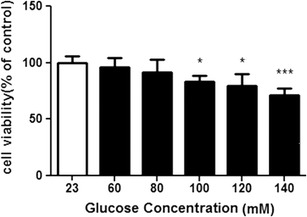
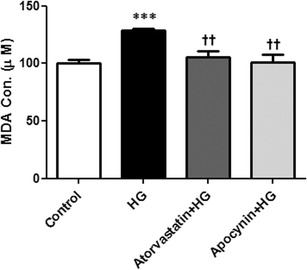
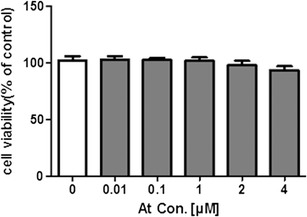
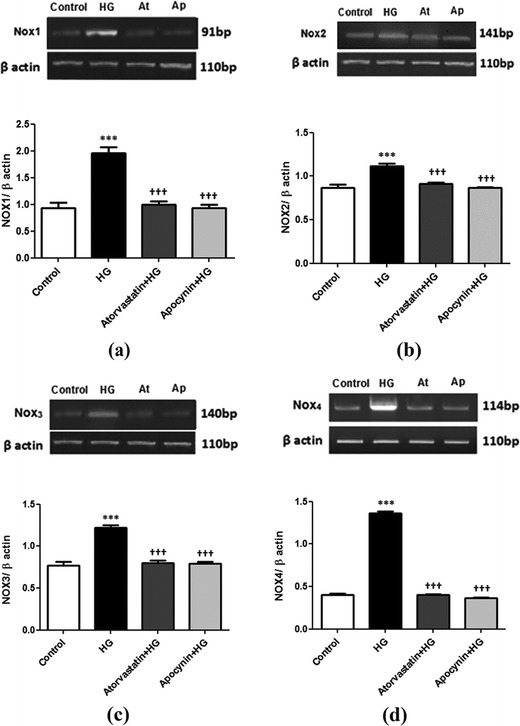
Overproduction of reactive oxygen species (ROS) by NADPH oxidase (NOX) activation has been considered the essential mechanism induced by hyperglycemia in various tissues. However, there is no comprehensive study on the role of NOXs in high glucose (HG)-induced toxic effect in neural tissues. Recently, a therapeutic strategy in oxidative related pathologies has been introduced by blocking the undesirable actions of NOX enzymes by small molecules. The protective roles of Statins in ameliorating oxidative stress by NOX inhibition have been shown in some tissues except neural. We hypothesized then, that different NOXs may have role in HG-induced neural cell injury. Furthermore, we postulate that Atorvastatin as a small molecule may modulate this NOXs activity to protect neural cells. Undifferentiated PC12 cells were treated with HG (140 mM/24 h) in the presence and absence of Atorvastatin (1 μM/96 h). The cell viability was measured by MTT assay and the gene and protein expressions profile of NOX (1-4) were determined by RT-PCR and western blotting, respectively. Levels of ROS and malondialdehyde (MDA) were also evaluated. Gene and protein expression levels of NOX (1-4) and consequently ROS and MDA levels were elevated in HG-treated PC12 cells. Atorvastatin could significantly decrease HG-induced NOXs, ROS and MDA elevation and improve impaired cell viability. It can be concluded that HG could elevate NOXs activity, ROS and MDA levels in neural tissues and Atorvastatin as a small molecule NOX inhibitor drug may prevent and delay diabetic complications, particularly neuropathy.
NADPH氧化酶(NOX)激活导致的活性氧(ROS)过度产生被认为是高血糖在各种组织中诱导的关键机制。然而,关于NOXs在高糖(HG)诱导的神经组织毒性作用中的作用,尚无全面研究。最近,通过小分子阻断NOX酶的不良作用,引入了一种针对氧化相关病理的治疗策略。除神经组织外,他汀类药物在某些组织中已显示出通过抑制NOX改善氧化应激的保护作用。因此,我们推测不同的NOXs可能在HG诱导的神经细胞损伤中起作用。此外,我们假设阿托伐他汀作为一种小分子可能调节这种NOXs活性以保护神经细胞。将未分化的PC12细胞在有或无阿托伐他汀(1μM/96小时)的情况下用HG(140mM/24小时)处理。通过MTT法测定细胞活力,分别通过RT-PCR和蛋白质印迹法测定NOX(1-4)的基因和蛋白表达谱。还评估了ROS和丙二醛(MDA)的水平。在HG处理的PC12细胞中,NOX(1-4)的基因和蛋白表达水平以及ROS和MDA水平均升高。阿托伐他汀可显著降低HG诱导的NOXs、ROS和MDA升高,并改善受损的细胞活力。可以得出结论,HG可提高神经组织中NOXs活性、ROS和MDA水平,而阿托伐他汀作为一种小分子NOX抑制剂药物可能预防和延缓糖尿病并发症,特别是神经病变。