Szostak Agnieszka, Ogłuszka Magdalena, Te Pas Marinus F W, Poławska Ewa, Urbański Paweł, Juszczuk-Kubiak Edyta, Blicharski Tadeusz, Pareek Chandra Shekhar, Dunkelberger Jenelle R, Horbańczuk Jarosław O, Pierzchała Mariusz
Institute of Genetics and Animal Breeding, Polish Academy of Science, Jastrzębiec, Poland.
Animal Breeding and Genetics Centre, Wageningen UR Livestock Research, Lelystad, The Netherlands.
Genes Nutr. 2016 Mar 17;11:9. doi: 10.1186/s12263-016-0517-4. eCollection 2016.
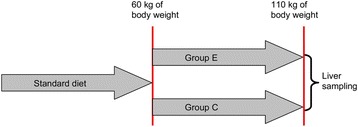
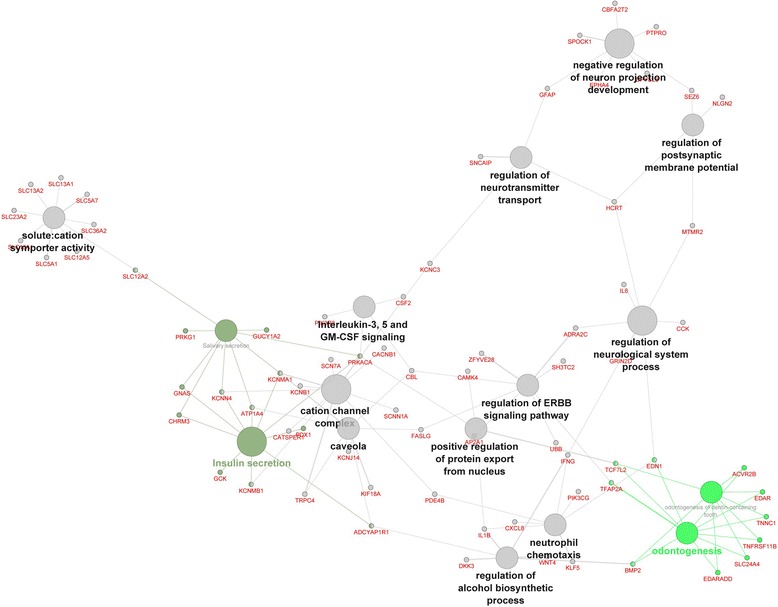
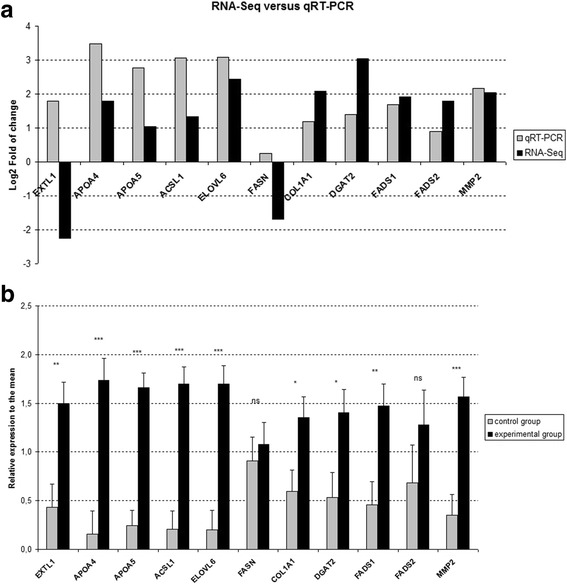
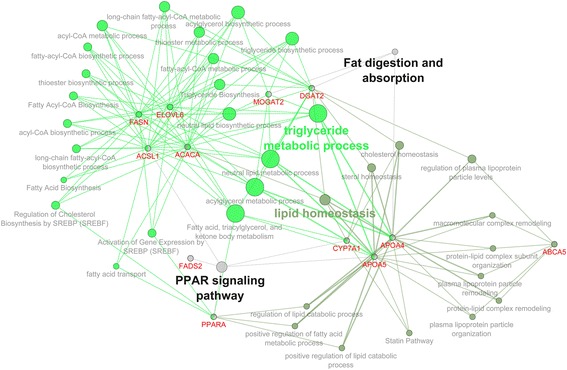
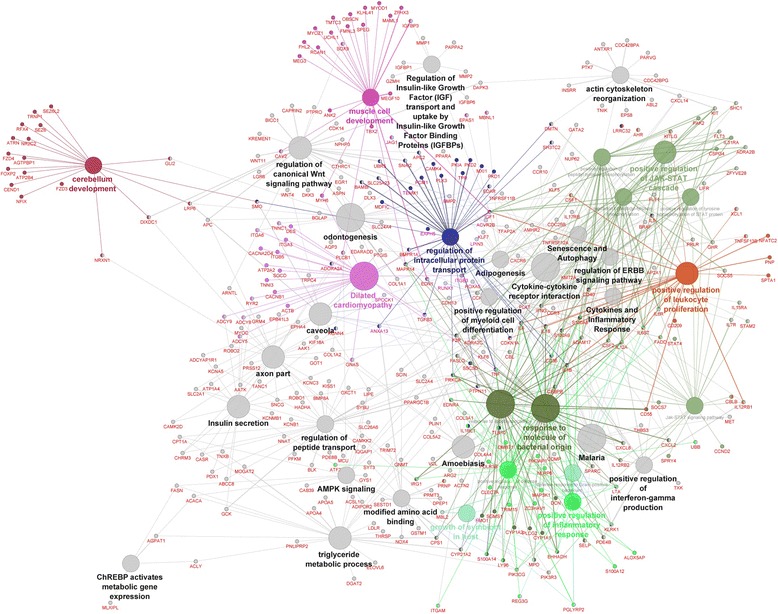
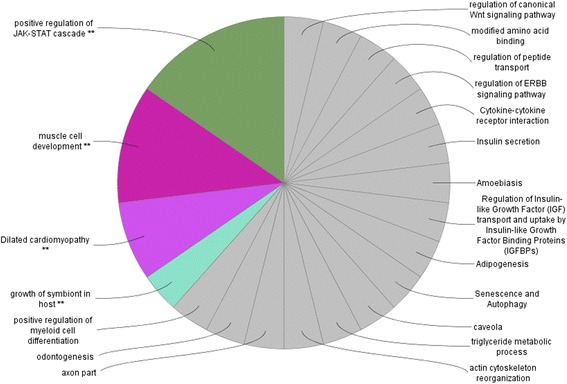
The optimal ratio of omega-6 to omega-3 polyunsaturated fatty acids (PUFAs) is important for keeping the homeostasis of biological processes and metabolism, yet the underlying biological mechanism is poorly understood. The objective of this study was to identify changes in the pig liver transcriptome induced by a diet enriched with omega-6 and omega-3 fatty acids and to characterize the biological mechanisms related to PUFA metabolism. Polish Landrace pigs (n = 12) were fed diet enriched with linoleic acid (LA, omega-6) and α-linolenic acid (ALA, omega-3) or standard diet as a control. The fatty acid profiling was assayed in order to verify how feeding influenced the fatty acid content in the liver, and subsequently next-generation sequencing (NGS) was used to identify differentially expressed genes (DEG) between transcriptomes between dietary groups. The biological mechanisms and pathway interaction networks were identified using DAVID and Cytoscape tools. Fatty acid profile analysis indicated a higher contribution of PUFAs in the liver for LA- and ALA-enriched diet group, particularly for the omega-3 fatty acid family, but not omega-6. Next-generation sequencing identified 3565 DEG, 1484 of which were induced and 2081 were suppressed by PUFA supplementation. A low ratio of omega-6/omega-3 fatty acids resulted in the modulation of fatty acid metabolism pathways and over-representation of genes involved in energy metabolism, signal transduction, and immune response pathways. In conclusion, a diet enriched with omega-6 and omega-3 fatty acids altered the transcriptomic profile of the pig liver and would influence animal health status.
ω-6与ω-3多不饱和脂肪酸(PUFAs)的最佳比例对于维持生物过程和新陈代谢的稳态至关重要,但其潜在的生物学机制仍知之甚少。本研究的目的是确定富含ω-6和ω-3脂肪酸的饮食诱导猪肝转录组的变化,并表征与PUFA代谢相关的生物学机制。选用12头波兰大白猪,一组饲喂富含亚油酸(LA,ω-6)和α-亚麻酸(ALA,ω-3)的日粮,另一组饲喂标准日粮作为对照。检测脂肪酸谱以验证饲喂方式如何影响肝脏中的脂肪酸含量,随后使用二代测序(NGS)来鉴定不同日粮组转录组之间的差异表达基因(DEG)。使用DAVID和Cytoscape工具鉴定生物学机制和通路相互作用网络。脂肪酸谱分析表明,富含LA和ALA的日粮组中,PUFAs在肝脏中的占比更高,尤其是ω-3脂肪酸家族,但ω-6并非如此。二代测序鉴定出3565个DEG,其中1484个被PUFA补充诱导,2081个被抑制。低ω-6/ω-3脂肪酸比例导致脂肪酸代谢途径的调节以及参与能量代谢、信号转导和免疫反应途径的基因过度表达。总之,富含ω-6和ω-3脂肪酸的饮食改变了猪肝的转录组图谱,并会影响动物健康状况。