Ogłuszka Magdalena, Szostak Agnieszka, Te Pas Marinus F W, Poławska Ewa, Urbański Paweł, Blicharski Tadeusz, Pareek Chandra S, Juszczuk-Kubiak Edyta, Dunkelberger Jenelle R, Horbańczuk Jarosław O, Pierzchała Mariusz
Institute of Genetics and Animal Breeding of the Polish Academy of Sciences, Postępu 36A, 05-552 Jastrzębiec, Poland.
Breeding and Genomic Centre, Wageningen UR Livestock Research, 6700 AH Wageningen, The Netherlands.
Genes Nutr. 2017 Jan 31;12:4. doi: 10.1186/s12263-017-0552-8. eCollection 2017.
The level of omega-6 and omega-3 polyunsaturated fatty acids can affect many cellular systems and function via nuclear receptors or the bioactive lipid regulation of gene expression. The objective of this study was to investigate changes in the muscle transcriptome and the biological functions regulated by increased consumption of omega-3 and omega-6 fatty acids in the pig gluteus medius muscle.
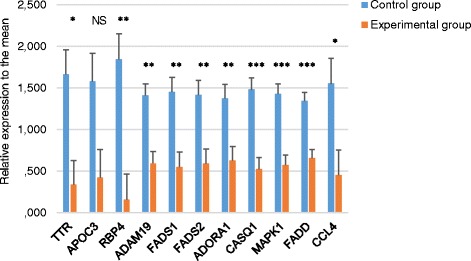
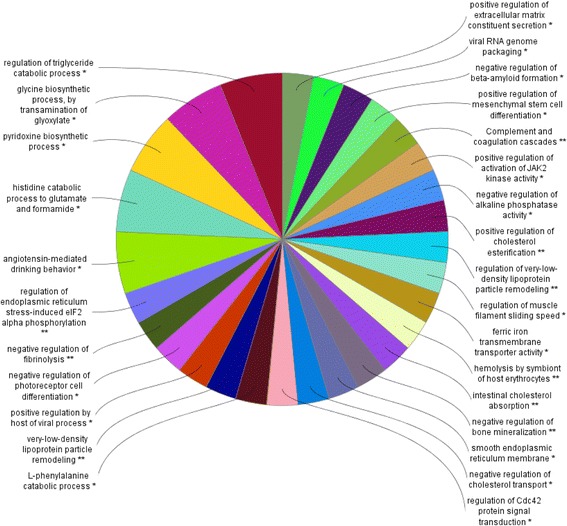
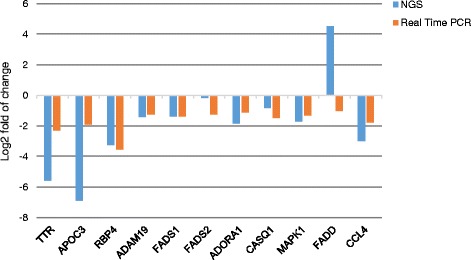
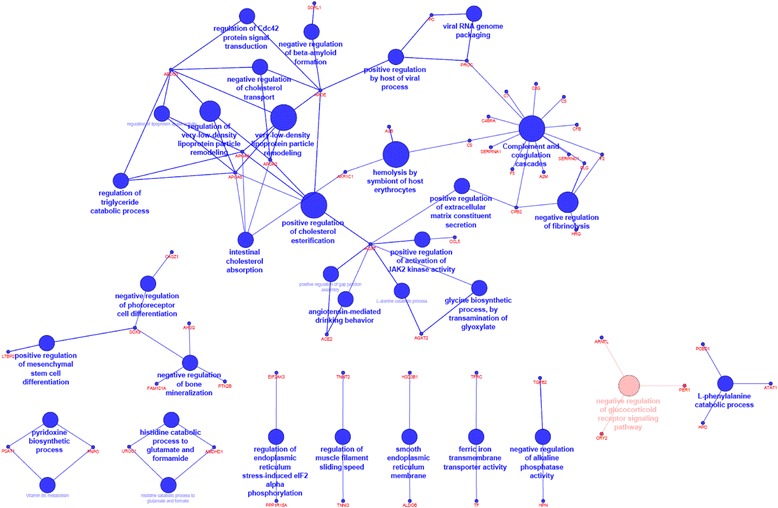
The transcriptome of the gluteus medius muscle was studied for pigs subjected to either a control diet or a diet supplemented with linseed and rapeseed oil to increase polyunsaturated fatty acid content. Next-generation sequencing (NGS) was used to generate the muscle tissue transcriptome database pointing differentially expressed genes (DEG). Comparative expression analyses identified 749 genes significantly differing at least in the twofold of change between two groups of animals fed with divergent level of omega-3 and omega-6 fatty acids. The expression of 219 genes was upregulated, and the expression of 530 genes was downregulated in the group of pigs supplemented with omega-3 and omega-6 fatty acids in relation to control group pigs. Results of RNA-seq indicated a role of fatty acid in the regulation of the expression of genes which are essential for muscle tissue development and functioning. Functional analysis revealed that the identified genes were important for a number of biological processes including inflammatory response, signaling, lipid metabolism, and homeostasis.
Summarizing, obtained results provide strong evidence that omega-6 and omega-3 fatty acids regulate fundamental metabolic processes in muscle tissue development and functioning.
ω-6和ω-3多不饱和脂肪酸水平可通过核受体或基因表达的生物活性脂质调节影响许多细胞系统和功能。本研究的目的是调查猪臀中肌中ω-3和ω-6脂肪酸摄入量增加对肌肉转录组和所调节的生物学功能的影响。
对喂食对照日粮或添加亚麻籽和菜籽油以增加多不饱和脂肪酸含量日粮的猪的臀中肌转录组进行了研究。利用新一代测序(NGS)生成肌肉组织转录组数据库,找出差异表达基因(DEG)。比较表达分析确定,在两组摄入不同水平ω-3和ω-6脂肪酸的动物之间,有749个基因的差异至少达到两倍变化。与对照组猪相比,在补充了ω-3和ω-6脂肪酸的猪群中,219个基因的表达上调,530个基因的表达下调。RNA测序结果表明脂肪酸在调节对肌肉组织发育和功能至关重要的基因表达中发挥作用。功能分析显示,所鉴定的基因对包括炎症反应、信号传导、脂质代谢和体内平衡在内的许多生物学过程都很重要。
总之,所得结果提供了有力证据,证明ω-6和ω-3脂肪酸在肌肉组织发育和功能中调节基本代谢过程。