Rinaldi Riccardo, Van Deynze Allen, Portis Ezio, Rotino Giuseppe L, Toppino Laura, Hill Theresa, Ashrafi Hamid, Barchi Lorenzo, Lanteri Sergio
DISAFA Plant Genetics and Breeding, University of TurinTurin, Italy; Seed Biotechnology Center, University of California, DavisDavis, CA, USA.
Seed Biotechnology Center, University of California, Davis Davis, CA, USA.
Front Plant Sci. 2016 Jul 18;7:1031. doi: 10.3389/fpls.2016.01031. eCollection 2016.
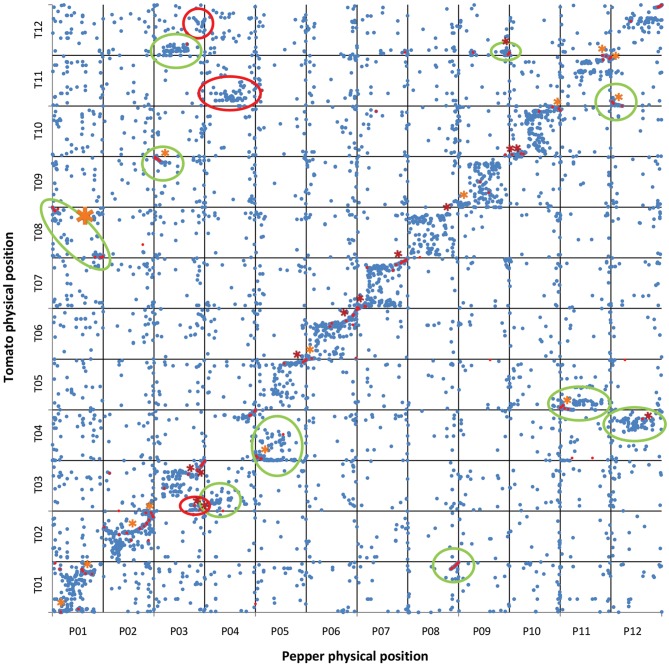
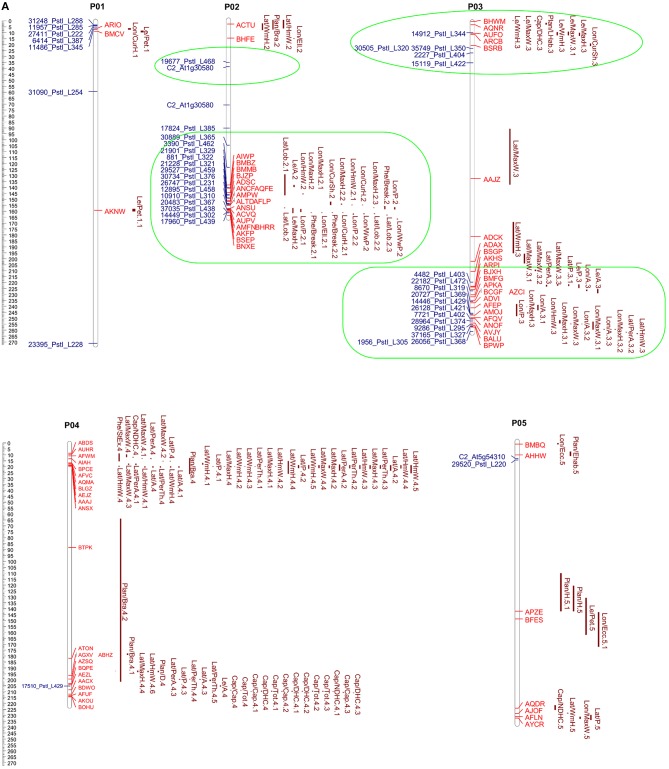
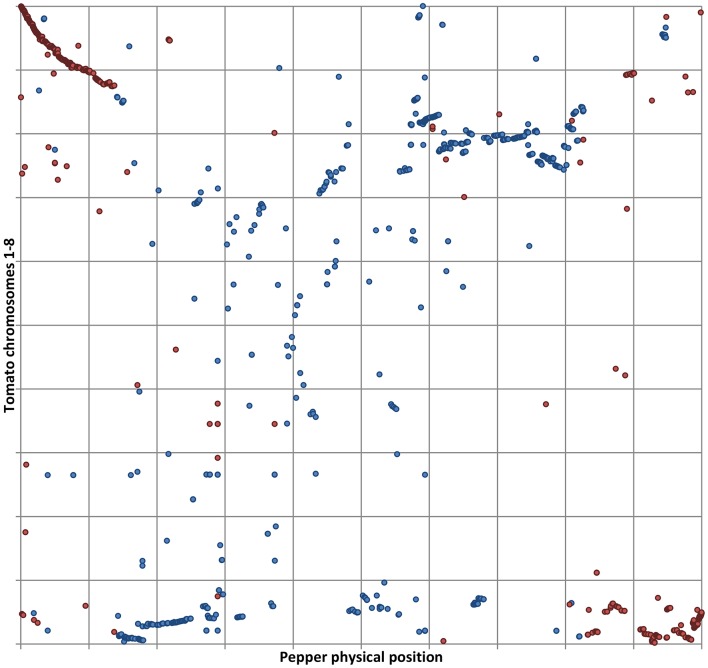
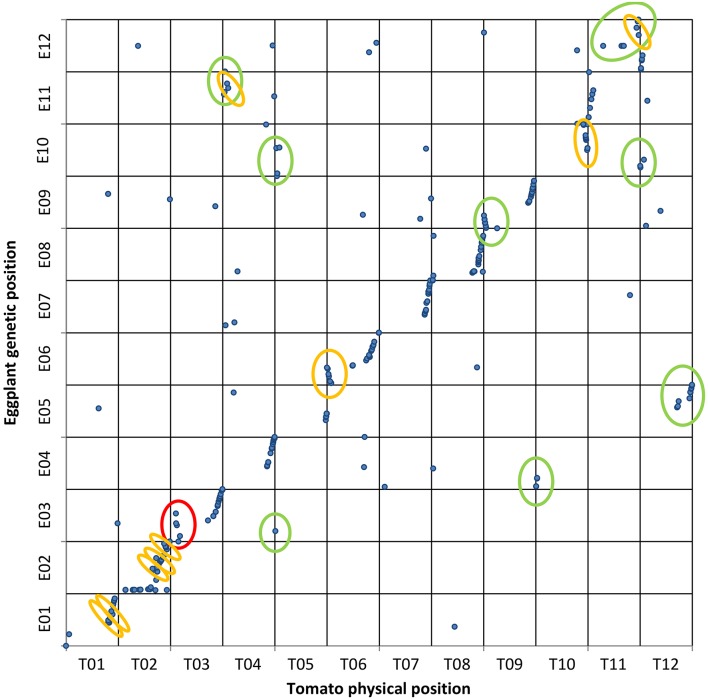
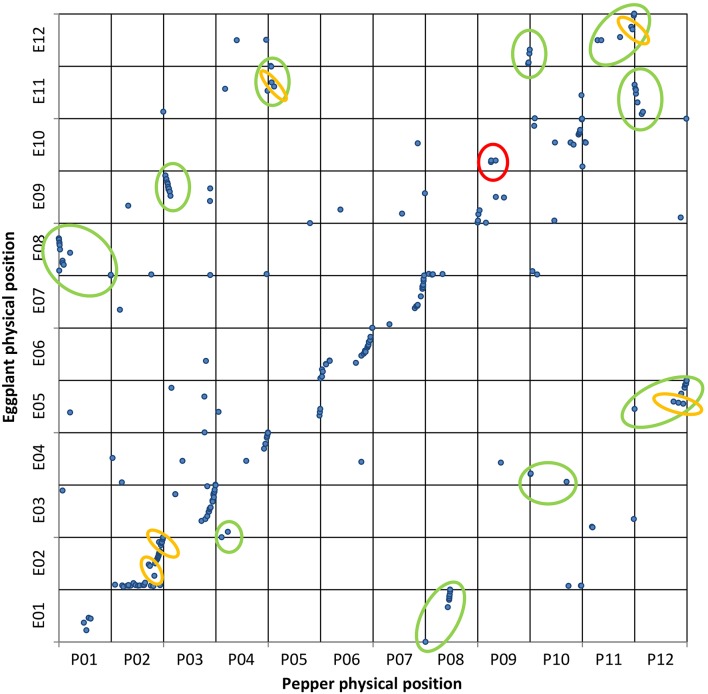
Eggplant, pepper, and tomato are the most exploited berry-producing vegetables within the Solanaceae family. Their genomes differ in size, but each has 12 chromosomes which have undergone rearrangements causing a redistribution of loci. The genome sequences of all three species are available but differ in coverage, assembly quality and percentage of anchorage. Determining their syntenic relationship and QTL orthology will contribute to exploit genomic resources and genetic data for key agronomic traits. The syntenic analysis between tomato and pepper based on the alignment of 34,727 tomato CDS to the pepper genome sequence, identified 19,734 unique hits. The resulting synteny map confirmed the 14 inversions and 10 translocations previously documented, but also highlighted 3 new translocations and 4 major new inversions. Furthermore, each of the 12 chromosomes exhibited a number of rearrangements involving small regions of 0.5-0.7 Mbp. Due to high fragmentation of the publicly available eggplant genome sequence, physical localization of most eggplant QTL was not possible, thus, we compared the organization of the eggplant genetic map with the genome sequence of both tomato and pepper. The eggplant/tomato syntenic map confirmed all the 10 translocations but only 9 of the 14 known inversions; on the other hand, a newly detected inversion was recognized while another one was not confirmed. The eggplant/pepper syntenic map confirmed 10 translocations and 8 inversions already detected and suggested a putative new translocation. In order to perform the assessment of eggplant and pepper QTL orthology, the eggplant and pepper sequence-based markers located in their respective genetic map were aligned onto the pepper genome. GBrowse in pepper was used as reference platform for QTL positioning. A set of 151 pepper QTL were located as well as 212 eggplant QTL, including 76 major QTL (PVE ≥ 10%) affecting key agronomic traits. Most were confirmed to cluster in orthologous chromosomal regions. Our results highlight that the availability of genome sequences for an increasing number of crop species and the development of "ultra-dense" physical maps provide new and key tools for detailed syntenic and orthology studies between related plant species.
茄子、辣椒和番茄是茄科中最常被研究的浆果类蔬菜。它们的基因组大小不同,但均有12条染色体,这些染色体发生了重排,导致基因座重新分布。这三个物种的基因组序列均可获取,但在覆盖度、组装质量和锚定百分比方面存在差异。确定它们的共线性关系和QTL直系同源性将有助于利用基因组资源和关键农艺性状的遗传数据。基于34727个番茄CDS与辣椒基因组序列的比对,对番茄和辣椒进行共线性分析,共鉴定出19734个独特匹配。所得的共线性图谱证实了先前记录的14次倒位和10次易位,但也突出显示了3次新的易位和4次主要的新倒位。此外,12条染色体中的每一条都表现出一些涉及0.5 - 0.7 Mbp小区域的重排。由于公开的茄子基因组序列高度碎片化,大多数茄子QTL的物理定位无法实现,因此,我们将茄子遗传图谱的组织与番茄和辣椒的基因组序列进行了比较。茄子/番茄共线性图谱证实了所有10次易位,但仅证实了14次已知倒位中的9次;另一方面,识别出一个新检测到的倒位,而另一个未得到证实。茄子/辣椒共线性图谱证实了已检测到的10次易位和8次倒位,并提示存在一个假定的新易位。为了评估茄子和辣椒QTL的直系同源性,将位于茄子和辣椒各自遗传图谱中的基于序列的标记与辣椒基因组进行比对。辣椒中的GBrowse被用作QTL定位的参考平台。定位了一组151个辣椒QTL以及212个茄子QTL,其中包括76个影响关键农艺性状的主要QTL(PVE≥10%)。大多数被证实聚集在直系同源染色体区域。我们的结果表明,越来越多作物物种的基因组序列的可用性以及“超密集”物理图谱的发展为相关植物物种之间详细的共线性和直系同源性研究提供了新的关键工具。