Knowles Rachel Louise, Tadic Valerija, Hogan Ailbhe, Bull Catherine, Rahi Jugnoo Sangeeta, Dezateux Carol
Life Course Epidemiology and Biostatistics Section, Population Policy and Practice Programme, UCL Institute of Child Health, University College London, London, United Kingdom.
Cardiac Unit, Great Ormond Street Hospital for Children NHS Trust, London, United Kingdom.
PLoS One. 2016 Aug 3;11(8):e0159326. doi: 10.1371/journal.pone.0159326. eCollection 2016.
Understanding children's views about living with congenital heart defects (CHDs) is fundamental to supporting their successful participation in daily life, school and peer relationships. As an adjunct to a health and quality of life outcomes questionnaire, we asked school-age children who survived infant heart procedures to describe their experiences of living with CHDs.
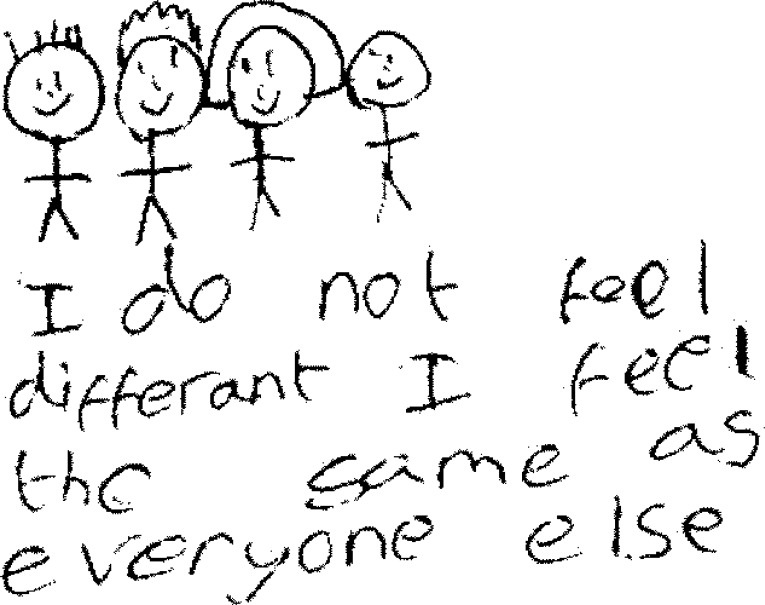
In a UK-wide cohort study, children aged 10 to 14 years with CHDs self-completed postal questionnaires that included an open question about having a 'heart problem'. We compared the characteristics of children with more and less severe cardiac diagnoses and, through collaborative inductive content analysis, investigated the subjective experiences and coping strategies described by children in both clinical severity groups.
Text and/or drawings were returned by 436 children (246 boys [56%], mean age 12.1 years [SD 1.0; range 10-14]); 313 had less severe (LS) and 123 more severe (MS) cardiac diagnoses. At the most recent hospital visit, a higher proportion of the MS group were underweight (more than two standard deviations below the mean for age) or cyanosed (underweight: MS 20.0%, LS 9.9%; cyanosed: MS 26.2%, LS 3.5%). Children in the MS group described concerns about social isolation and feeling 'different', whereas children with less severe diagnoses often characterised their CHD as 'not a big thing'. Some coping strategies were common to both severity groups, including managing health information to avoid social exclusion, however only children in the LS group considered their CHD 'in the past' or experienced a sense of survivorship.
Children's reported experiences were not dependent on their cardiac diagnosis, although there were clear qualitative differences by clinical severity group. Children's concerns emphasised social participation and our findings imply a need to shift the clinical focus from monitoring cardiac function to optimising participation. We highlight the potential for informing and evaluating clinical practice and service provision through seeking patient-reported outcomes in paediatric care.
了解儿童对患有先天性心脏病(CHD)的看法是支持他们成功参与日常生活、学校生活和同伴关系的基础。作为健康与生活质量结果问卷的补充,我们让接受过婴儿心脏手术且存活下来的学龄儿童描述他们患有先天性心脏病的经历。
在一项全英国范围的队列研究中,患有先天性心脏病的10至14岁儿童自行填写邮寄问卷,其中包括一个关于“心脏问题”的开放性问题。我们比较了心脏诊断严重程度不同的儿童的特征,并通过协作归纳内容分析,研究了两个临床严重程度组中儿童描述的主观经历和应对策略。
436名儿童(246名男孩[56%],平均年龄12.1岁[标准差1.0;范围10 - 14岁])返回了文本和/或图画;313名儿童的心脏诊断不太严重(LS),123名儿童的心脏诊断更严重(MS)。在最近一次医院就诊时,MS组中体重过轻(比年龄均值低两个以上标准差)或发绀的比例更高(体重过轻:MS组20.0%,LS组9.9%;发绀:MS组26.2%,LS组3.5%)。MS组的儿童描述了对社会孤立和感觉“与众不同”的担忧,而诊断不太严重的儿童通常将他们的先天性心脏病描述为“没什么大不了的”。一些应对策略在两个严重程度组中都很常见,包括管理健康信息以避免社会排斥,然而只有LS组的儿童认为他们的先天性心脏病是“过去的事了”或有生存感。
儿童报告的经历并不取决于他们的心脏诊断,尽管临床严重程度组之间存在明显的质性差异。儿童的担忧强调了社会参与,我们的研究结果意味着需要将临床重点从监测心脏功能转向优化参与度。我们强调了通过在儿科护理中寻求患者报告的结果来为临床实践和服务提供提供信息和评估的潜力。