Mohammadi Saeed, Ghaffari Seyed H, Shaiegan Mojgan, Nikogoftar Zarif Mahin, Nikbakht Mohsen, Alimoghaddam Kamran, Ghavamzadeh Ardeshir
Iranian Blood Transfusion Research Center, High Institute for Education and Research in Transfusion Medicine, Tehran, Iran; Hematology-Oncology and Stem Cell Transplantation Research Center, Tehran University of Medical Sciences, Tehran, Iran.
Hematology-Oncology and Stem Cell Transplantation Research Center, Tehran University of Medical Sciences, Tehran, Iran.
Int J Hematol Oncol Stem Cell Res. 2016 Jul 1;10(3):120-9.
Acute myeloid leukemia (AML) is an immunophenotypically heterogeneous malignant disease, in which CD34 positivity is associated with poor prognosis. Osteopontin (OPN) plays different roles in physiologic and pathologic conditions like: survival, metastasis and cell protection from cytotoxic and apoptotic stimuli. Due to anti-apoptotic effect of OPN in normal and malignant cells, silencing of OPN leads to elevation of sensitivity towards chemotherapeutic agents and attenuates cancer cells migration and invasion. Therefore, the aim of this study was to evaluate OPN roles in modulating curcumin-mediated growth inhibitory on leukemic stem cells (LSCs) colony forming potential and survival in AML cell lines and primary CD34+/CD38- bone marrow-derived AML cells.
Primary human CD34+/CD38- cells were isolated from bone marrow mononuclear cells of 10 AML patients at initial state of diagnosis, using a CD34 Multi sort kit. The growth inhibitory effects of curcumin (CUR) were evaluated by MTT and colony-formation assays. Apoptosis was analyzed by 7AAD assay in CD34+ KG-1, U937 cell lines and primary isolated cells. Short interfering RNA (siRNA) against OPN was used for OPN silencing in both cell lines and primary AML cells. Then, transfected cells were incubated with/without curcumin. The change in OPN gene expression was examined by Real-time PCR.
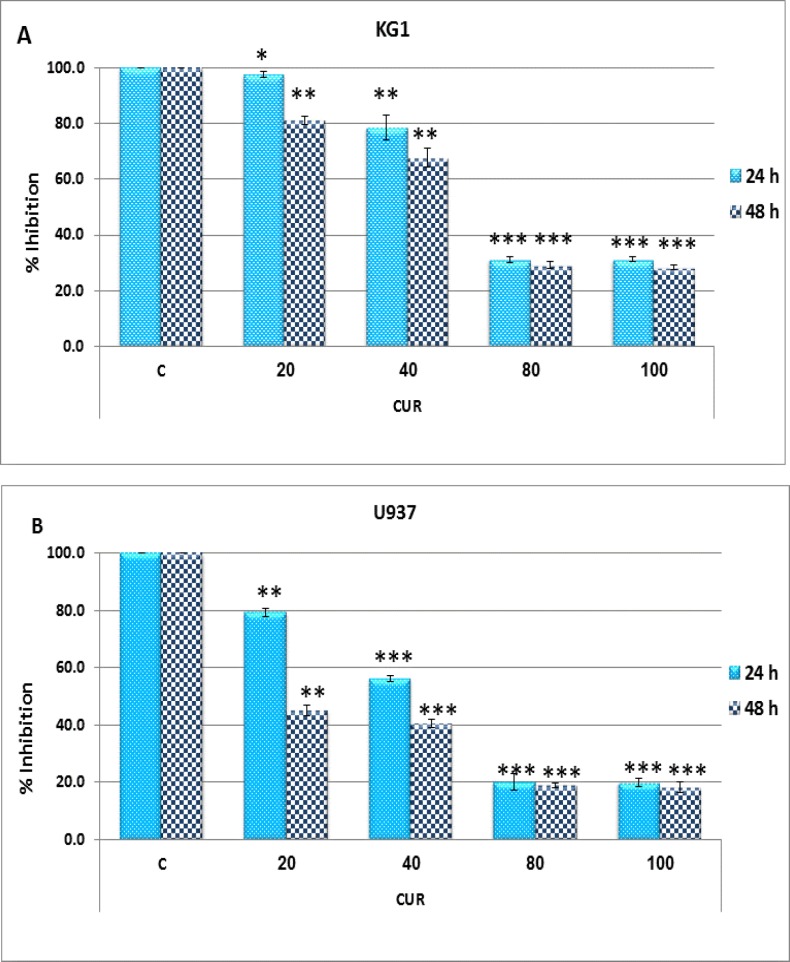
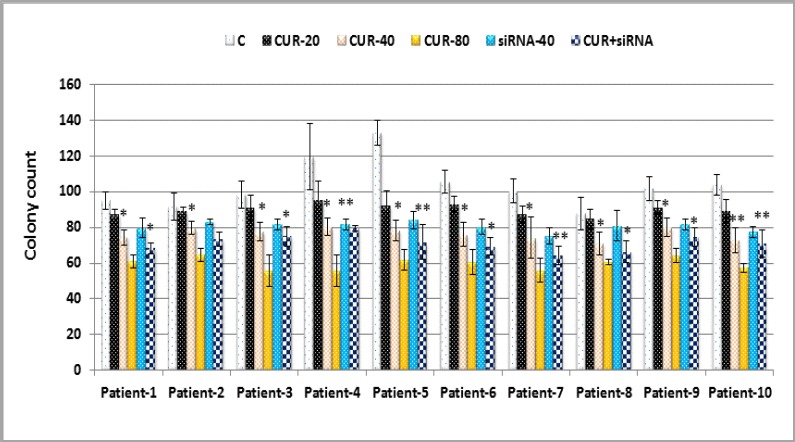
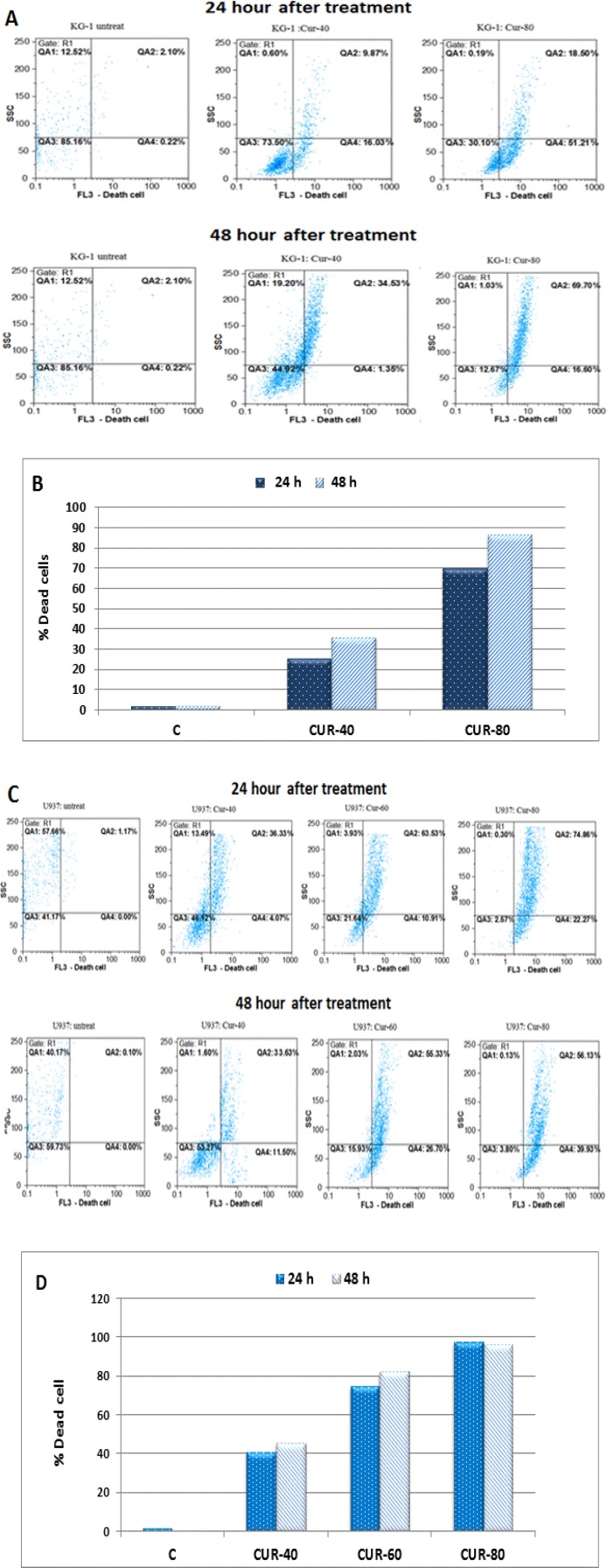
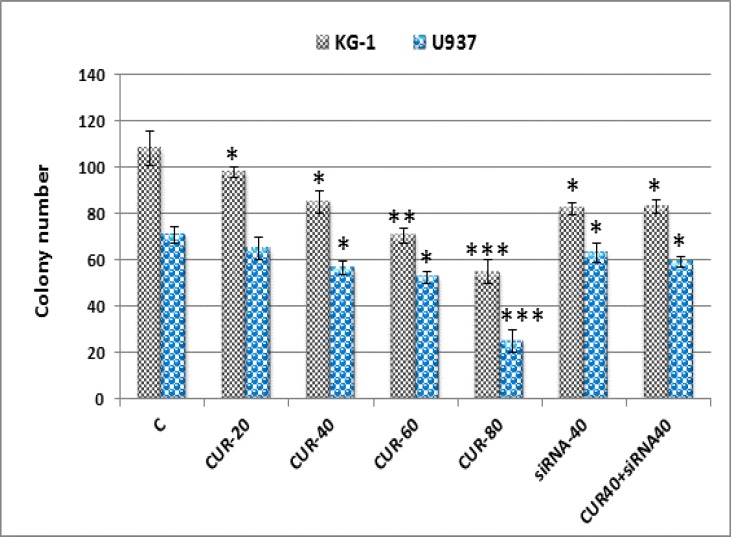
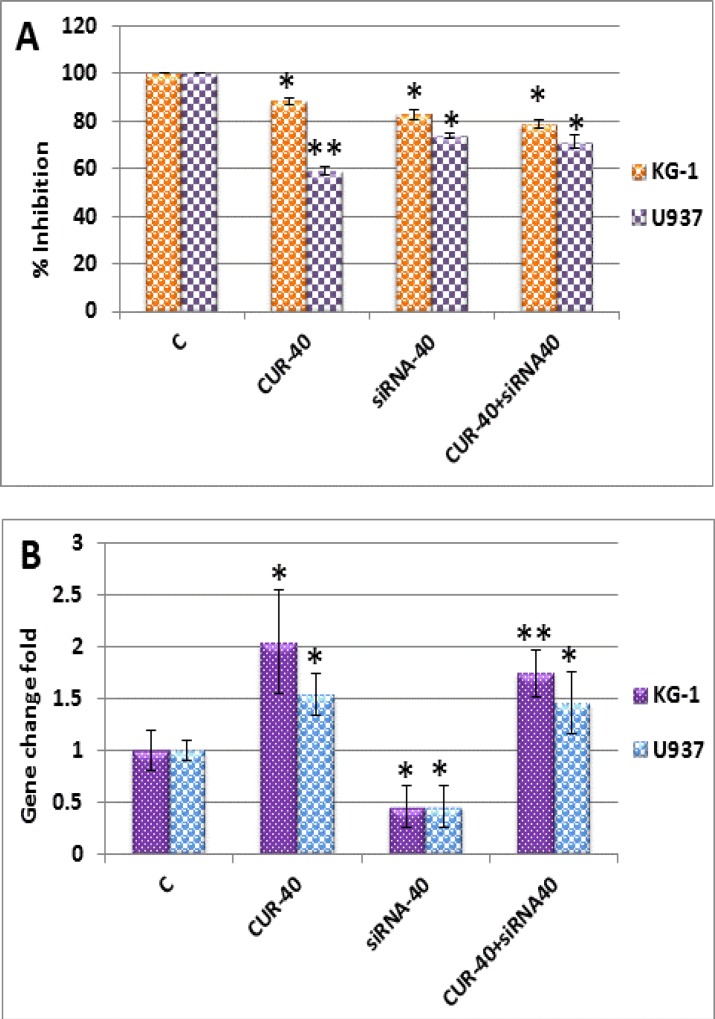
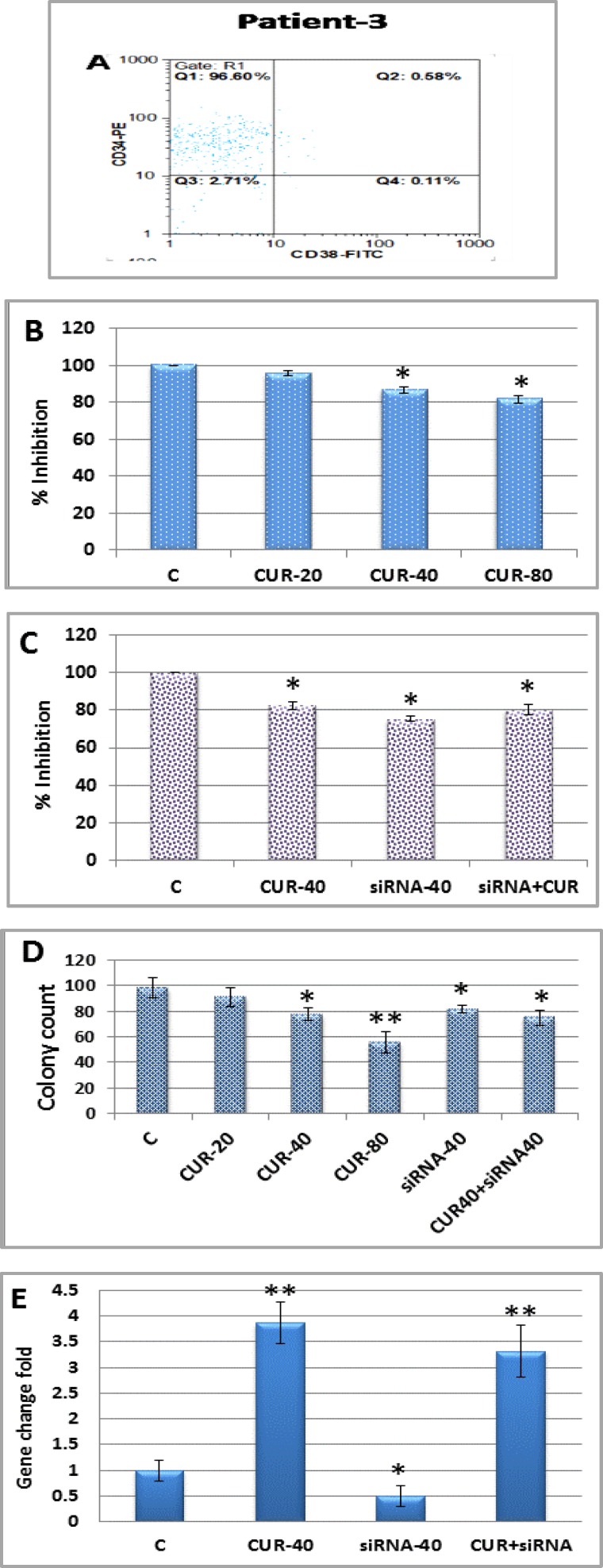
CUR inhibited proliferation and induced apoptosis in both KG-1 and U937 cells and also primary isolated AML cells. OPN silencing by siRNA increased the susceptibility of KG-1, U937 and primary CD34+/CD38- AML cells to apoptosis. Moreover, soft agar colony assays revealed that silencing of OPN with siRNA significantly decreased colony numbers in LSCs compared with the non-targeting group. Furthermore, CD34+/CD38- populations as a main LSCs compartment through OPN overexpression towards CUR treatment might be nullified the inhibitory effects of OPN siRNA on their survival and colony forming potential.
Taken together, our results suggested that knockdown of OPN using OPN specific siRNA significantly decreased colony numbers in LSCs and this effect might be vetoed by LSCs via induction of OPN overexpressionin combination of CUR and siRNA.
急性髓系白血病(AML)是一种免疫表型异质性恶性疾病,其中CD34阳性与预后不良相关。骨桥蛋白(OPN)在生理和病理条件下发挥不同作用,如生存、转移以及保护细胞免受细胞毒性和凋亡刺激。由于OPN在正常细胞和恶性细胞中具有抗凋亡作用,沉默OPN会导致对化疗药物的敏感性升高,并减弱癌细胞的迁移和侵袭。因此,本研究旨在评估OPN在调节姜黄素介导的对白血病干细胞(LSCs)集落形成潜力的生长抑制作用以及在AML细胞系和原发性CD34+/CD38-骨髓来源的AML细胞中的生存方面所起的作用。
使用CD34多重分选试剂盒,从10例初诊AML患者的骨髓单个核细胞中分离出原发性人类CD34+/CD38-细胞。通过MTT和集落形成试验评估姜黄素(CUR)的生长抑制作用。通过7AAD试验在CD34+ KG-1、U937细胞系和原发性分离细胞中分析凋亡情况。针对OPN的小干扰RNA(siRNA)用于在细胞系和原发性AML细胞中沉默OPN。然后,将转染后的细胞与姜黄素一起或不与姜黄素一起孵育。通过实时PCR检测OPN基因表达的变化。
CUR抑制了KG-1和U937细胞以及原发性分离的AML细胞的增殖并诱导其凋亡。通过siRNA沉默OPN增加了KG-1、U937和原发性CD34+/CD38- AML细胞对凋亡的敏感性。此外,软琼脂集落试验表明,与非靶向组相比,用siRNA沉默OPN显著降低了LSCs中的集落数量。此外,作为主要LSCs区室的CD34+/CD38-群体通过对CUR治疗过度表达OPN,可能会抵消OPN siRNA对其生存和集落形成潜力的抑制作用。
综上所述,我们的结果表明,使用OPN特异性siRNA敲低OPN可显著降低LSCs中的集落数量,而LSCs可能通过在CUR和siRNA联合作用下诱导OPN过度表达来抵消这种作用。