Hasson Christopher J, Zhang Zhaoran, Abe Masaki O, Sternad Dagmar
Department of Physical Therapy, Movement and Rehabilitation Sciences, Northeastern University, Boston, Massachusetts, United States of America.
Department of Bioengineering, Northeastern University, Boston, Massachusetts, United States of America.
PLoS Comput Biol. 2016 Aug 4;12(8):e1005044. doi: 10.1371/journal.pcbi.1005044. eCollection 2016 Aug.
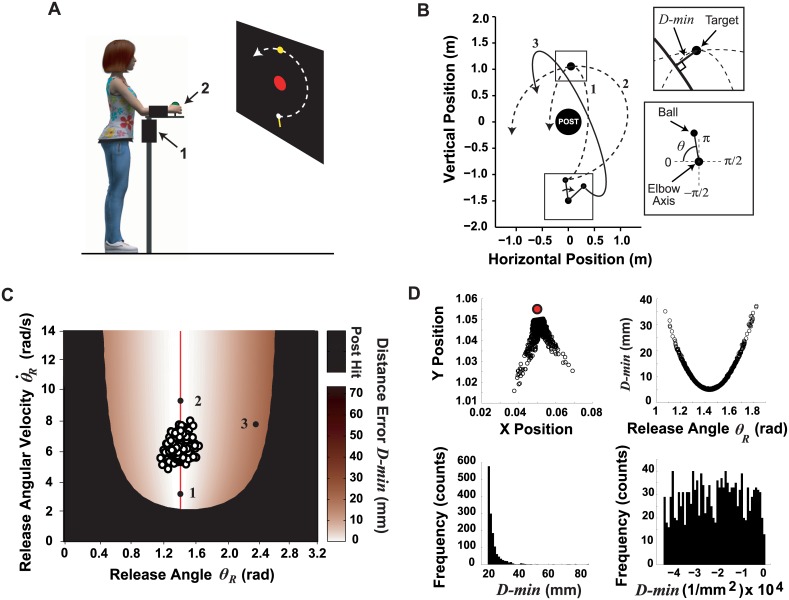
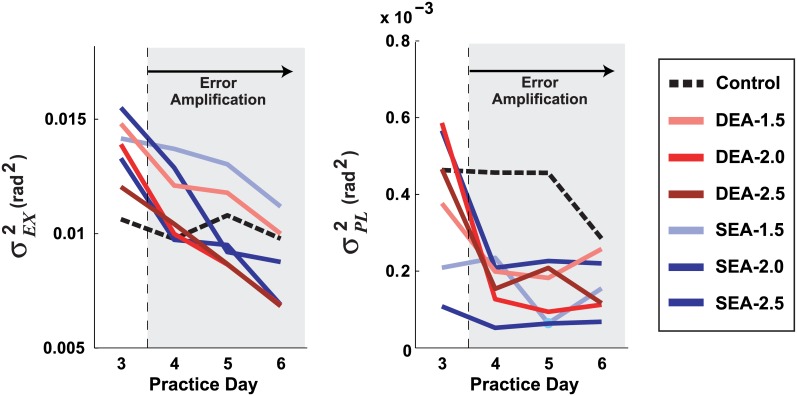
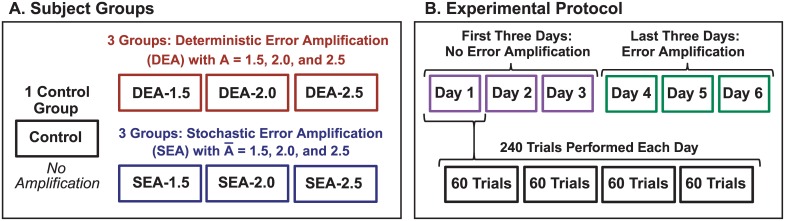
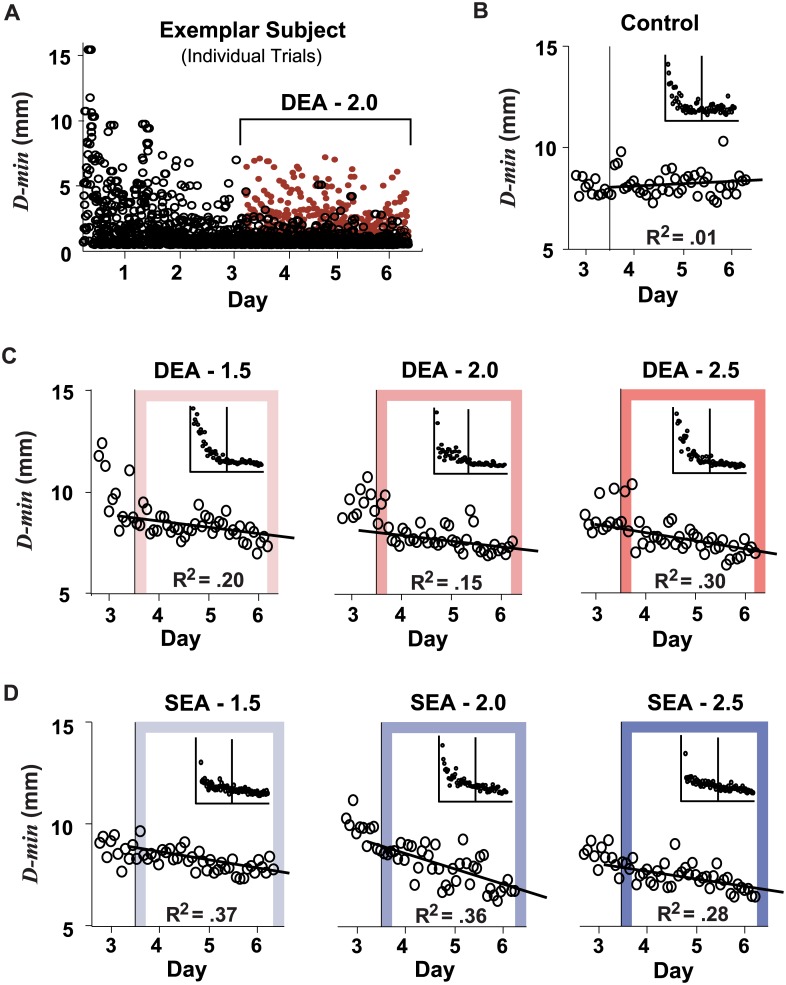
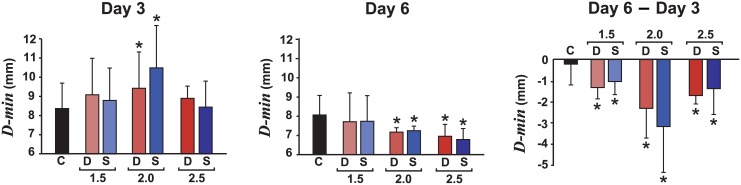
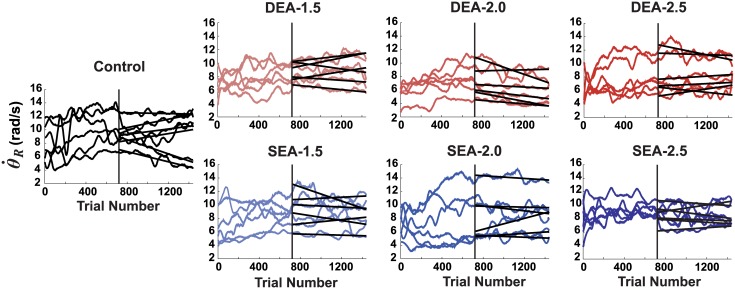
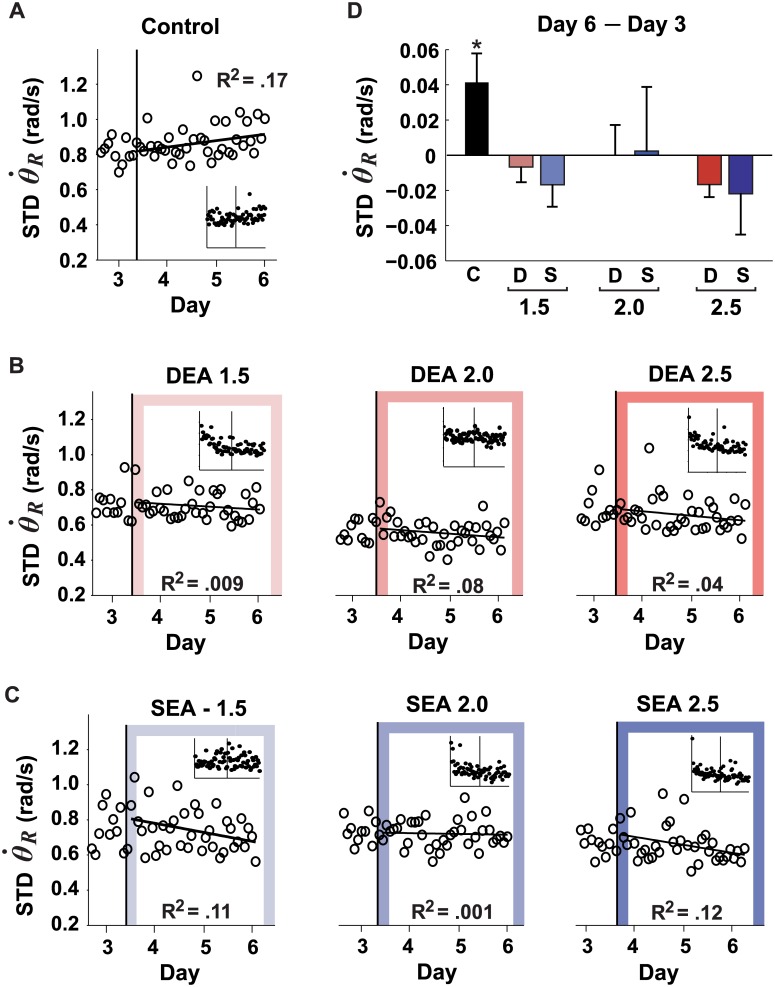
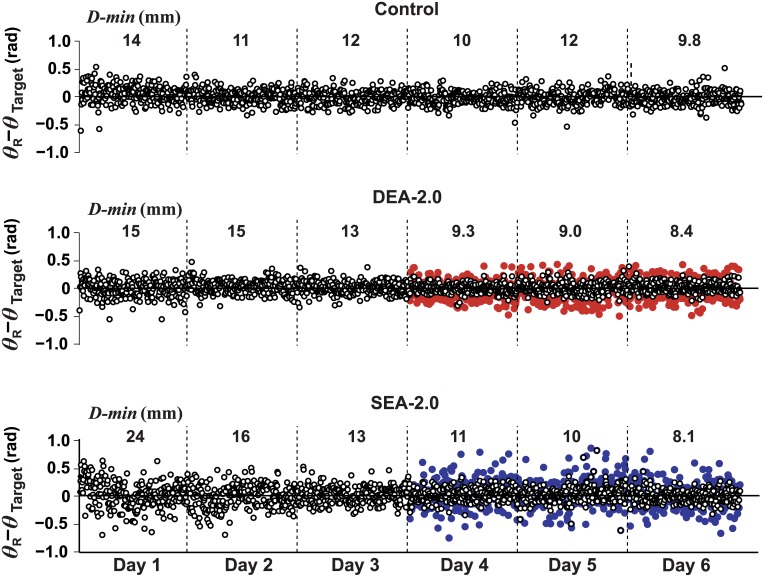
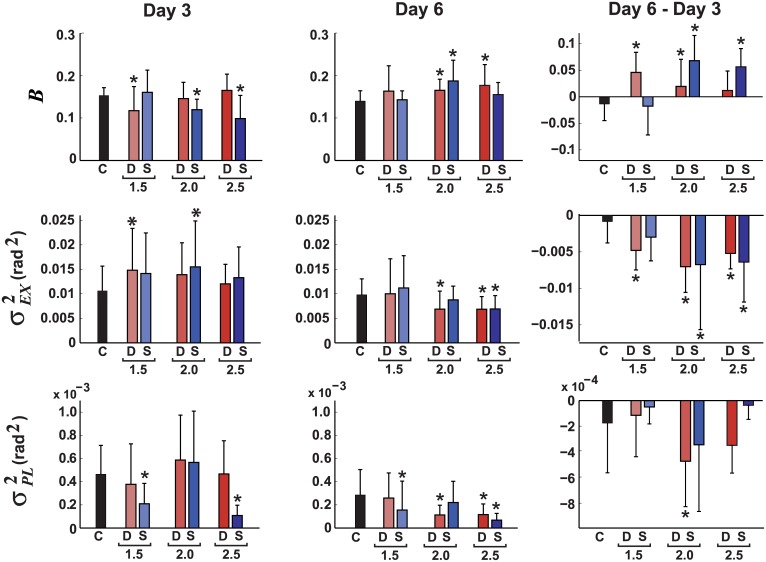
Variability in motor performance results from the interplay of error correction and neuromotor noise. This study examined whether visual amplification of error, previously shown to improve performance, affects not only error correction, but also neuromotor noise, typically regarded as inaccessible to intervention. Seven groups of healthy individuals, with six participants in each group, practiced a virtual throwing task for three days until reaching a performance plateau. Over three more days of practice, six of the groups received different magnitudes of visual error amplification; three of these groups also had noise added. An additional control group was not subjected to any manipulations for all six practice days. The results showed that the control group did not improve further after the first three practice days, but the error amplification groups continued to decrease their error under the manipulations. Analysis of the temporal structure of participants' corrective actions based on stochastic learning models revealed that these performance gains were attained by reducing neuromotor noise and, to a considerably lesser degree, by increasing the size of corrective actions. Based on these results, error amplification presents a promising intervention to improve motor function by decreasing neuromotor noise after performance has reached an asymptote. These results are relevant for patients with neurological disorders and the elderly. More fundamentally, these results suggest that neuromotor noise may be accessible to practice interventions.
运动表现的变异性源于误差校正和神经运动噪声的相互作用。本研究考察了先前已证明能改善表现的视觉误差放大是否不仅影响误差校正,还影响神经运动噪声(通常被认为是无法通过干预来改变的)。七组健康个体,每组六人,进行一项虚拟投掷任务,为期三天,直至达到表现平稳状态。在接下来的三天练习中,其中六组接受了不同程度的视觉误差放大;其中三组还添加了噪声。另一个对照组在全部六天的练习中未接受任何操作。结果显示,对照组在前三天练习后没有进一步改善,但误差放大组在操作下继续减少其误差。基于随机学习模型对参与者校正动作的时间结构进行分析发现,这些表现提升是通过降低神经运动噪声以及在相当小的程度上通过增加校正动作的幅度来实现的。基于这些结果,误差放大是一种很有前景的干预方法,可在表现达到平稳状态后通过降低神经运动噪声来改善运动功能。这些结果对患有神经疾病的患者和老年人具有重要意义。更根本的是,这些结果表明神经运动噪声可能是可以通过练习干预来改变的。