Department of Chemistry, The Scripps Research Institute , Jupiter, Florida 33458, United States.
Department of Biosciences, Rice University , Houston, Texas 77005, United States.
J Am Chem Soc. 2016 Aug 31;138(34):10905-15. doi: 10.1021/jacs.6b04317. Epub 2016 Aug 18.
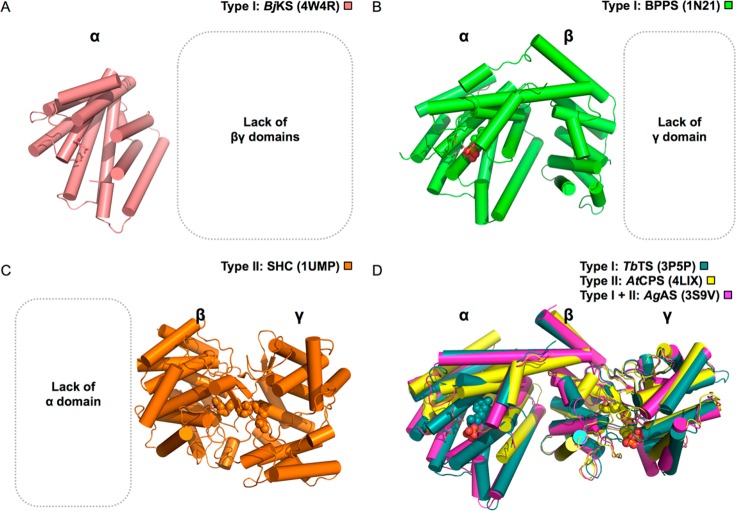
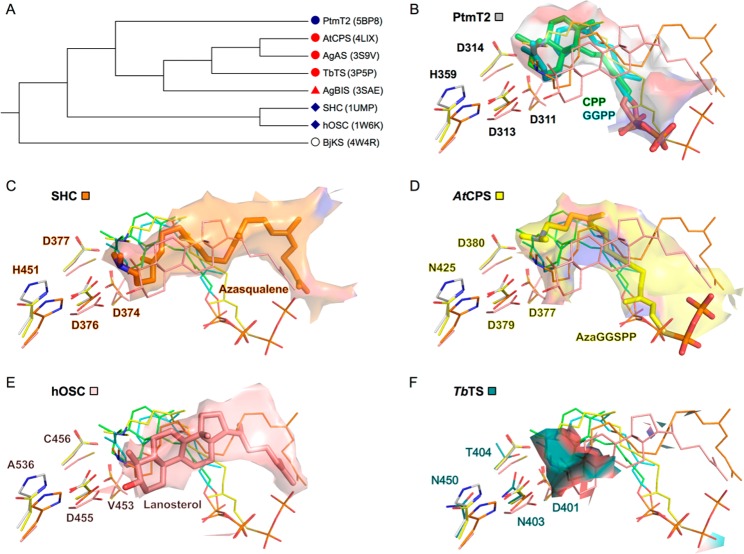
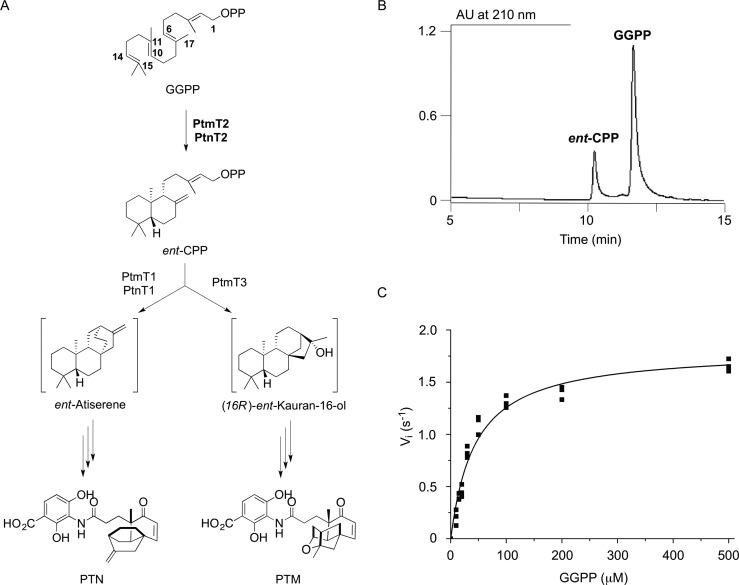
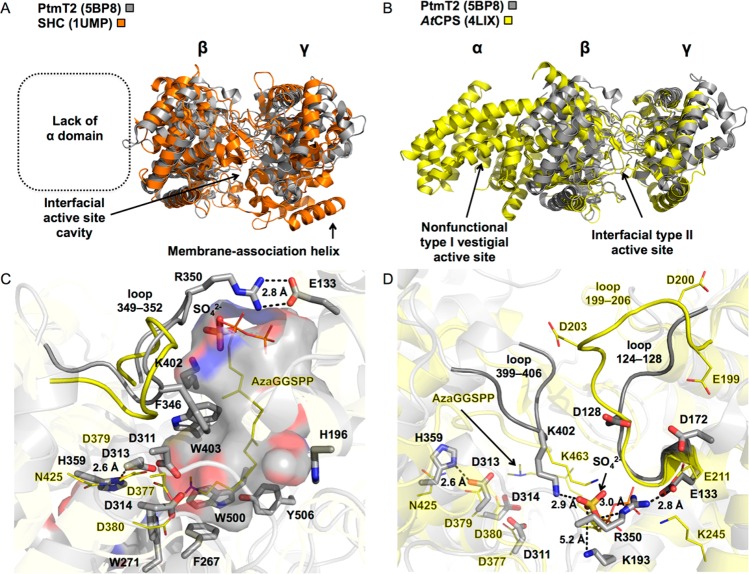
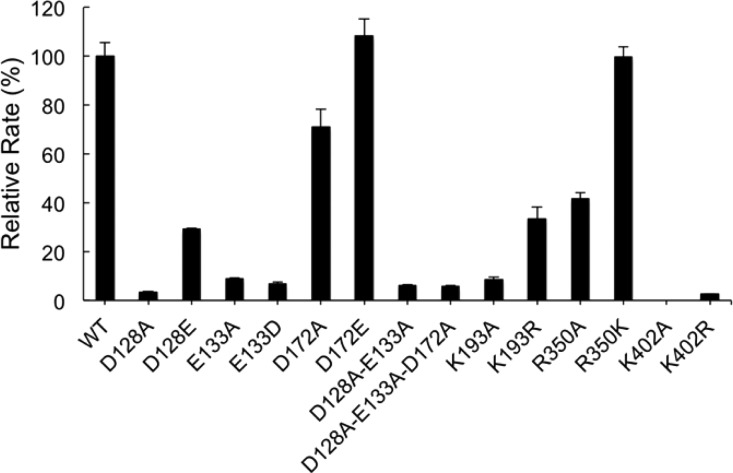
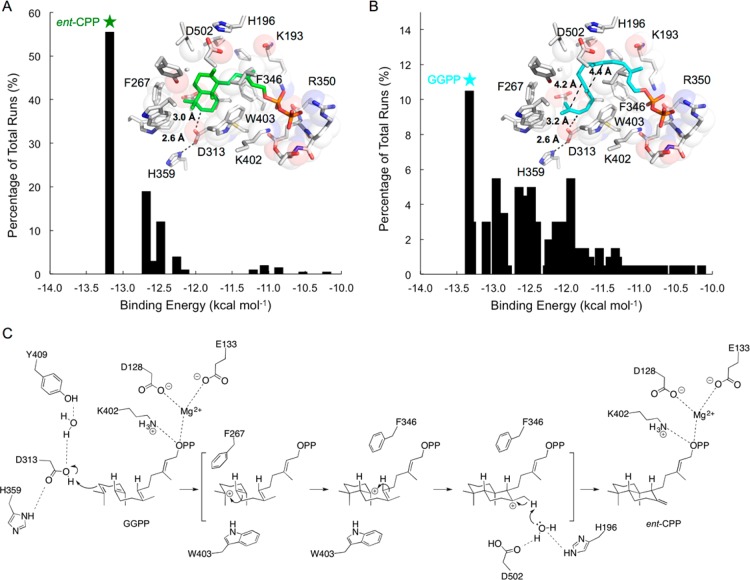
Terpenoids are the largest and most structurally diverse family of natural products found in nature, yet their presence in bacteria is underappreciated. The carbon skeletons of terpenoids are generated through carbocation-dependent cyclization cascades catalyzed by terpene synthases (TSs). Type I and type II TSs initiate cyclization via diphosphate ionization and protonation, respectively, and protein structures of both types are known. Most plant diterpene synthases (DTSs) possess three α-helical domains (αβγ), which are thought to have arisen from the fusion of discrete, ancestral bacterial type I TSs (α) and type II TSs (βγ). Type II DTSs of bacterial origin, of which there are no structurally characterized members, are a missing piece in the structural evolution of TSs. Here, we report the first crystal structure of a type II DTS from bacteria. PtmT2 from Streptomyces platensis CB00739 was verified as an ent-copalyl diphosphate synthase involved in the biosynthesis of platensimycin and platencin. The crystal structure of PtmT2 was solved at a resolution of 1.80 Å, and docking studies suggest the catalytically active conformation of geranylgeranyl diphosphate (GGPP). Site-directed mutagenesis confirmed residues involved in binding the diphosphate moiety of GGPP and identified DxxxxE as a potential Mg(2+)-binding motif for type II DTSs of bacterial origin. Finally, both the shape and physicochemical properties of the active sites are responsible for determining specific catalytic outcomes of TSs. The structure of PtmT2 fundamentally advances the knowledge of bacterial TSs, their mechanisms, and their role in the evolution of TSs.
萜类化合物是自然界中发现的最大和结构最多样化的天然产物家族,但它们在细菌中的存在尚未得到充分认识。萜类化合物的碳骨架是通过萜烯合酶(TSs)催化的碳正离子依赖性环化级联产生的。I 型和 II 型 TSs 分别通过二磷酸离子化和质子化启动环化,并且已知这两种类型的蛋白质结构。大多数植物二萜合酶(DTSs)具有三个α-螺旋结构域(αβγ),据认为这些结构域是由离散的、祖先细菌 I 型 TS(α)和 II 型 TS(βγ)融合而来的。具有细菌起源的 II 型 DTS 是 TS 结构进化中的缺失部分,目前没有结构表征的成员。在这里,我们报道了第一个来自细菌的 II 型 DTS 的晶体结构。来自链霉菌属 CB00739 的 PtmT2 被验证为参与 platensimycin 和 platencin 生物合成的 ent-copalyl 二磷酸合酶。PtmT2 的晶体结构在 1.80 Å 的分辨率下得到解决,对接研究表明 geranylgeranyl diphosphate (GGPP) 的催化活性构象。定点突变证实了参与 GGPP 二磷酸部分结合的残基,并确定 DxxxxE 是细菌起源的 II 型 DTS 的潜在 Mg2+结合基序。最后,活性位点的形状和物理化学性质都决定了 TS 的特定催化结果。PtmT2 的结构从根本上推进了对细菌 TS 及其机制的认识,以及它们在 TS 进化中的作用。