Dong Qian, Li Ce, Che Xiaofang, Qu Jinglei, Fan Yibo, Li Xiaohan, Li Yue, Wang Qian, Liu Yunpeng, Yang Xianghong, Qu Xiujuan
Department of Oncology, Shengjing Hospital of China Medical University, Shenyang, 110004, China.
Department of Medical Oncology, The First Hospital of China Medical University, Shenyang, 110001, China.
Oncotarget. 2016 Dec 13;7(50):82338-82353. doi: 10.18632/oncotarget.11001.
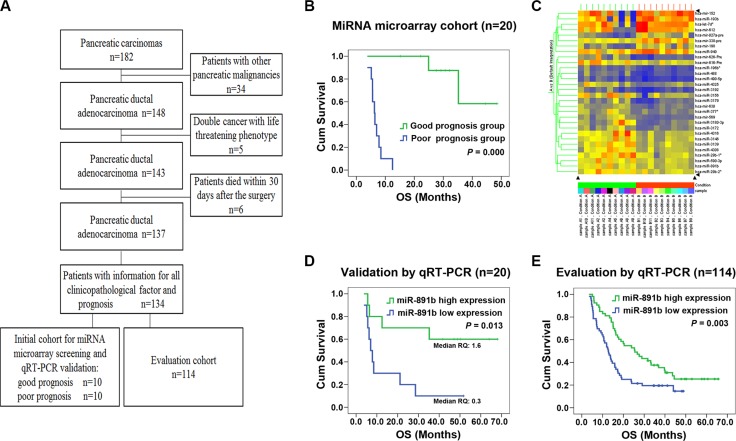
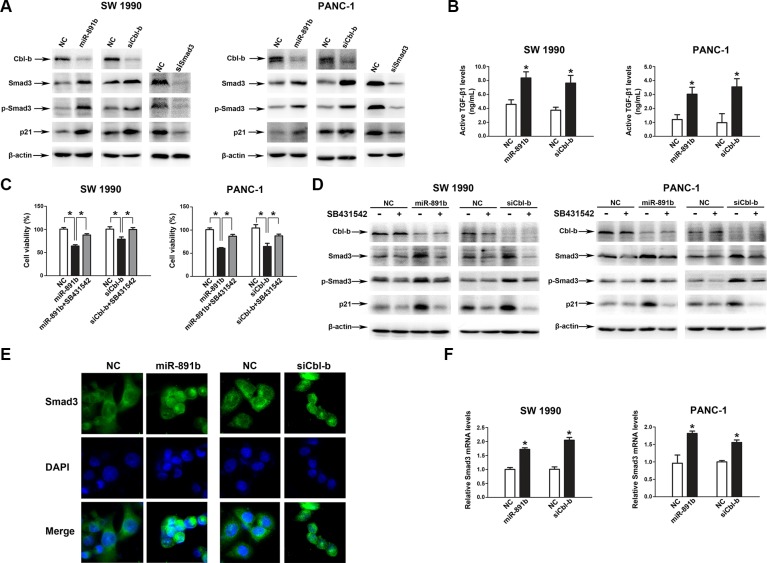
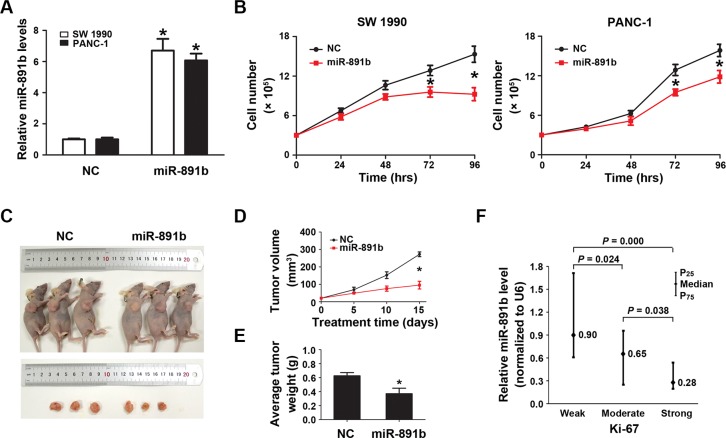
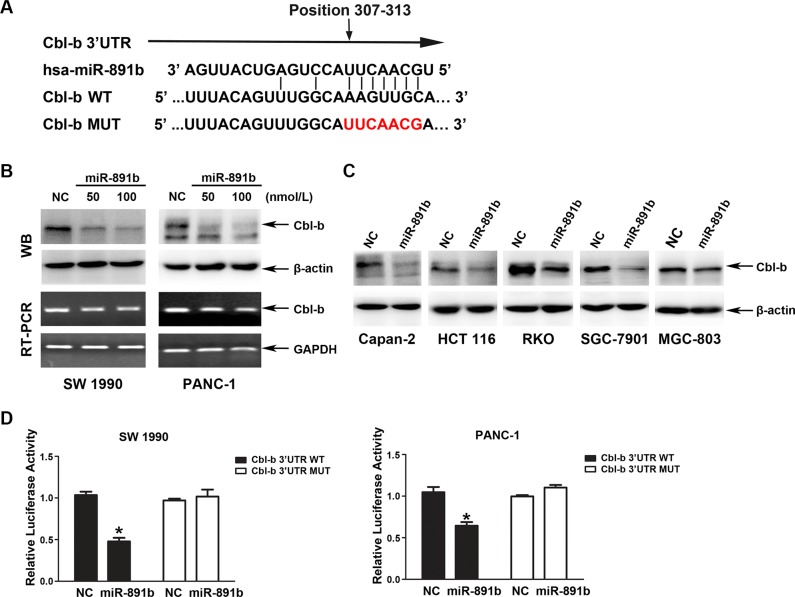
Growing evidence has revealed that microRNAs could regulate the proliferation of pancreatic ductal adenocarcinoma (PDAC) cells and predict the prognosis of PDAC. Here the comparative microRNA expression profiles of the good and poor prognosis groups were performed by microRNA microarray. MicroRNA-891b (miR-891b) was screened and validated to be a prognostic predictor of PDAC in the initial group and further evaluated to be an independent predictor for the overall survival of resectable PDACs in an independent cohort. By a series of cellular and animal experiments, as well as clinical specimen analyses, miR-891b was confirmed to target the Cbl-b gene, promot the expression of tumor suppressor p21 protein and inhibit the proliferation of PDAC cells. The results provide a theoretical basis for the study of miR-891b as an independent prognostic predictor of PDAC and the role of miR-891b/Cbl-b pathway in this prediction, as well as the identification of new targets for PDAC.
越来越多的证据表明,微小RNA可调节胰腺导管腺癌(PDAC)细胞的增殖并预测PDAC的预后。在此,通过微小RNA微阵列对预后良好和预后不良组的微小RNA表达谱进行了比较。微小RNA-891b(miR-891b)在初始组中被筛选并验证为PDAC的预后预测指标,并在一个独立队列中进一步评估为可切除PDAC总体生存的独立预测指标。通过一系列细胞和动物实验以及临床标本分析,证实miR-891b靶向Cbl-b基因,促进肿瘤抑制因子p21蛋白的表达并抑制PDAC细胞的增殖。这些结果为研究miR-891b作为PDAC的独立预后预测指标以及miR-891b/Cbl-b途径在该预测中的作用,以及鉴定PDAC的新靶点提供了理论依据。