Bankolé Landry-Cyrille, Millet Guillaume Y, Temesi John, Bachasson Damien, Ravelojaona Marion, Wuyam Bernard, Verges Samuel, Ponsot Elodie, Antoine Jean-Christophe, Kadi Fawzi, Féasson Léonard
Laboratoire Interuniversitaire de Biologie de la Motricité, UJM-Saint-Etienne, Université de Lyon, Saint-Etienne, France Unité de Myologie, Centre Hospitalier, Universitaire de Saint-Etienne, Saint-Etienne, France Division of Sport Sciences, School of Health and Medical Sciences, Orebro University, Orebro, Sweden Human Performance Laboratory, Faculty of Kinesiology, University of Calgary, Calgary, Alberta, Canada U1042, INSERM, Grenoble, France Laboratoire HP2, Grenoble Alpes University, Grenoble, France Centre Référent Maladies Neuromusculaires Rares Rhône-Alpes, Saint-Etienne, France.
Medicine (Baltimore). 2016 Aug;95(31):e4497. doi: 10.1097/MD.0000000000004497.
Previous randomized controlled trials investigating exercise training programs in facioscapulohumeral muscular dystrophy (FSHD) patients are scarce and of short duration only. This study assessed the safety and efficacy of a 6-month home-based exercise training program on fitness, muscle, and motor function in FSHD patients.
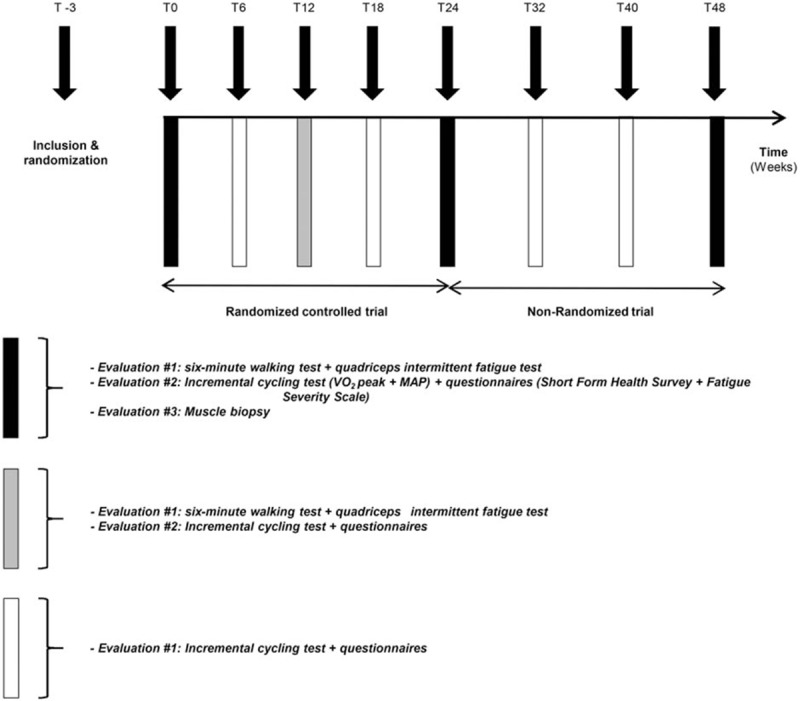
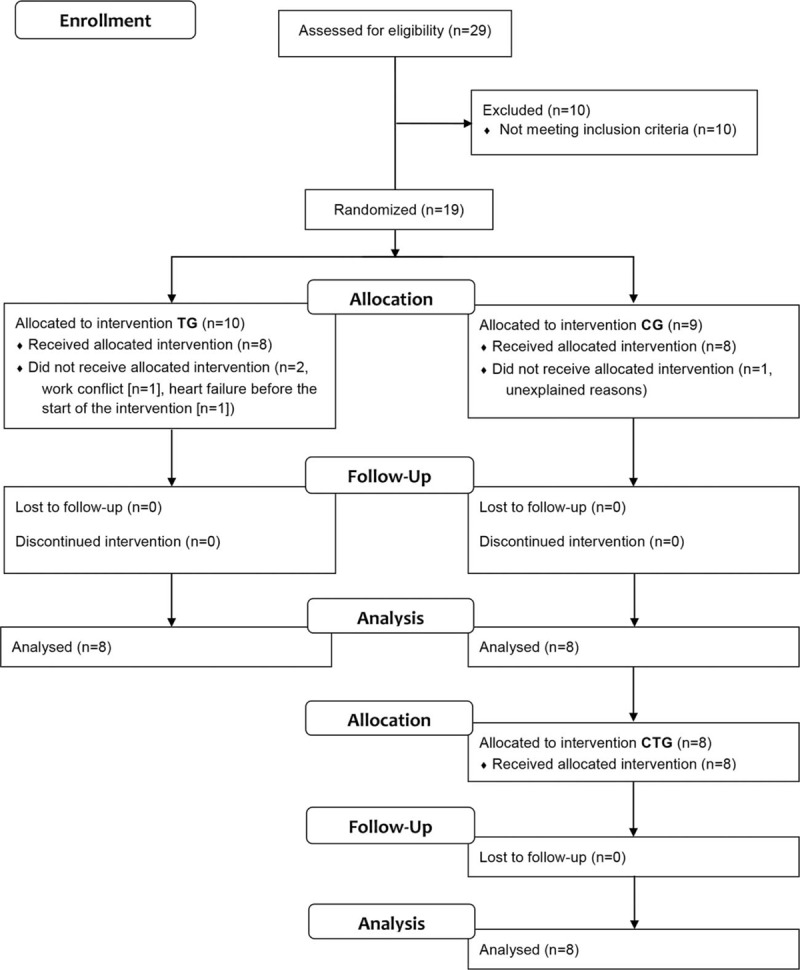
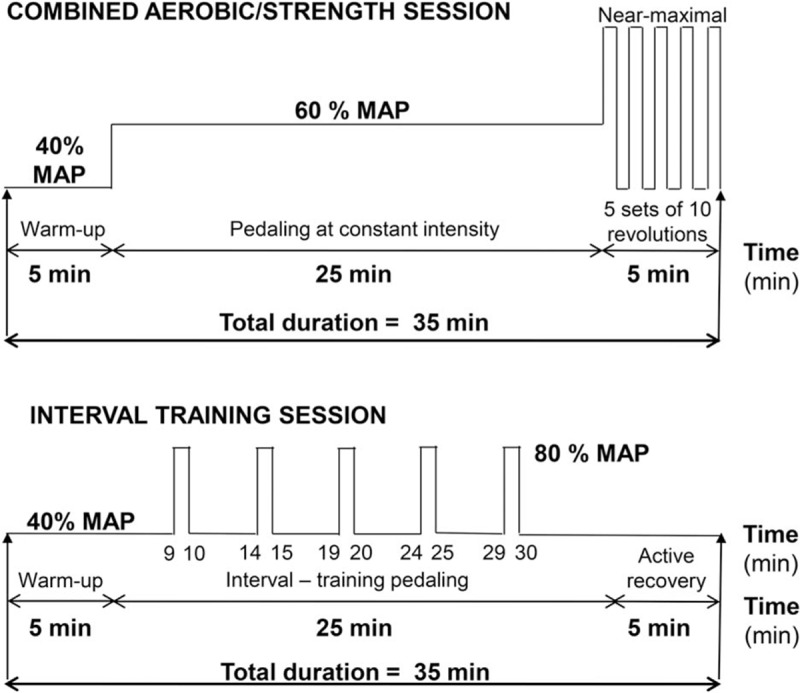
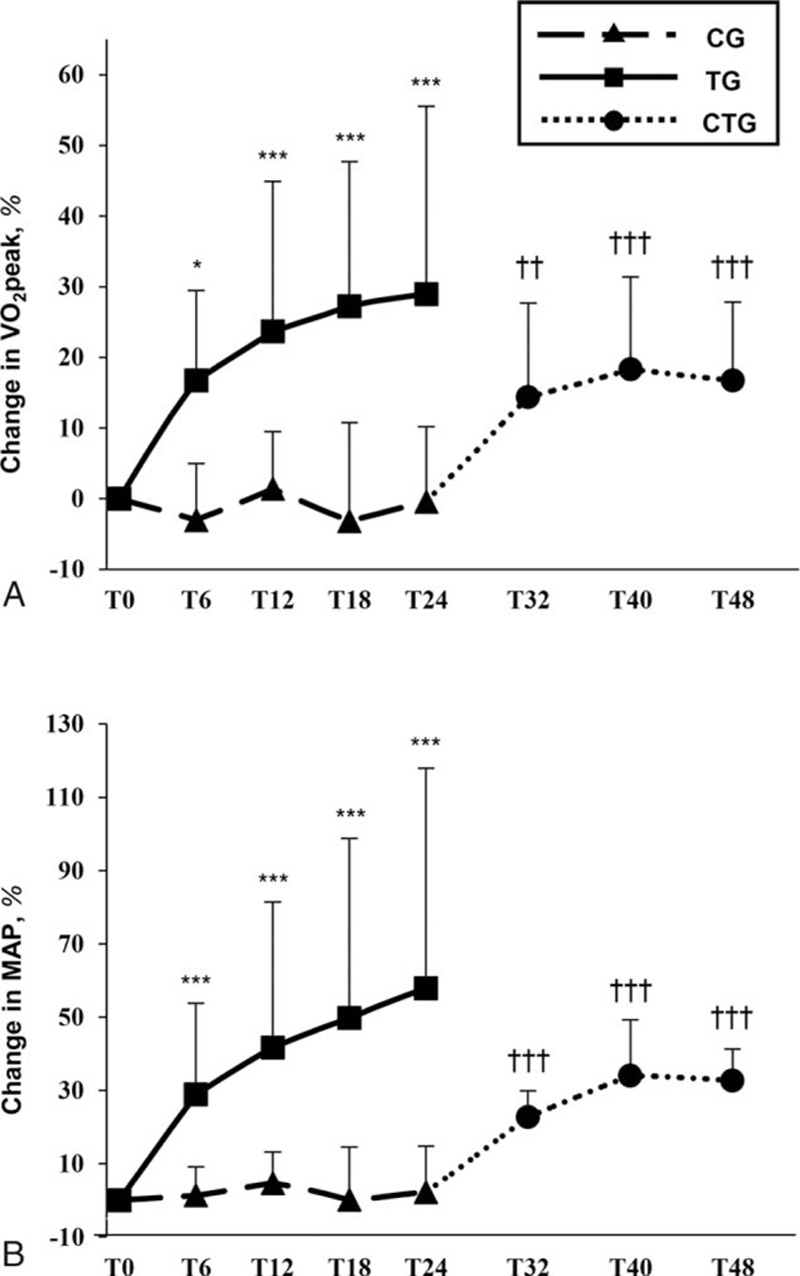
Sixteen FSHD patients were randomly assigned to training (TG) and control (CG) groups (both n = 8) in a home-based exercise intervention. Training consisted of cycling 3 times weekly for 35 minutes (combination of strength, high-intensity interval, and low-intensity aerobic) at home for 24 weeks. Patients in CG also performed an identical training program (CTG) after 24 weeks. The primary outcome was change in peak oxygen uptake (VO2 peak) measured every 6 weeks. The principal secondary outcomes were maximal quadriceps strength (MVC) and local quadriceps endurance every 12 weeks. Other outcome measures included maximal aerobic power (MAP) and experienced fatigue every 6 weeks, 6-minute walking distance every 12 weeks, and muscle characteristics from vastus lateralis biopsies taken pre- and postintervention.
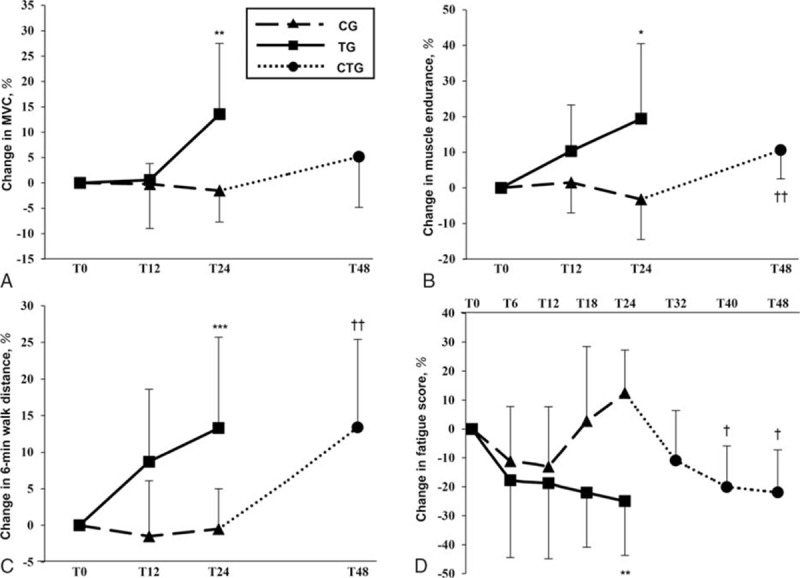
The compliance rate was 91% in TG. Significant improvements with training were observed in the VO2 peak (+19%, P = 0.002) and MAP by week 6 and further to week 24. Muscle endurance, MVC, and 6-minute walking distance increased and experienced fatigue decreased. Muscle fiber cross-sectional area and citrate synthase activity increased by 34% (P = 0.008) and 46% (P = 0.003), respectively. Dystrophic pathophysiologic patterns were not exacerbated. Similar improvements were experienced by TG and CTG.
A combined strength and interval cycling exercise-training program compatible with patients' daily professional and social activities leads to significant functional benefits without compromising muscle tissue.
以往针对面肩肱型肌营养不良(FSHD)患者运动训练项目的随机对照试验较少,且持续时间较短。本研究评估了一项为期6个月的居家运动训练项目对FSHD患者体能、肌肉和运动功能的安全性和有效性。
16例FSHD患者被随机分为训练组(TG)和对照组(CG)(每组n = 8),进行居家运动干预。训练包括每周在家骑行3次,每次35分钟(结合力量、高强度间歇和低强度有氧运动),共24周。CG组患者在24周后也进行相同的训练项目(CTG)。主要结局指标是每6周测量的峰值摄氧量(VO2峰值)变化。主要次要结局指标是每12周测量的股四头肌最大力量(MVC)和局部股四头肌耐力。其他结局指标包括每6周测量的最大有氧功率(MAP)和疲劳感受、每12周测量的6分钟步行距离,以及干预前后从股外侧肌活检获得的肌肉特征。
TG组的依从率为91%。训练后,VO2峰值(+19%,P = 0.002)和MAP在第6周时显著改善,并持续至第24周。肌肉耐力、MVC和6分钟步行距离增加,疲劳感受减轻。肌纤维横截面积和柠檬酸合酶活性分别增加了34%(P = 0.008)和46%(P = 0.003)。营养不良的病理生理模式未加重。TG组和CTG组都有类似的改善。
一项与患者日常职业和社交活动相兼容的力量训练和间歇骑行运动训练项目能带来显著的功能益处,且不会损害肌肉组织。