Choi Jong Bum, Kang Kyeongjin, Song Mi Kyung, Seok Suhyun, Kim Yoon Hee, Kim Ji Eun
1. Department of Anesthesiology and Pain Medicine, Ajou University School of Medicine, Suwon, Republic of Korea.
2. Department of Anatomy and Cell Biology, School of Medicine, Sungkyunkwan University, Seoul, Republic of Korea.
Int J Med Sci. 2016 Jul 5;13(8):562-8. doi: 10.7150/ijms.15875. eCollection 2016.
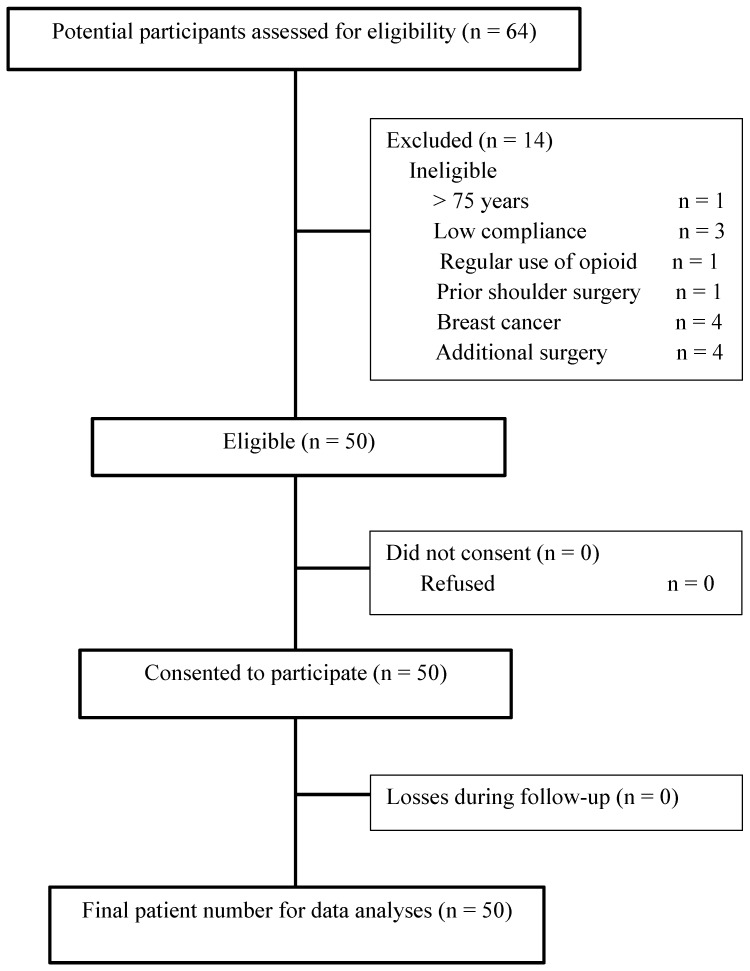
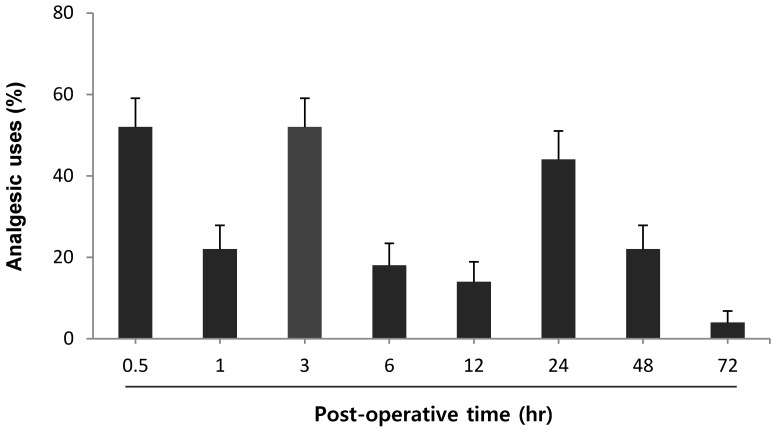
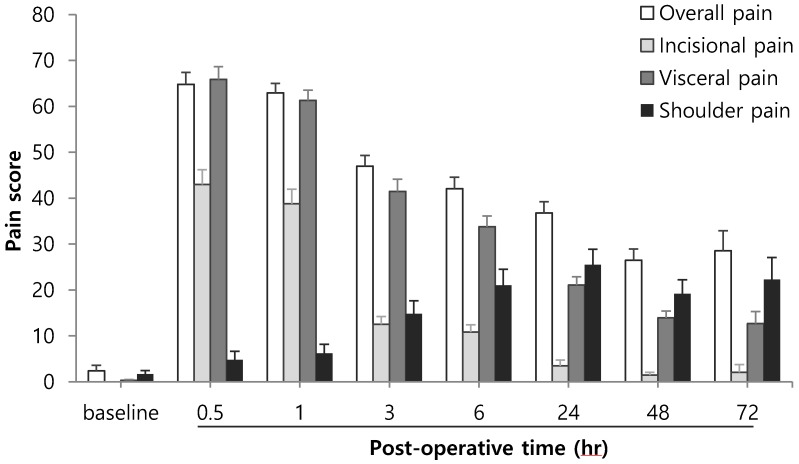
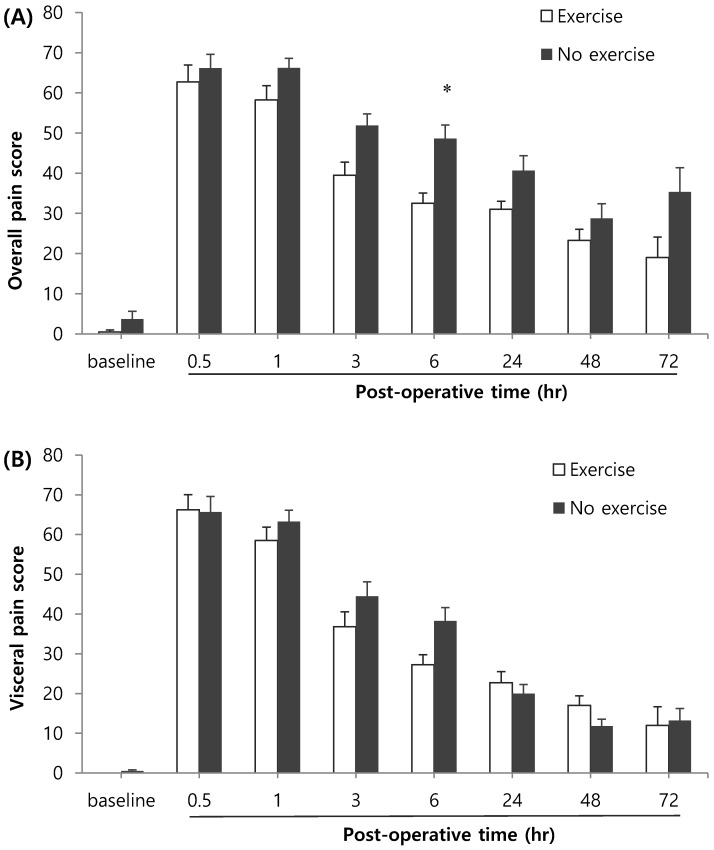
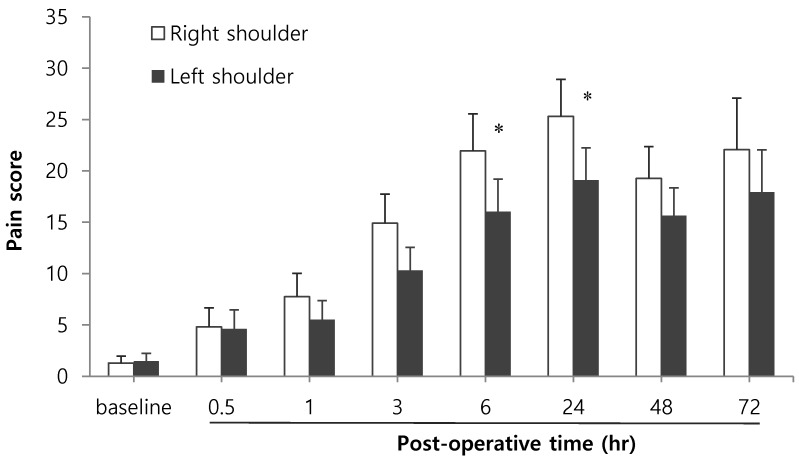
Background. Total laparoscopic hysterectomy (TLH) causes various types of postoperative pain, and the pain pattern has not been evaluated in detail to date. This prospective observational study investigated the types of postoperative pain, intensity in the course of time, and pain characteristics during the first postoperative 72 hr after TLH. Methods. Sixty four female patients undergoing TLH were enrolled, which finally 50 patients were included for the data analyses. The locations of pain included overall pain, abdominal visceral and incisional pains, shoulder pain, and perineal pain. Assessments were made at rest and in motion, and pain level was scored with the use of the 100 mm visual analog scale. The pain was assessed at baseline, and at postoperative 30 min, 1 hr, 3 hr, 6 hr, 24 hr, 48 hr, and 72 hr. Results. Overall, visceral, and incisional pains were most intense on the day of operation and then decreased following surgery. In contrast, shoulder pain gradually increased, peaking at postoperative 24 hr. Shoulder pain developed in 90% of all patients (44/50). It was not more aggravated in motion than at rest, in comparison with other pains, and right shoulder pain was more severe than left shoulder pain (p=0.006). In addition, the preoperative exercise habit of patients increased the threshold of shoulder pain. Most patients (46/50) had perineal pain, which was more severe than abdominal pain in approximately 30% of patients (17/50). Conclusion. Pain after TLH showed considerably different duration, severity, and characteristics, compared with other laparoscopic procedures. Shoulder pain was most intense at postoperative 24 hr, and the intensity was associated with the prior exercise habit of patients and the high level of analgesic request.
背景。全腹腔镜子宫切除术(TLH)会引发多种类型的术后疼痛,而迄今为止,疼痛模式尚未得到详细评估。这项前瞻性观察性研究调查了TLH术后72小时内的术后疼痛类型、随时间变化的强度以及疼痛特征。方法。纳入64例行TLH的女性患者,最终50例患者纳入数据分析。疼痛部位包括全身疼痛、腹部内脏痛和切口痛、肩痛及会阴痛。在静息和活动状态下进行评估,使用100毫米视觉模拟量表对疼痛程度进行评分。在基线时以及术后30分钟、1小时、3小时、6小时、24小时、48小时和72小时对疼痛进行评估。结果。总体而言,内脏痛和切口痛在手术当天最为剧烈,术后逐渐减轻。相比之下,肩痛逐渐加重,在术后24小时达到峰值。90%的患者(44/50)出现肩痛。与其他疼痛相比,肩痛在活动时并不比静息时更严重,且右肩痛比左肩痛更严重(p = 0.006)。此外,患者术前的运动习惯提高了肩痛阈值。大多数患者(46/50)有会阴痛,约30%的患者(17/50)会阴痛比腹痛更严重。结论。与其他腹腔镜手术相比,TLH后的疼痛在持续时间、严重程度和特征方面有很大差异。肩痛在术后24小时最为剧烈,其强度与患者先前的运动习惯及高镇痛需求水平有关。