Bidhult Sebastian, Kantasis George, Aletras Anthony H, Arheden Håkan, Heiberg Einar, Hedström Erik
Department of Clinical Sciences Lund, Clinical Physiology, Lund University, Skane University Hospital, Lund, Sweden.
Department of Biomedical Engineering, Faculty of Engineering, Lund University, Lund, Sweden.
BMC Med Imaging. 2016 Aug 8;16(1):46. doi: 10.1186/s12880-016-0148-6.
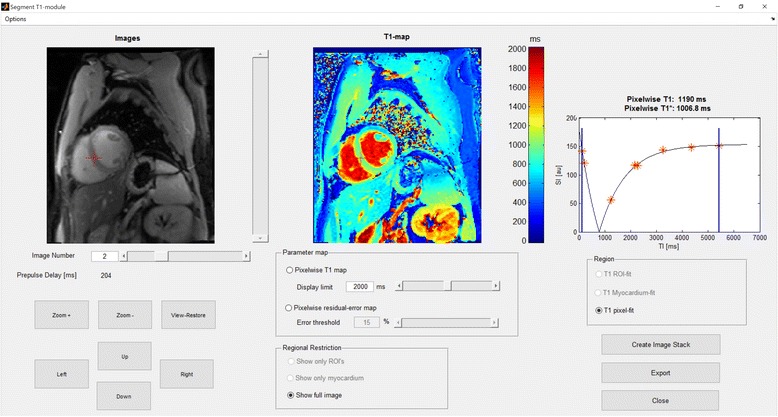
Determination of the relaxation time constants T1 and T2 with quantitative magnetic resonance imaging is increasingly used for both research and clinical practice. Recently, groups have been formed within the Society of Cardiovascular Magnetic Resonance to address issues with relaxometry. However, so far they have avoided specific recommendations on methodology due to lack of consensus and current evolving research. Standardised widely available software may simplify this process. The purpose of the current study was to develop and validate vendor-independent T1 and T2 mapping modules and implement those in the versatile and widespread software Segment, freely available for research and FDA approved for clinical applications.
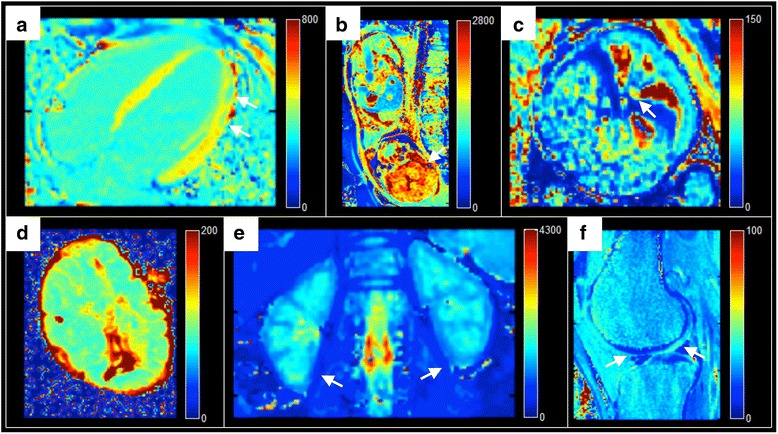
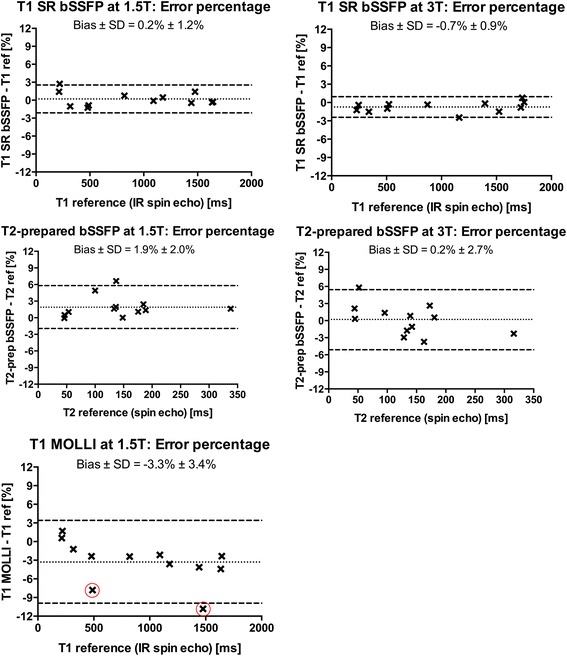
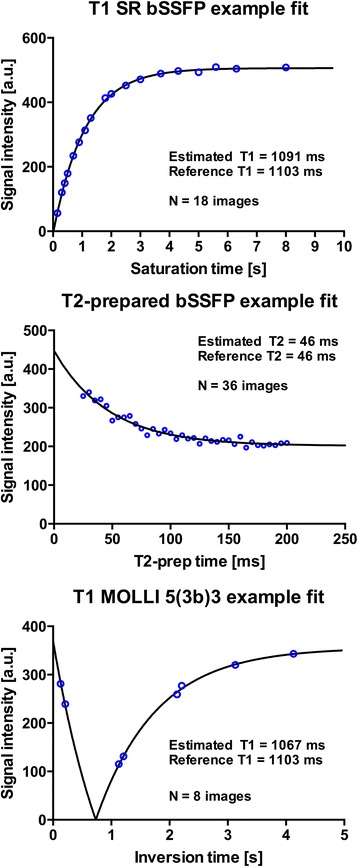
The T1 and T2 mapping modules were developed and validated in phantoms at 1.5 T and 3 T with reference standard values calculated from reference pulse sequences using the Nelder-Mead Simplex optimisation method. The proposed modules support current commonly available MRI pulse sequences and both 2- and 3-parameter curve fitting. Images acquired in patients using three major vendors showed vendor-independence. Bias and variability showed high agreement with T1 and T2 reference standards for T1 (range 214-1752 ms) and T2 (range 45-338 ms), respectively.
The developed and validated T1 and T2 mapping and quantification modules generated relaxation maps from current commonly used MRI sequences and multiple signal models. Patient applications showed usability for three major vendors.
利用定量磁共振成像测定弛豫时间常数T1和T2在研究和临床实践中应用越来越广泛。最近,心血管磁共振学会内部已成立了多个小组来解决弛豫测量法相关问题。然而,由于缺乏共识以及当前研究仍在不断发展,到目前为止他们尚未就方法学给出具体建议。标准化的通用软件可能会简化这一过程。本研究的目的是开发并验证与设备供应商无关的T1和T2映射模块,并将其应用于通用且广泛使用的Segment软件中,该软件可免费用于研究,且已获得美国食品药品监督管理局的临床应用批准。
T1和T2映射模块在1.5T和3T的体模中进行了开发和验证,通过使用Nelder-Mead单纯形优化方法从参考脉冲序列计算出参考标准值。所提出的模块支持当前常用的MRI脉冲序列以及二参数和三参数曲线拟合。使用三大主要设备供应商的设备在患者中采集的图像显示出与设备供应商无关。偏差和变异性分别与T1(范围为214 - 1752毫秒)和T2(范围为45 - 338毫秒)的T1和T2参考标准高度一致。
所开发并经验证的T1和T2映射及量化模块可从当前常用的MRI序列和多种信号模型生成弛豫图。在患者中的应用表明该模块对三大主要设备供应商均适用。