Vernocchi Pamela, Del Chierico Federica, Putignani Lorenza
Unit of Human Microbiome, Genetic and Rare Diseases Area, Bambino Gesù Children's Hospital, IRCCS Rome, Italy.
Unit of Human Microbiome, Genetic and Rare Diseases Area, Bambino Gesù Children's Hospital, IRCCSRome, Italy; Unit of Parasitology, Bambino Gesù Children's Hospital, IRCCSRome, Italy.
Front Microbiol. 2016 Jul 26;7:1144. doi: 10.3389/fmicb.2016.01144. eCollection 2016.
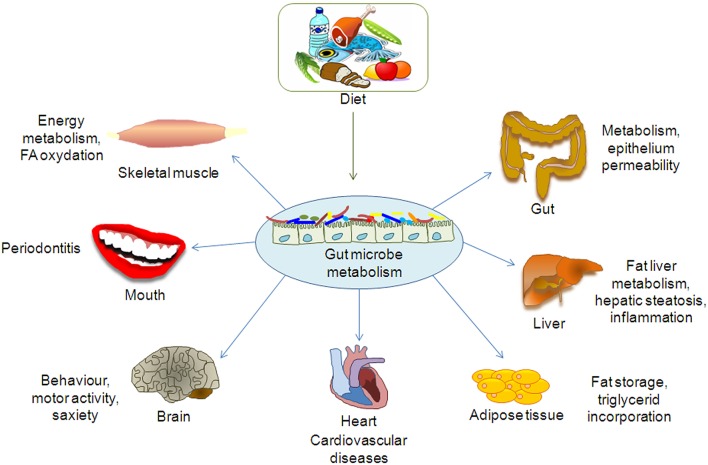
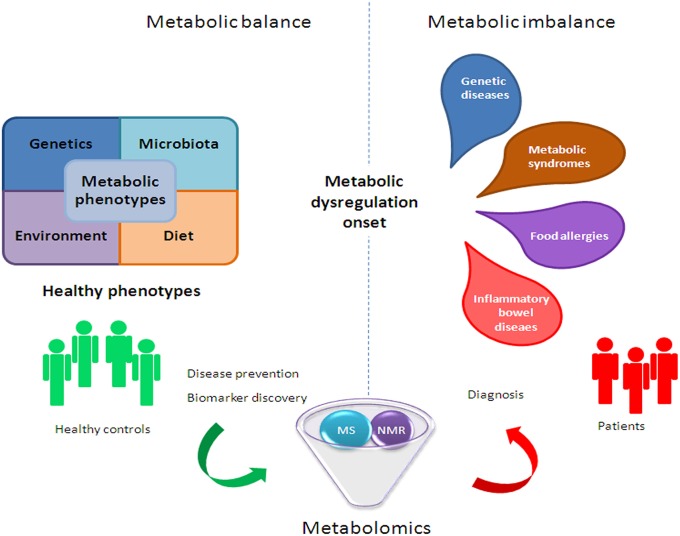
The gut microbiota is composed of a huge number of different bacteria, that produce a large amount of compounds playing a key role in microbe selection and in the construction of a metabolic signaling network. The microbial activities are affected by environmental stimuli leading to the generation of a wide number of compounds, that influence the host metabolome and human health. Indeed, metabolite profiles related to the gut microbiota can offer deep insights on the impact of lifestyle and dietary factors on chronic and acute diseases. Metagenomics, metaproteomics and metabolomics are some of the meta-omics approaches to study the modulation of the gut microbiota. Metabolomic research applied to biofluids allows to: define the metabolic profile; identify and quantify classes and compounds of interest; characterize small molecules produced by intestinal microbes; and define the biochemical pathways of metabolites. Mass spectrometry and nuclear magnetic resonance spectroscopy are the principal technologies applied to metabolomics in terms of coverage, sensitivity and quantification. Moreover, the use of biostatistics and mathematical approaches coupled with metabolomics play a key role in the extraction of biologically meaningful information from wide datasets. Metabolomic studies in gut microbiota-related research have increased, focusing on the generation of novel biomarkers, which could lead to the development of mechanistic hypotheses potentially applicable to the development of nutritional and personalized therapies.
肠道微生物群由大量不同的细菌组成,这些细菌产生大量在微生物选择和代谢信号网络构建中起关键作用的化合物。微生物活动受环境刺激影响,导致产生大量影响宿主代谢组和人类健康的化合物。事实上,与肠道微生物群相关的代谢物谱可以深入洞察生活方式和饮食因素对慢性和急性疾病的影响。宏基因组学、宏蛋白质组学和代谢组学是研究肠道微生物群调节的一些组学方法。应用于生物流体的代谢组学研究能够:定义代谢谱;识别和定量感兴趣的类别和化合物;表征肠道微生物产生的小分子;以及定义代谢物的生化途径。就覆盖范围、灵敏度和定量而言,质谱和核磁共振光谱是应用于代谢组学的主要技术。此外,生物统计学和数学方法与代谢组学的结合在从广泛的数据集中提取具有生物学意义的信息方面发挥着关键作用。肠道微生物群相关研究中的代谢组学研究有所增加,重点是新型生物标志物的生成,这可能会导致形成潜在适用于营养和个性化疗法开发的机制假说。