Wang Shuren, Ma Kai, Chen Lechuang, Zhu Hongxia, Liang Shufang, Liu Mei, Xu Ningzhi
Laboratory of Cell and Molecular Biology & State Key Laboratory of Molecular Oncology, National Cancer Center/Cancer Hospital, Chinese Academy of Medical Sciences and Peking Union Medical College, Beijing 100021, China.
State Key Laboratory of Biotherapy and Cancer Center, West China Hospital, Sichuan University, and Collaborative Innovation Center for Biotherapy, No.17, 3rd Section of People's South Road, Chengdu 610041, P.R. China.
Biosci Rep. 2016 Sep 29;36(5). doi: 10.1042/BSR20160135. Print 2016 Oct.
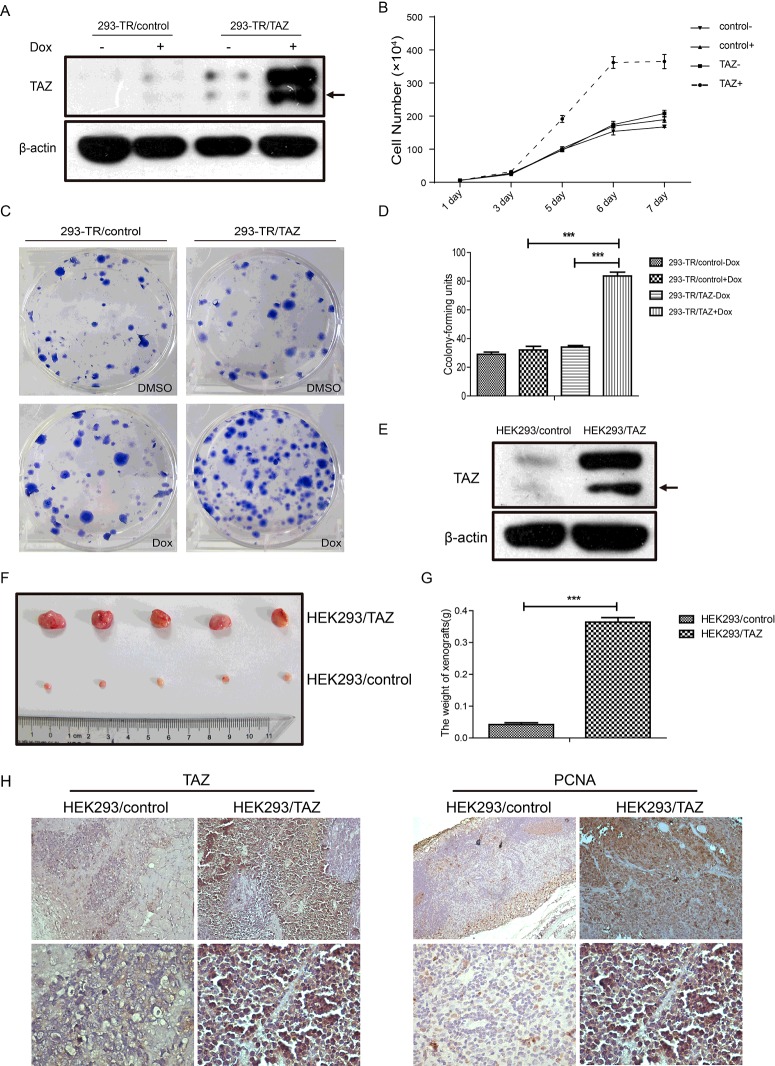
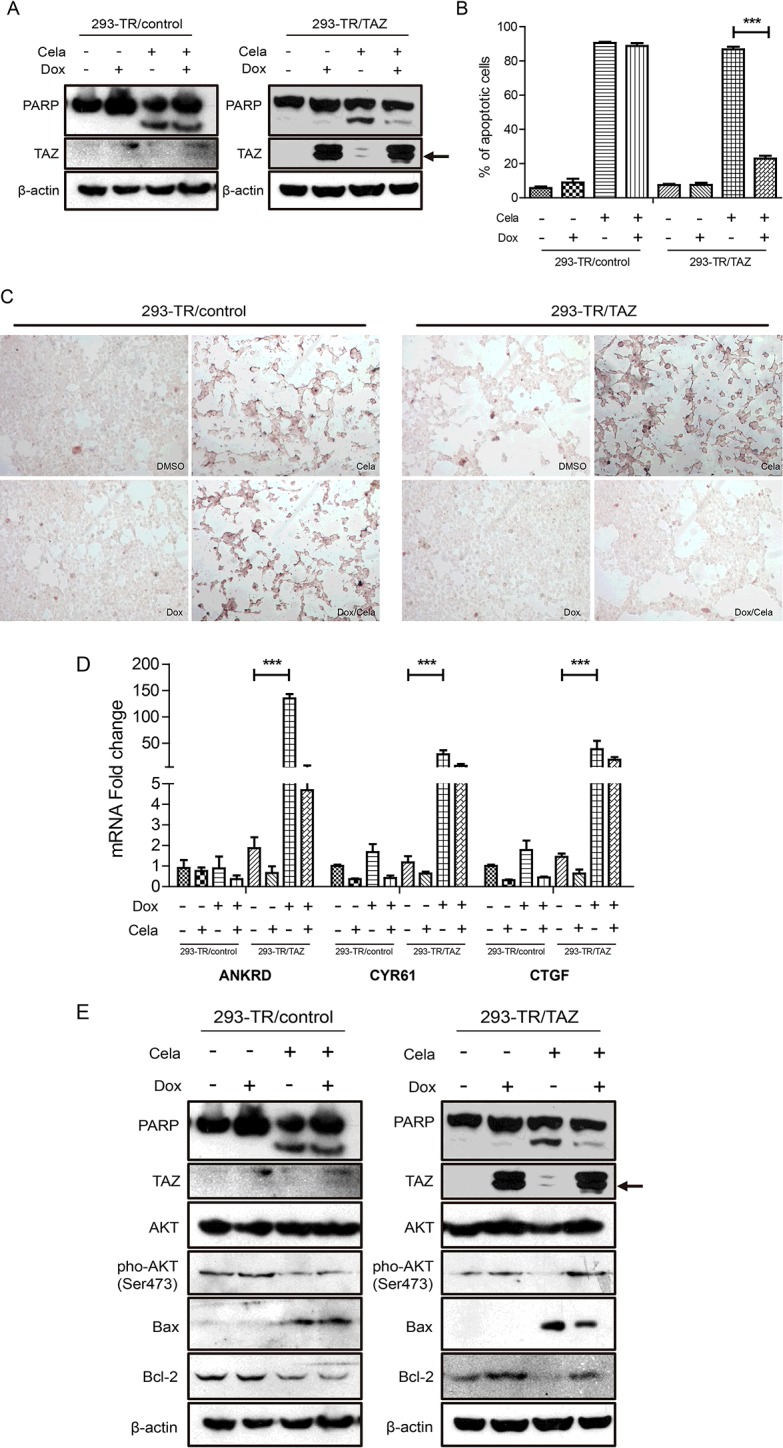
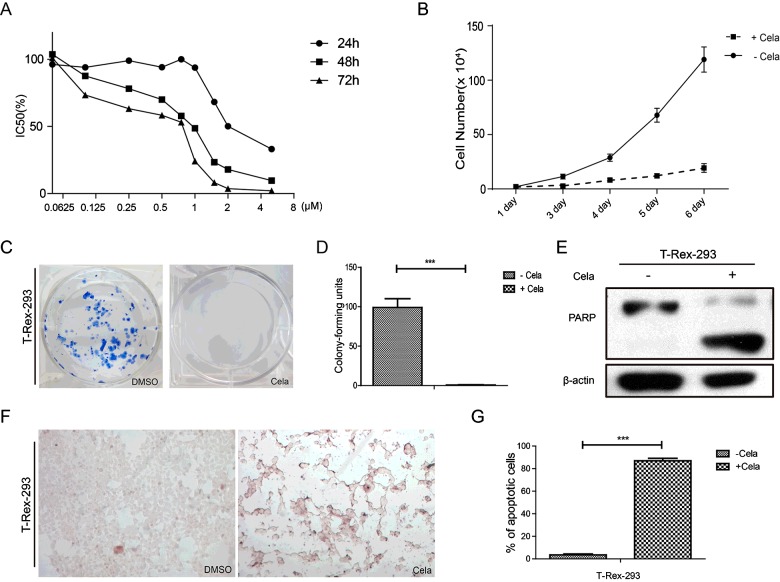
Hippo pathway is a highly conservative signalling pathway related to the development of organisms, which has been demonstrated to be strongly linked to the tumorigenesis and tumour progression. As the major downstream effector of Hippo pathway, yes-associated protein (YAP), is a transcriptional activator of target genes that are involved in cell proliferation and survival. As an oncogene, YAP can promote cell growth and inhibit cell apoptosis. Another major downstream effector of Hippo pathway, transcriptional co-activators with PDZ-binding motif (TAZ), is nearly 60% homologous with YAP. In the present study, we assume that TAZ probably has the similar function to YAP. To test this issue, we established an inducible and a stable expression system of TAZ in T-Rex-293 and HEK293 cells respectively. The results of cell growth curves, colony formation assay and tumour xenograft growth showed that overexpression of TAZ could promote cell growth in vitro and in vivo Meanwhile, we found that up-regulated expression of TAZ could partially restore Celastrol-induced cell apoptosis. Induced overexpression of TAZ could up-regulate its target genes including ankyrin repeat domain-containing protein (ANKRD), cysteine-rich 61 (CYR61) and connective tissue growth factor (CTGF), increase the expression of B-cell lymphoma-2 (Bcl-2), decrease the expression of Bcl-2 associated X protein (Bax) and activate the phosphatidylinositol 3-kinase (PI3K)/protein kinase B (Akt) pathway, which may be the mechanism underlying anti-apoptosis of TAZ. All these findings indicated that TAZ acts as an oncogene that could be a key regulator of cell proliferation and apoptosis.
河马通路是一条与生物体发育相关的高度保守的信号通路,已被证明与肿瘤发生和肿瘤进展密切相关。作为河马通路的主要下游效应因子,Yes相关蛋白(YAP)是参与细胞增殖和存活的靶基因的转录激活因子。作为一种癌基因,YAP可以促进细胞生长并抑制细胞凋亡。河马通路的另一个主要下游效应因子,具有PDZ结合基序的转录共激活因子(TAZ),与YAP的同源性近60%。在本研究中,我们假设TAZ可能具有与YAP相似的功能。为了验证这一问题,我们分别在T-Rex-293和HEK293细胞中建立了TAZ的诱导型和稳定表达系统。细胞生长曲线、集落形成试验和肿瘤异种移植生长的结果表明,TAZ的过表达可以在体外和体内促进细胞生长。同时,我们发现TAZ表达上调可以部分恢复雷公藤红素诱导的细胞凋亡。TAZ的诱导过表达可以上调其靶基因,包括含锚蛋白重复结构域蛋白(ANKRD)、富含半胱氨酸61(CYR61)和结缔组织生长因子(CTGF),增加B细胞淋巴瘤-2(Bcl-2)的表达,降低Bcl-2相关X蛋白(Bax)的表达,并激活磷脂酰肌醇3激酶(PI3K)/蛋白激酶B(Akt)通路,这可能是TAZ抗凋亡的潜在机制。所有这些发现表明,TAZ作为一种癌基因,可能是细胞增殖和凋亡的关键调节因子。