Yang HongKun, Meng YaLi, Chen BingLin, Zhang XingYue, Wang YouHua, Zhao WenQing, Zhou ZhiGuo
Key Laboratory of Crop Physiology and Ecology, Ministry of Agriculture, Nanjing Agricultural University and Jiangsu Collaborative Innovation Center for Modern Crop Production Nanjing, China.
Front Plant Sci. 2016 Aug 2;7:1118. doi: 10.3389/fpls.2016.01118. eCollection 2016.
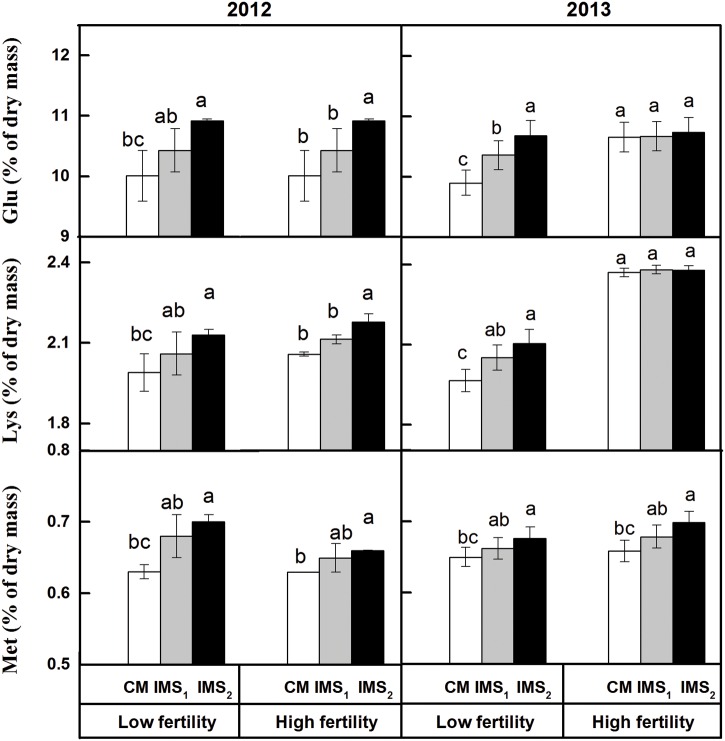
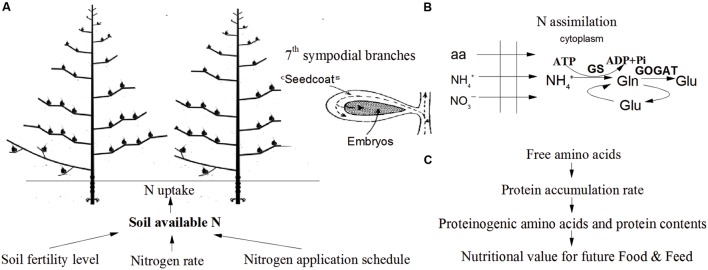
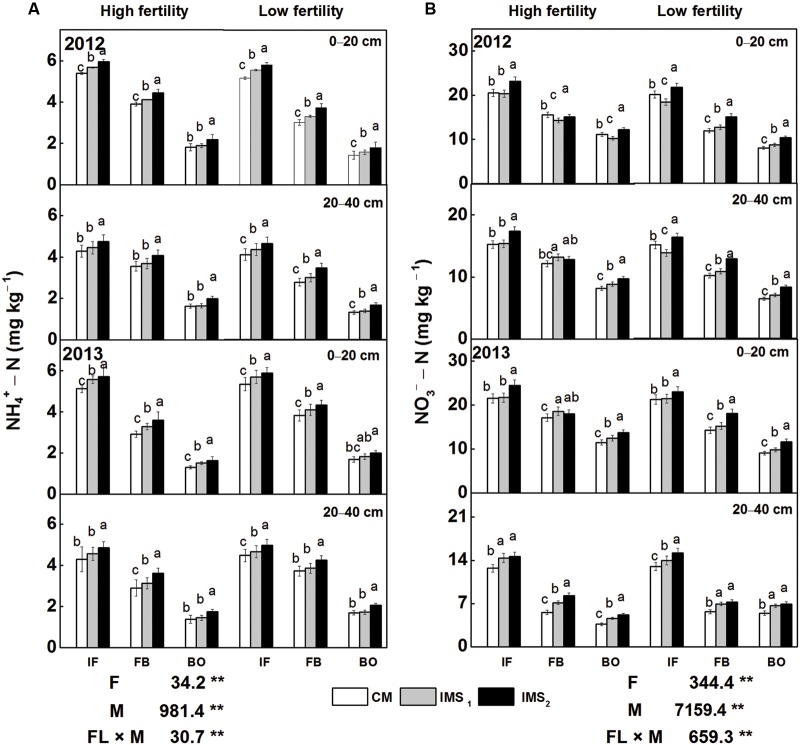
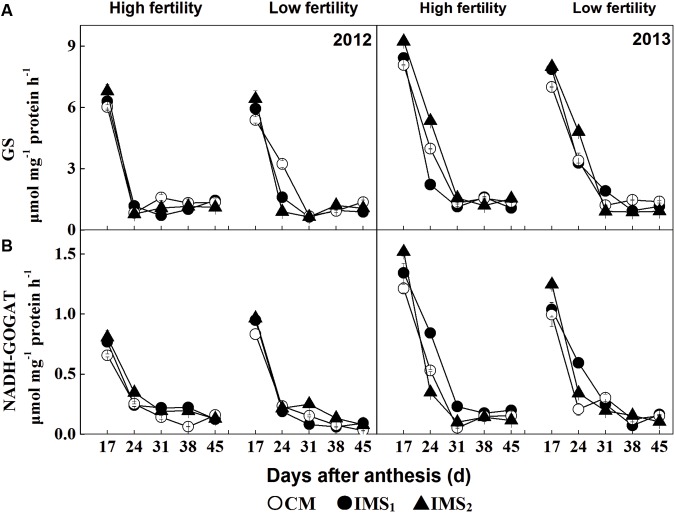
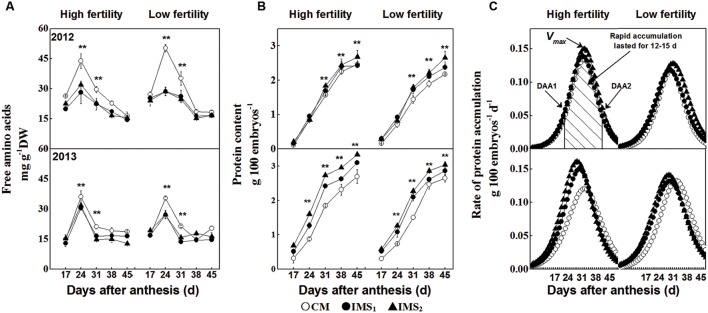
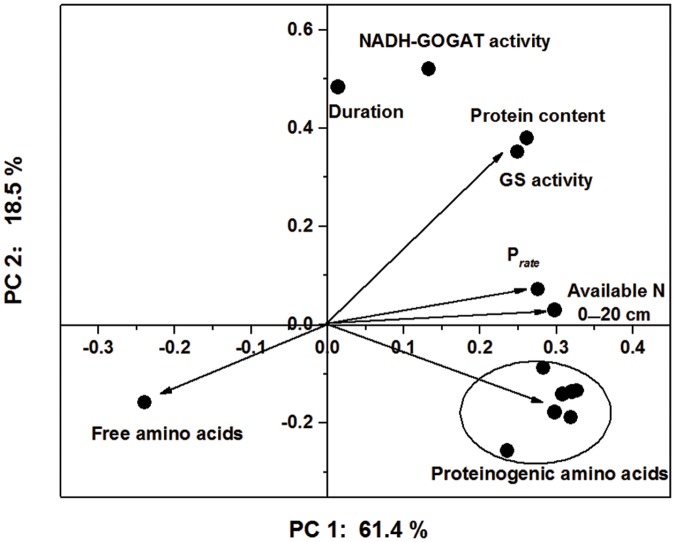
Cottonseed is widely used as a source of ruminant feed and for industrial purposes. Therefore, there is a tremendous need to improve the nutritional value of cotton embryos. In this study, a conventional management (CM) and two integrated cotton management strategies (IMS1, IMS2) were performed at two soil fertility levels to study the relationships among soil N, N assimilation, embryonic protein accumulation and protein quality. The levels of proteins, essential amino acids, and semi-essential amino acids, especially those of glutamate, lysine, and methionine, were higher in IMS1 and IMS2 embryos than in CM embryos. These changes were significantly positively correlated with the soil-available N content, glutamine synthetase activity and peak value of protein accumulation rate and were negatively correlated with the free amino acid level. These results illustrated that integrated management strategies, especially the rates and timing of N application, raise the level of soil available N, which is beneficial for N assimilation in developing cotton embryos. The protein content was limited by the rate of protein accumulation rather than by the free amino acid content. The combination of target yield fertilization, a growth-driven N application schedule, a high plant density and the seedling raising with bio-organic fertilizer can substantially improve protein quality in cotton embryos, especially at a soil with low soil organic matter and total nitrogen.
棉籽被广泛用作反刍动物饲料来源和工业用途。因此,极大地需要提高棉花胚的营养价值。在本研究中,在两种土壤肥力水平下实施了常规管理(CM)和两种综合棉花管理策略(IMS1、IMS2),以研究土壤氮、氮同化、胚蛋白积累和蛋白质质量之间的关系。IMS1和IMS2胚中的蛋白质、必需氨基酸和半必需氨基酸水平,尤其是谷氨酸、赖氨酸和蛋氨酸的水平,高于CM胚。这些变化与土壤有效氮含量、谷氨酰胺合成酶活性以及蛋白质积累速率峰值呈显著正相关,与游离氨基酸水平呈负相关。这些结果表明,综合管理策略,尤其是施氮量和施氮时间,提高了土壤有效氮水平,这有利于发育中的棉花胚进行氮同化。蛋白质含量受蛋白质积累速率的限制,而非游离氨基酸含量的限制。目标产量施肥、生长驱动的施氮计划、高种植密度以及使用生物有机肥育苗相结合,可大幅提高棉花胚的蛋白质质量,尤其是在土壤有机质和全氮含量较低的土壤中。