Lee Jong Hee, Han Seung Beom
Department of Orthopedic Surgery, Korea University Anam Hospital, Korea University School of Medicine, Seoul, Korea.
Hip Pelvis. 2015 Dec;27(4):201-8. doi: 10.5371/hp.2015.27.4.201. Epub 2015 Dec 30.
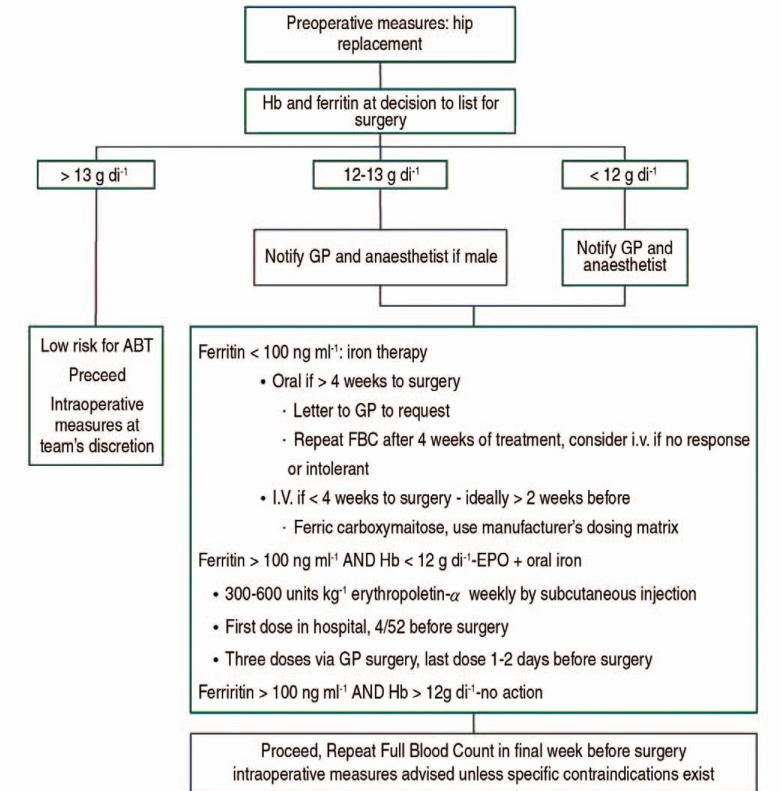
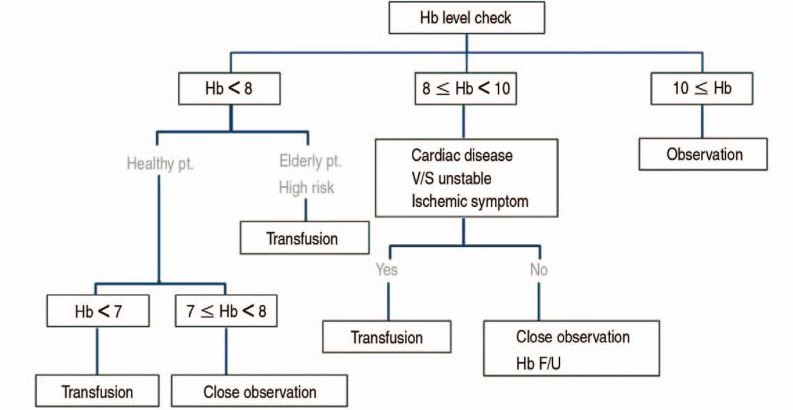
Perioperative blood transfusions are common in total hip arthroplasty because of preoperative anemia and perioperative blood loss. Perioperative anemia and the need for allogeneic blood transfusion are related with increased morbidity. To reduce perioperative allogeneic blood transfusion, keeping the preoperative hemoglobin level above 12.0 g/dL is important in orthopedic patients. By using the anti-fibrinolytic agent or perioperative cell salvage, reduce intraoperative blood loss is very important for the reduction of perioperative blood loss. As a transfusion trigger, low hemoglobin is another important target to reduce the transfusion rate. Because blood management is closely connected with prognosis, it has become a new challenge in orthopedic surgery.
由于术前贫血和围手术期失血,全髋关节置换术中围手术期输血很常见。围手术期贫血和异体输血需求与发病率增加有关。为减少围手术期异体输血,对于骨科患者而言,将术前血红蛋白水平维持在12.0 g/dL以上很重要。通过使用抗纤溶药物或围手术期血液回收,减少术中失血对于减少围手术期失血非常重要。作为输血触发因素,低血红蛋白是降低输血率的另一个重要目标。由于血液管理与预后密切相关,它已成为骨科手术中的一项新挑战。