Montalban-Arques Ana, Wurm Philipp, Trajanoski Slave, Schauer Silvia, Kienesberger Sabine, Halwachs Bettina, Högenauer Christoph, Langner Cord, Gorkiewicz Gregor
Institute of Pathology, Medical University of Graz, Graz, Austria.
Theodor Escherich Laboratory for Medical Microbiome Research, Medical University of Graz, Graz, Austria.
J Pathol. 2016 Dec;240(4):425-436. doi: 10.1002/path.4782. Epub 2016 Oct 21.
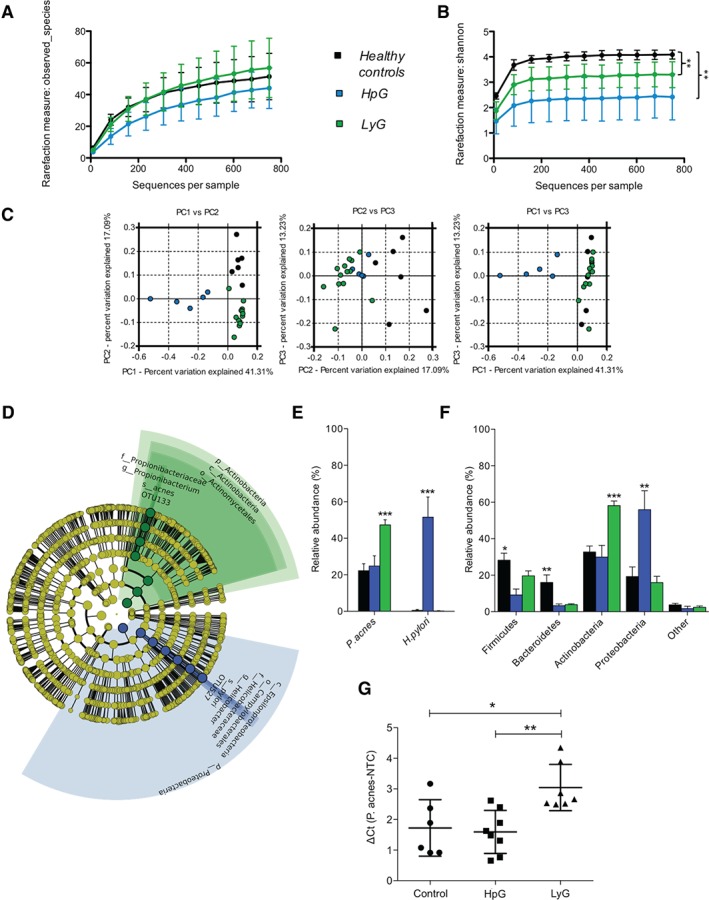
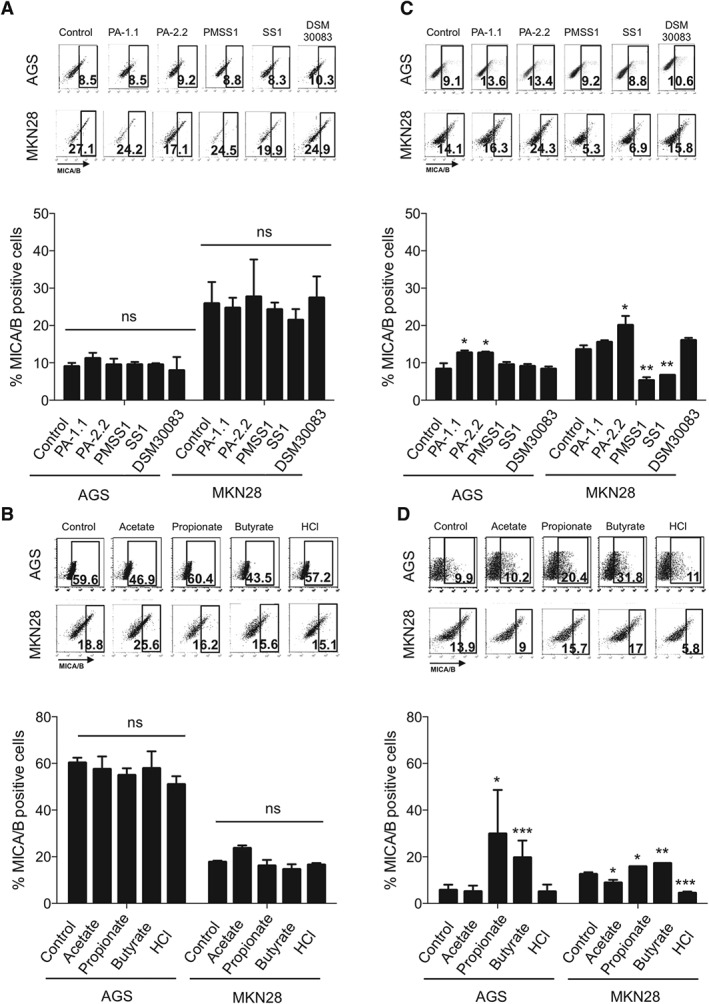
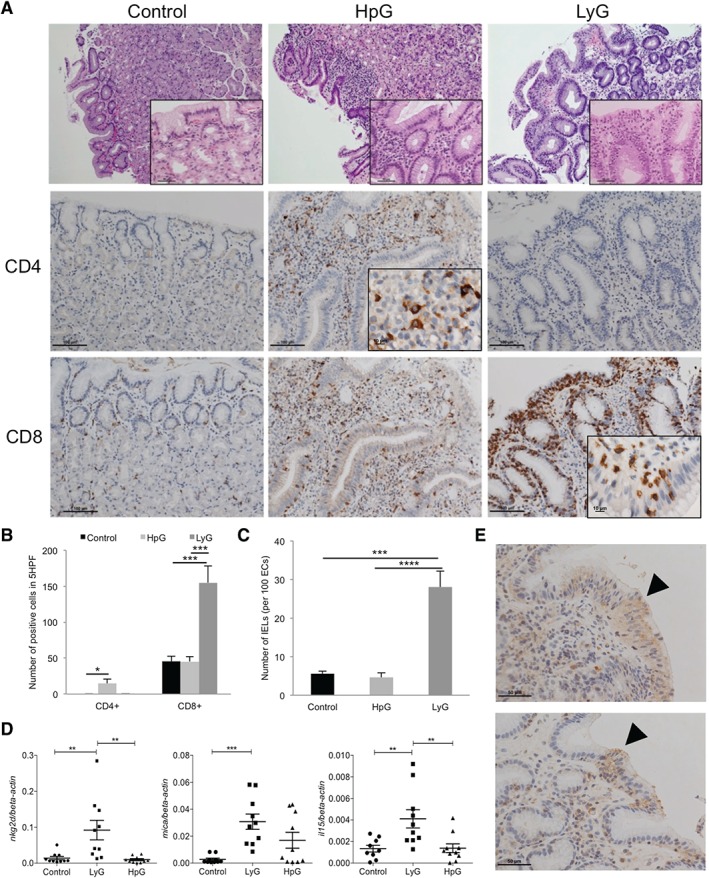
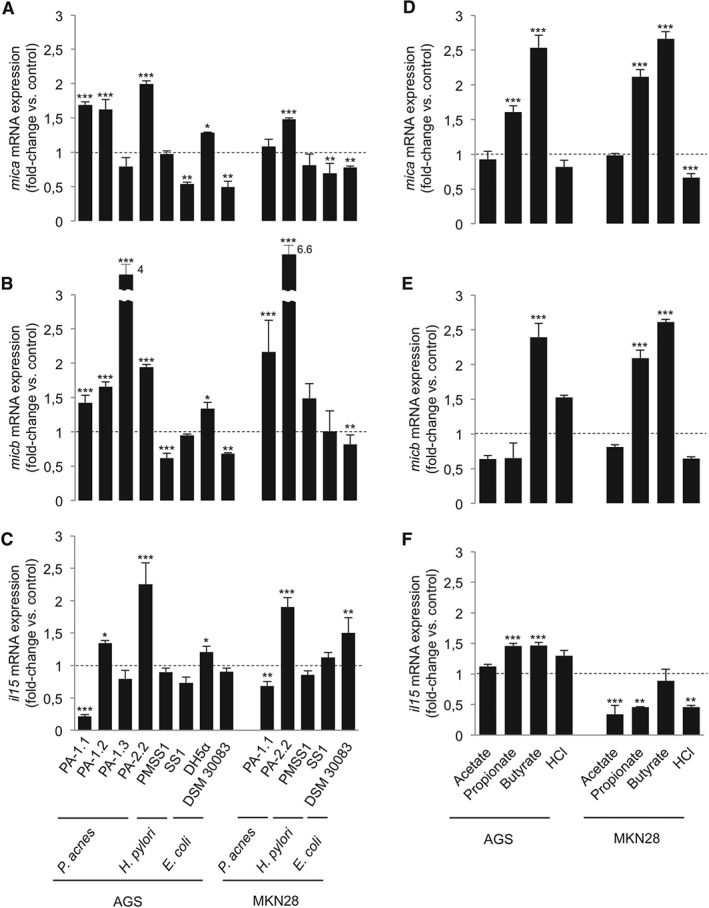
Corpus-dominant lymphocytic gastritis (LyG) is characterized by CD8 T-cell infiltration of the stomach epithelium by a so far uncharacterized mechanism. Although Helicobacter pylori is typically undetectable in LyG, patients respond to H. pylori antibiotic eradication therapy, suggesting a non-H. pylori microbial trigger for the disease. Comparative microbiota analysis of specimens from LyG, H. pylori gastritis and healthy controls precluded involvement of H. pylori in LyG but identified Propionibacterium acnes as a possible disease trigger. In addition, the natural killer group 2 member D (NKG2D) system and the proinflammatory cytokine interleukin (IL)-15 are significantly upregulated in the gastric mucosa of LyG patients, and gastric epithelial cells respond to microbe-derived stimuli, including live P. acnes and the microbial products short-chain fatty acids, with induction of NKG2D ligands. In contrast, H. pylori infection does not activate or even repress NKG2D ligands. Together, our findings identify P. acnes as a possible causative agent for LyG, which is dependent on the NKG2D system and IL-15 activation. © 2016 The Authors. The Journal of Pathology published by John Wiley & Sons Ltd on behalf of Pathological Society of Great Britain and Ireland.
以 corpus 为主的淋巴细胞性胃炎(LyG)的特征是胃上皮出现 CD8 T 细胞浸润,其机制迄今尚不明确。虽然在 LyG 中通常检测不到幽门螺杆菌,但患者对幽门螺杆菌抗生素根除治疗有反应,这表明该疾病存在非幽门螺杆菌的微生物触发因素。对 LyG、幽门螺杆菌胃炎和健康对照的标本进行比较微生物群分析排除了幽门螺杆菌与 LyG 的关联,但确定痤疮丙酸杆菌可能是疾病的触发因素。此外,自然杀伤细胞 2 成员 D(NKG2D)系统和促炎细胞因子白细胞介素(IL)-15 在 LyG 患者的胃黏膜中显著上调,胃上皮细胞对包括活的痤疮丙酸杆菌和微生物产物短链脂肪酸在内的微生物衍生刺激有反应,并诱导 NKG2D 配体。相比之下,幽门螺杆菌感染不会激活甚至抑制 NKG2D 配体。总之,我们的研究结果确定痤疮丙酸杆菌可能是 LyG 的病原体,这依赖于 NKG2D 系统和 IL-15 激活。© 2016 作者。《病理学杂志》由 John Wiley & Sons Ltd 代表大不列颠及爱尔兰病理学会出版。