Centro de Biología Molecular Severo Ochoa (Consejo Superior de Investigaciones Científicas), Universidad Autónoma de Madrid Madrid, Spain.
Front Mol Biosci. 2016 Aug 5;3:37. doi: 10.3389/fmolb.2016.00037. eCollection 2016.
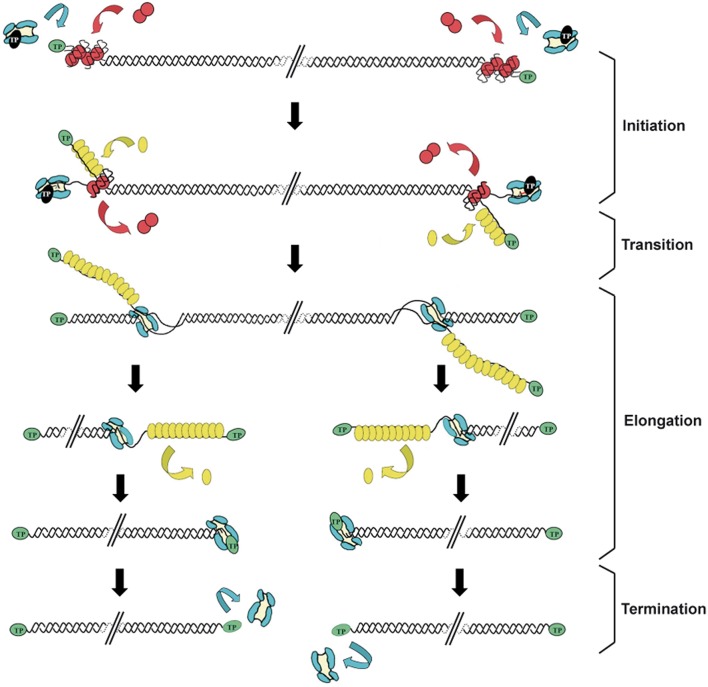
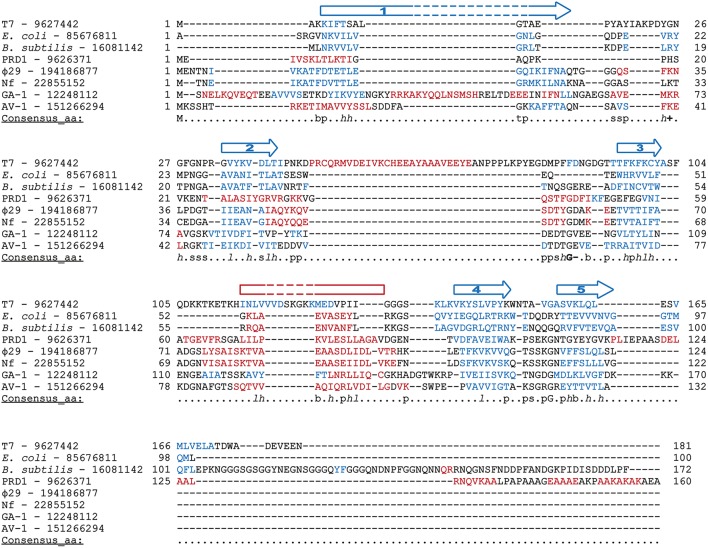
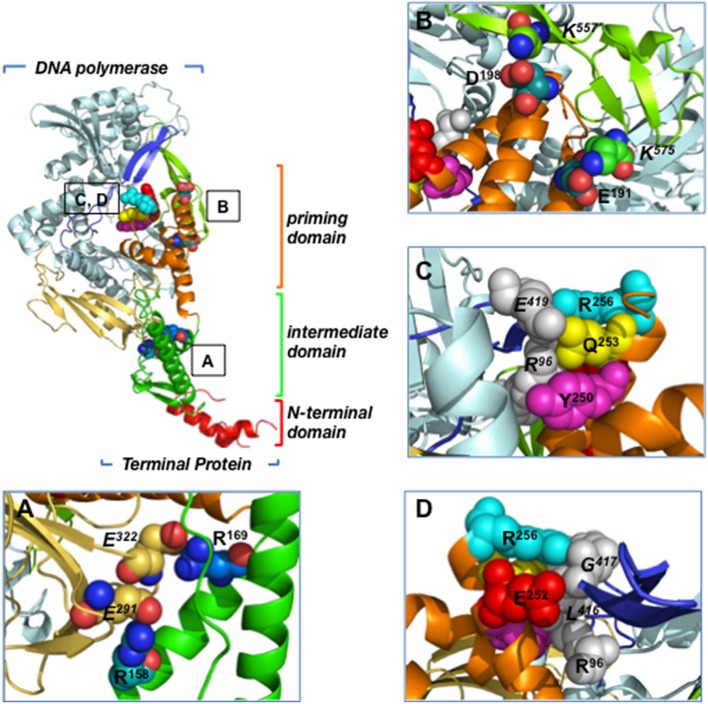
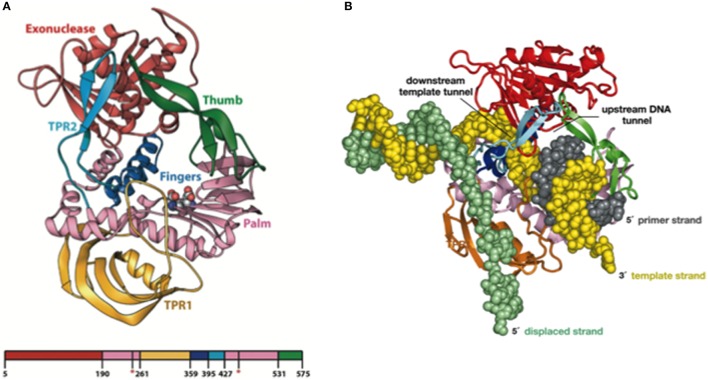
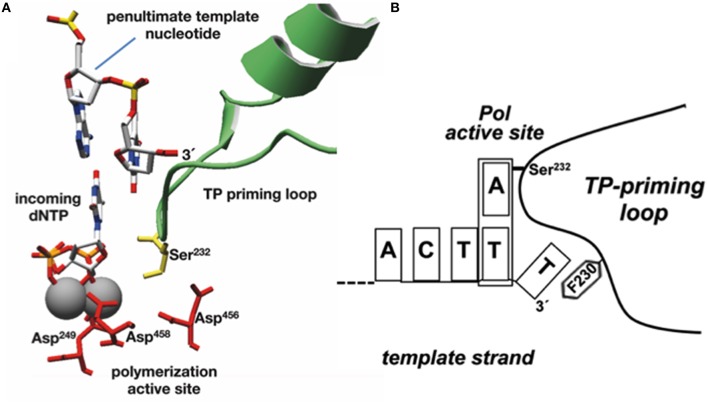
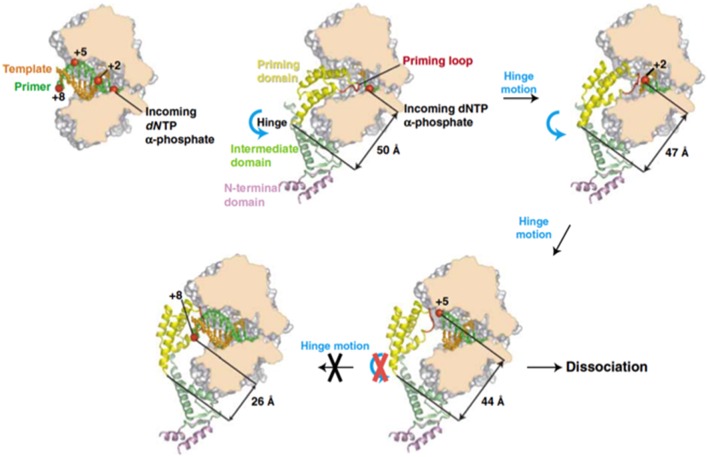
Bacillus subtilis phage Φ29 has a linear, double-stranded DNA 19 kb long with an inverted terminal repeat of 6 nucleotides and a protein covalently linked to the 5' ends of the DNA. This protein, called terminal protein (TP), is the primer for the initiation of replication, a reaction catalyzed by the viral DNA polymerase at the two DNA ends. The DNA polymerase further elongates the nascent DNA chain in a processive manner, coupling strand displacement with elongation. The viral protein p5 is a single-stranded DNA binding protein (SSB) that binds to the single strands generated by strand displacement during the elongation process. Viral protein p6 is a double-stranded DNA binding protein (DBP) that preferentially binds to the origins of replication at the Φ29 DNA ends and is required for the initiation of replication. Both SSB and DBP are essential for Φ29 DNA amplification. This review focuses on the role of these phage DNA-binding proteins in Φ29 DNA replication both in vitro and in vivo, as well as on the implication of several B. subtilis DNA-binding proteins in different processes of the viral cycle. We will revise the enzymatic activities of the Φ29 DNA polymerase: TP-deoxynucleotidylation, processive DNA polymerization coupled to strand displacement, 3'-5' exonucleolysis and pyrophosphorolysis. The resolution of the Φ29 DNA polymerase structure has shed light on the translocation mechanism and the determinants responsible for processivity and strand displacement. These two properties have made Φ29 DNA polymerase one of the main enzymes used in the current DNA amplification technologies. The determination of the structure of Φ29 TP revealed the existence of three domains: the priming domain, where the primer residue Ser232, as well as Phe230, involved in the determination of the initiating nucleotide, are located, the intermediate domain, involved in DNA polymerase binding, and the N-terminal domain, responsible for DNA binding and localization of the TP at the bacterial nucleoid, where viral DNA replication takes place. The biochemical properties of the Φ29 DBP and SSB and their function in the initiation and elongation of Φ29 DNA replication, respectively, will be described.
枯草芽孢杆菌噬菌体 Φ29 具有线性、双链 DNA,长度为 19kb,具有 6 个核苷酸的反向末端重复序列和与 DNA 5' 端共价连接的蛋白质。这种蛋白质称为末端蛋白(TP),是复制起始的引物,该反应由病毒 DNA 聚合酶在两个 DNA 末端催化。DNA 聚合酶进一步以连续的方式延伸新合成的 DNA 链,将链置换与延伸相结合。病毒蛋白 p5 是单链 DNA 结合蛋白(SSB),在延伸过程中结合由链置换产生的单链。病毒蛋白 p6 是双链 DNA 结合蛋白(DBP),优先结合 Φ29 DNA 末端的复制起点,是复制起始所必需的。SSB 和 DBP 对 Φ29 DNA 扩增都是必不可少的。本综述重点介绍了这些噬菌体 DNA 结合蛋白在 Φ29 DNA 复制中的作用,无论是在体外还是体内,以及枯草芽孢杆菌的几种 DNA 结合蛋白在病毒周期的不同过程中的作用。我们将修订 Φ29 DNA 聚合酶的酶促活性:TP-脱氧核苷酸酰化、与链置换偶联的连续 DNA 聚合、3'-5' 外切核酸酶和焦磷酸解。Φ29 DNA 聚合酶结构的解析揭示了其迁移机制和决定连续和链置换的因素。这两个特性使 Φ29 DNA 聚合酶成为当前 DNA 扩增技术中主要使用的酶之一。Φ29 TP 的结构测定揭示了其存在三个结构域:引发结构域,其中包含引物残基 Ser232 以及决定起始核苷酸的 Phe230;中间结构域,与 DNA 聚合酶结合有关;以及 N 端结构域,负责与 DNA 结合和将 TP 定位在细菌核体上,病毒 DNA 复制在此处进行。将描述枯草芽孢杆菌噬菌体 Φ29 的 DBP 和 SSB 的生化特性及其分别在 Φ29 DNA 复制起始和延伸中的功能。