Higareda-Almaraz Juan Carlos, Ruiz-Moreno Juan S, Klimentova Jana, Barbieri Daniela, Salvador-Gallego Raquel, Ly Regina, Valtierra-Gutierrez Ilse A, Dinsart Christiane, Rabinovich Gabriel A, Stulik Jiri, Rösl Frank, Rincon-Orozco Bladimiro
Division of Viral Transformation Mechanisms, German Cancer Research Center (DKFZ), Im Neuenheimer Feld 242, 69120, Heidelberg, Germany.
Institute for Diabetes and Cancer, Helmholtz Zentrum München, Deutsches Forschungszentrum für Gesundheit und Umwelt (GmbH), 85764, Neuherberg, Germany.
BMC Cancer. 2016 Aug 24;16(1):680. doi: 10.1186/s12885-016-2700-8.
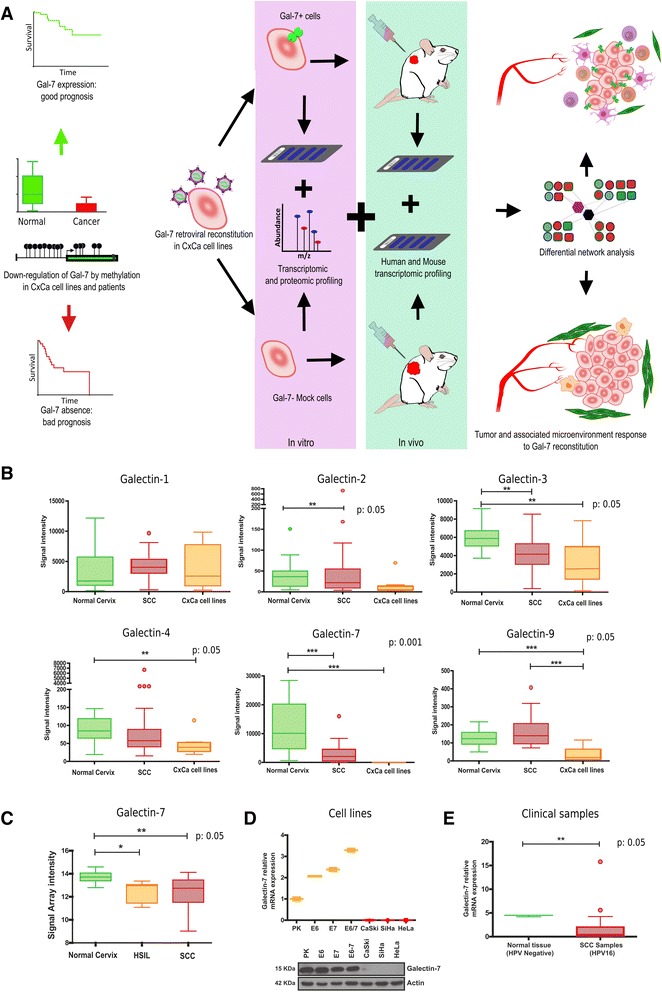
Galectin-7 (Gal-7) is negatively regulated in cervical cancer, and appears to be a link between the apoptotic response triggered by cancer and the anti-tumoral activity of the immune system. Our understanding of how cervical cancer cells and their molecular networks adapt in response to the expression of Gal-7 remains limited.
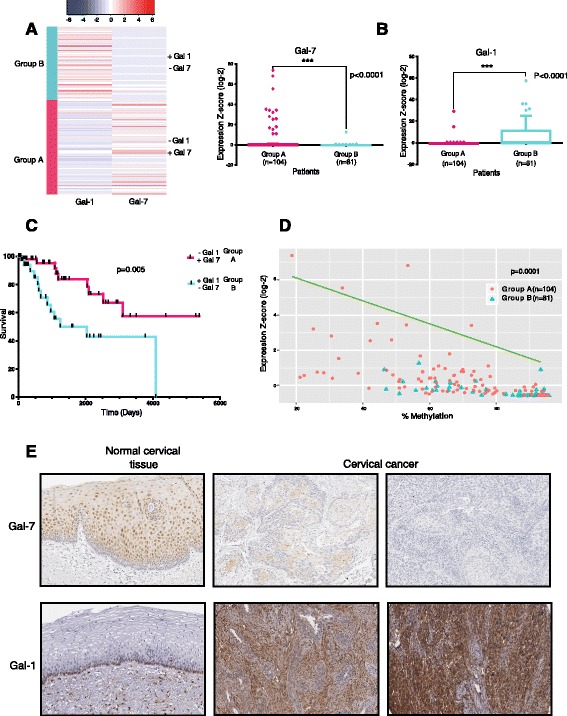
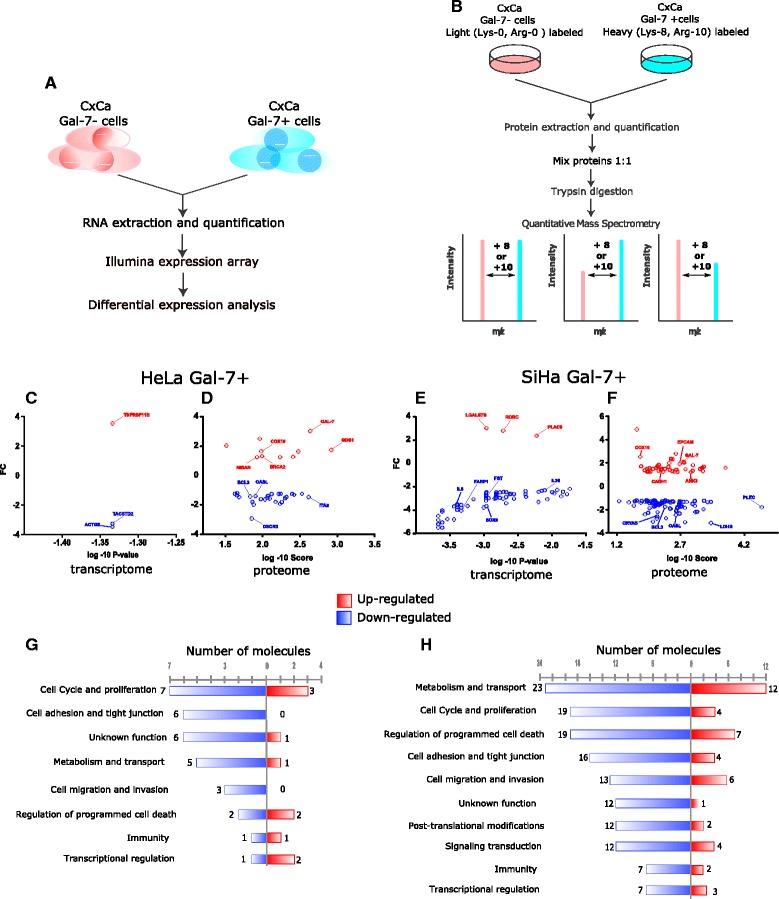
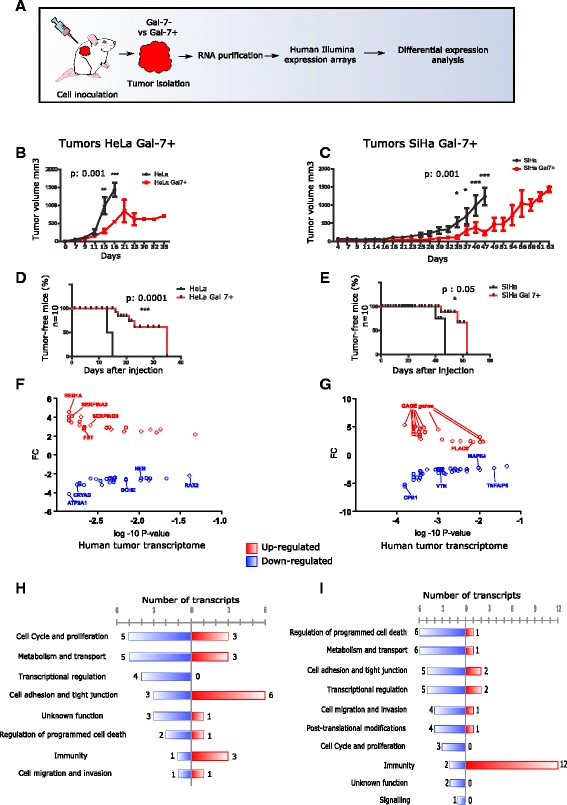
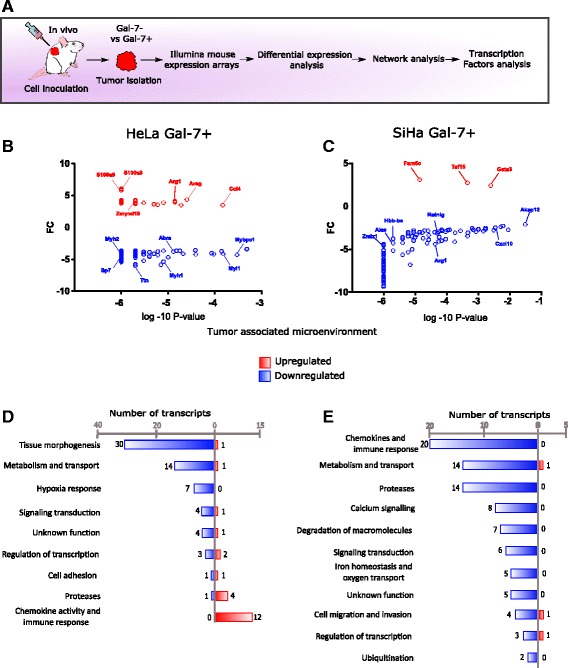
Meta-analysis of Gal-7 expression was conducted in three cervical cancer cohort studies and TCGA. In silico prediction and bisulfite sequencing were performed to inquire epigenetic alterations. To study the effect of Gal-7 on cervical cancer, we ectopically re-expressed it in the HeLa and SiHa cervical cancer cell lines, and analyzed their transcriptome and SILAC-based proteome. We also examined the tumor and microenvironment host cell transcriptomes after xenotransplantation into immunocompromised mice. Differences between samples were assessed with the Kruskall-Wallis, Dunn's Multiple Comparison and T tests. Kaplan-Meier and log-rank tests were used to determine overall survival.
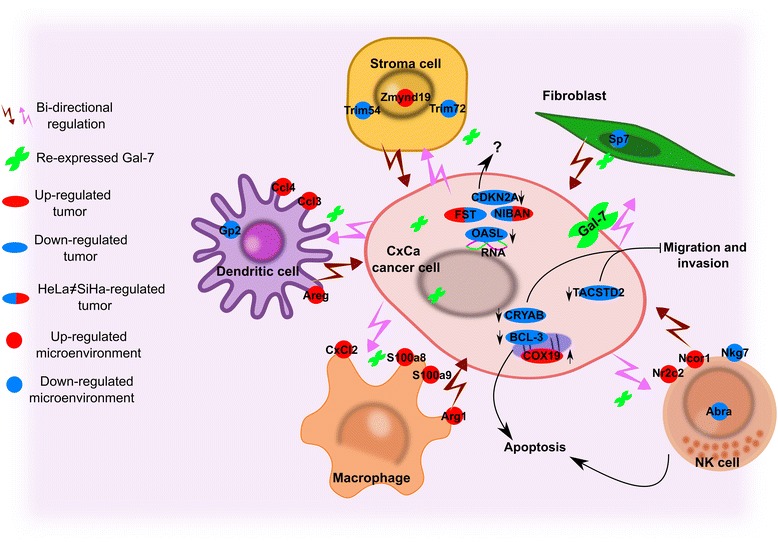
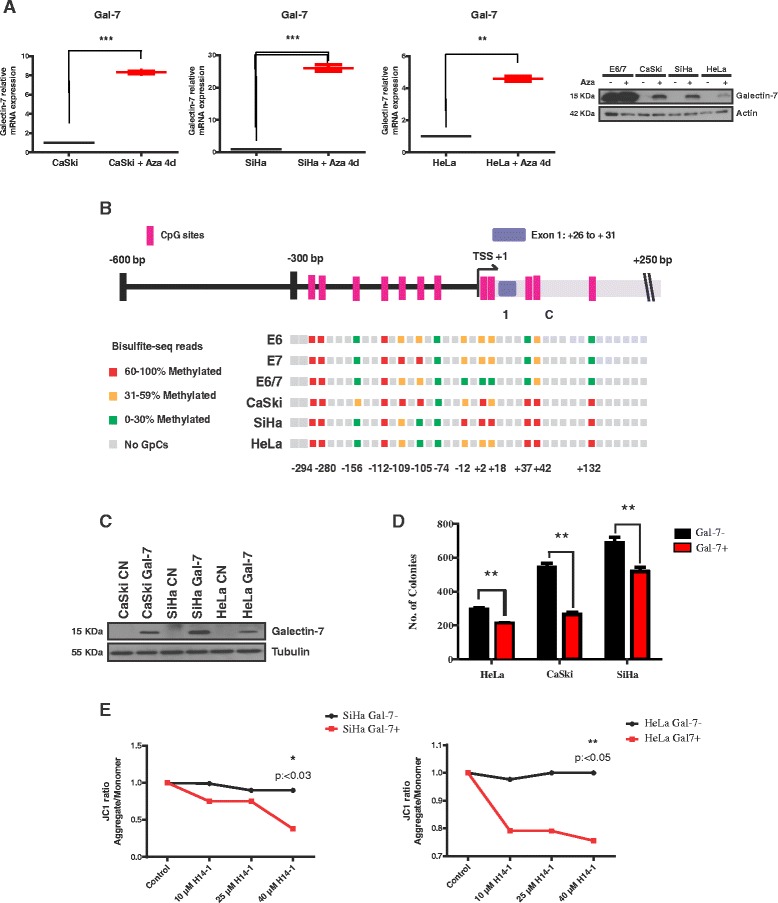
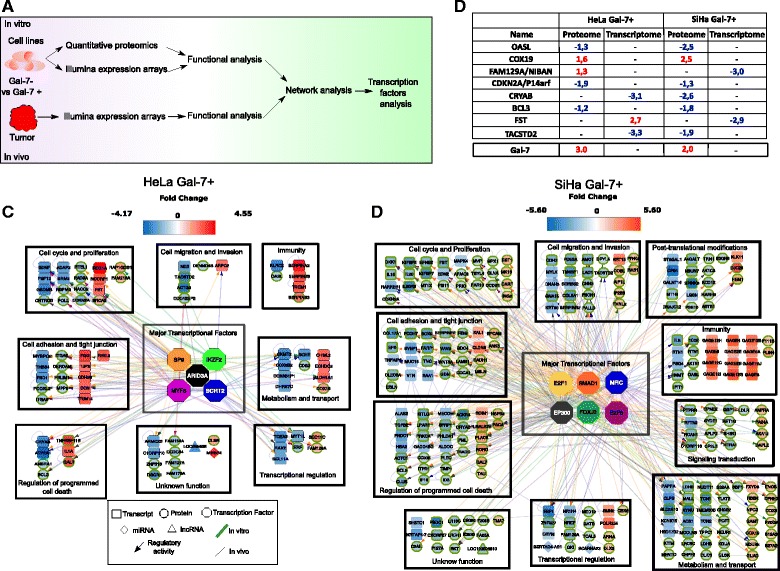
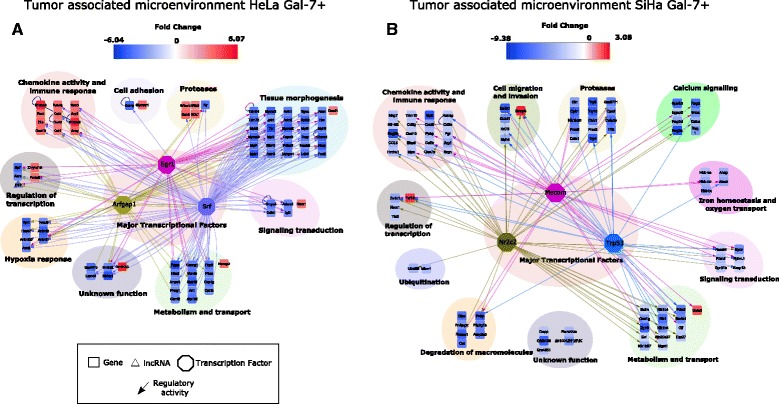
Gal-7 was constantly downregulated in our meta-analysis (p < 0.0001). Tumors with combined high Gal-7 and low galectin-1 expression (p = 0.0001) presented significantly better prognoses (p = 0.005). In silico and bisulfite sequencing assays showed de novo methylation in the Gal-7 promoter and first intron. Cells re-expressing Gal-7 showed a high apoptosis ratio (p < 0.05) and their xenografts displayed strong growth retardation (p < 0.001). Multiple gene modules and transcriptional regulators were modulated in response to Gal-7 reconstitution, both in cervical cancer cells and their microenvironments (FDR < 0.05 %). Most of these genes and modules were associated with tissue morphogenesis, metabolism, transport, chemokine activity, and immune response. These functional modules could exert the same effects in vitro and in vivo, even despite different compositions between HeLa and SiHa samples.
Gal-7 re-expression affects the regulation of molecular networks in cervical cancer that are involved in diverse cancer hallmarks, such as metabolism, growth control, invasion and evasion of apoptosis. The effect of Gal-7 extends to the microenvironment, where networks involved in its configuration and in immune surveillance are particularly affected.
在宫颈癌中,半乳糖凝集素-7(Gal-7)受到负调控,并且似乎是癌症引发的凋亡反应与免疫系统的抗肿瘤活性之间的一个联系。我们对于宫颈癌细胞及其分子网络如何响应Gal-7的表达而发生适应性变化的理解仍然有限。
在三项宫颈癌队列研究和癌症基因组图谱(TCGA)中对Gal-7的表达进行了荟萃分析。进行了计算机预测和亚硫酸氢盐测序以探究表观遗传改变。为了研究Gal-7对宫颈癌的影响,我们在HeLa和SiHa宫颈癌细胞系中异位重新表达了Gal-7,并分析了它们的转录组和基于稳定同位素标记氨基酸法(SILAC)的蛋白质组。我们还检查了将肿瘤异种移植到免疫缺陷小鼠后的肿瘤和微环境宿主细胞转录组。用Kruskal-Wallis检验、Dunn多重比较检验和t检验评估样本之间的差异。采用Kaplan-Meier法和对数秩检验来确定总生存期。
在我们的荟萃分析中Gal-7持续下调(p < 0.0001)。Gal-7高表达与半乳糖凝集素-1低表达相结合的肿瘤(p = 0.0001)预后明显更好(p = 0.005)。计算机分析和亚硫酸氢盐测序分析显示Gal-7启动子和第一内含子存在从头甲基化。重新表达Gal-7的细胞显示出高凋亡率(p < 0.05),并且它们的异种移植瘤表现出强烈的生长迟缓(p < 0.001)。响应Gal-7的重建,在宫颈癌细胞及其微环境中多个基因模块和转录调节因子受到调控(错误发现率< 0.05%)。这些基因和模块中的大多数与组织形态发生、代谢、转运、趋化因子活性和免疫反应相关。即使HeLa和SiHa样本之间的组成不同,这些功能模块在体外和体内也能发挥相同的作用。
Gal-7的重新表达影响宫颈癌中涉及多种癌症特征(如代谢、生长控制、侵袭和逃避凋亡)的分子网络的调控。Gal-7的作用扩展到微环境,其中涉及其构成和免疫监视的网络受到特别影响。