Chandrasekaran Murugesan, Kim Kiyoon, Krishnamoorthy Ramasamy, Walitang Denver, Sundaram Subbiah, Joe Manoharan M, Selvakumar Gopal, Hu Shuijin, Oh Sang-Hyon, Sa Tongmin
Department of Environmental and Biological Chemistry, Chungbuk National University Cheongju, South Korea.
Department of Environmental and Biological Chemistry, Chungbuk National UniversityCheongju, South Korea; Department of Microbiology, School of Life Sciences, Vels UniversityChennai, India.
Front Microbiol. 2016 Aug 11;7:1246. doi: 10.3389/fmicb.2016.01246. eCollection 2016.
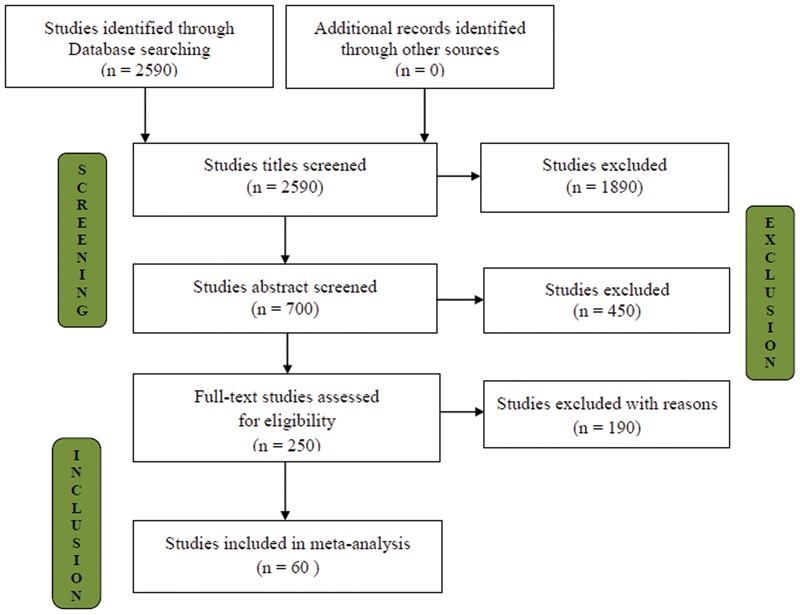
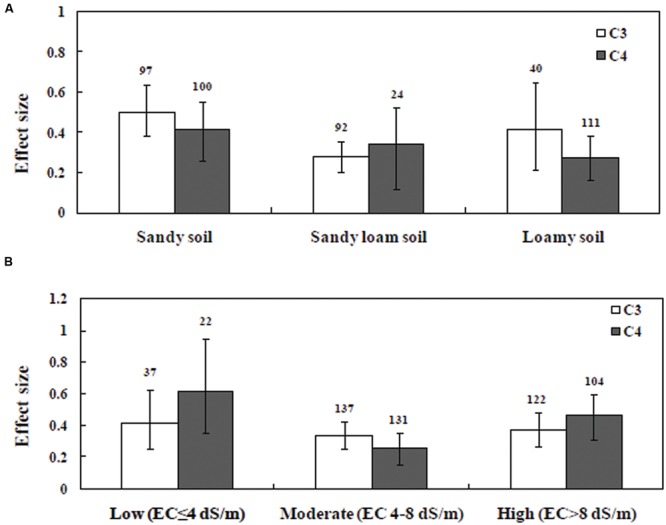
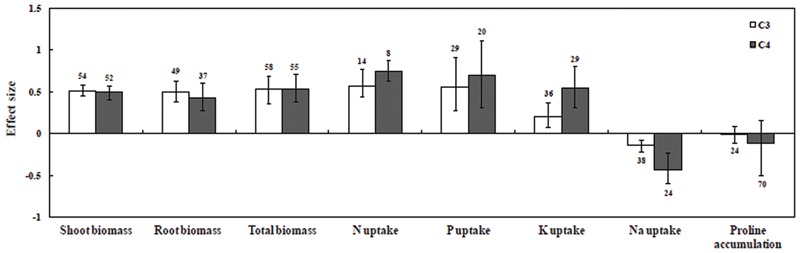
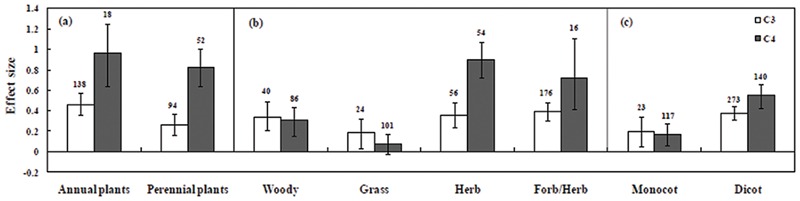
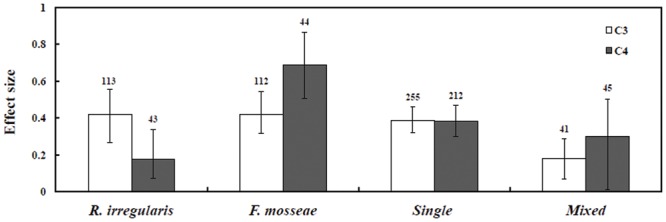
A wide range of C3 and C4 plant species could acclimatize and grow under the impact of salinity stress. Symbiotic relationship between plant roots and arbuscular mycorrhizal fungi (AMF) are widespread and are well known to ameliorate the influence of salinity stress on agro-ecosystem. In the present study, we sought to understand the phenomenon of variability on AMF symbiotic relationship on saline stress amelioration in C3 and C4 plants. Thus, the objective was to compare varied mycorrhizal symbiotic relationship between C3 and C4 plants in saline conditions. To accomplish the above mentioned objective, we conducted a random effects models meta-analysis across 60 published studies. An effect size was calculated as the difference in mycorrhizal responses between the AMF inoculated plants and its corresponding control under saline conditions. Responses were compared between (i) identity of AMF species and AMF inoculation, (ii) identity of host plants (C3 vs. C4) and plant functional groups, (iii) soil texture and level of salinity and (iv) experimental condition (greenhouse vs. field). Results indicate that both C3 and C4 plants under saline condition responded positively to AMF inoculation, thereby overcoming the predicted effects of symbiotic efficiency. Although C3 and C4 plants showed positive effects under low (EC < 4 ds/m) and high (>8 ds/m) saline conditions, C3 plants showed significant effects for mycorrhizal inoculation over C4 plants. Among the plant types, C4 annual and perennial plants, C4 herbs and C4 dicot had a significant effect over other counterparts. Between single and mixed AMF inoculants, single inoculants Rhizophagus irregularis had a positive effect on C3 plants whereas Funneliformis mosseae had a positive effect on C4 plants than other species. In all of the observed studies, mycorrhizal inoculation showed positive effects on shoot, root and total biomass, and in nitrogen, phosphorous and potassium (K) uptake. However, it showed negative effects in sodium (Na) uptake in both C3 and C4 plants. This influence, owing to mycorrhizal inoculation, was significantly higher in K uptake in C4 plants. For our analysis, we concluded that AMF-inoculated C4 plants showed more competitive K(+) ions uptake than C3 plants. Therefore, maintenance of high cytosolic K(+)/Na(+) ratio is a key feature of plant salt tolerance. Studies on the detailed mechanism for the selective transport of K in C3 and C4 mycorrhizal plants under salt stress is lacking, and this needs to be explored.
多种C3和C4植物物种能够在盐胁迫的影响下适应并生长。植物根系与丛枝菌根真菌(AMF)之间的共生关系广泛存在,并且众所周知,这种关系能够减轻盐胁迫对农业生态系统的影响。在本研究中,我们试图了解C3和C4植物中AMF共生关系在缓解盐胁迫方面的变异性现象。因此,目标是比较盐胁迫条件下C3和C4植物之间不同的菌根共生关系。为实现上述目标,我们对60项已发表的研究进行了随机效应模型荟萃分析。效应大小计算为盐胁迫条件下接种AMF的植物与其相应对照之间菌根反应的差异。在以下方面比较了反应:(i)AMF物种身份和AMF接种情况,(ii)宿主植物身份(C3与C4)和植物功能组,(iii)土壤质地和盐度水平,以及(iv)实验条件(温室与田间)。结果表明,盐胁迫条件下的C3和C4植物对接种AMF均有积极反应,从而克服了共生效率的预测影响。虽然C3和C4植物在低(EC < 4 ds/m)和高(>8 ds/m)盐胁迫条件下均表现出积极影响,但C3植物接种菌根的效果比C4植物更显著。在植物类型中,C4一年生和多年生植物、C4草本植物和C4双子叶植物比其他同类植物有显著影响。在单一和混合AMF接种剂之间,单一接种剂不规则球囊霉对C3植物有积极影响,而摩西管柄囊霉对C4植物的积极影响比其他物种更大。在所有观察到的研究中,接种菌根对地上部、根部和总生物量以及氮、磷和钾(K)的吸收均有积极影响。然而,它对C3和C4植物的钠(Na)吸收均有负面影响。由于接种菌根,这种影响在C4植物的钾吸收中显著更高。对于我们的分析,我们得出结论,接种AMF的C4植物比C3植物表现出更强的竞争性钾(+)离子吸收能力。因此,维持高细胞质钾(+)/钠(+)比率是植物耐盐性的关键特征。目前缺乏关于盐胁迫下C3和C4菌根植物中钾选择性运输详细机制的研究,这需要进一步探索。